
Introduction
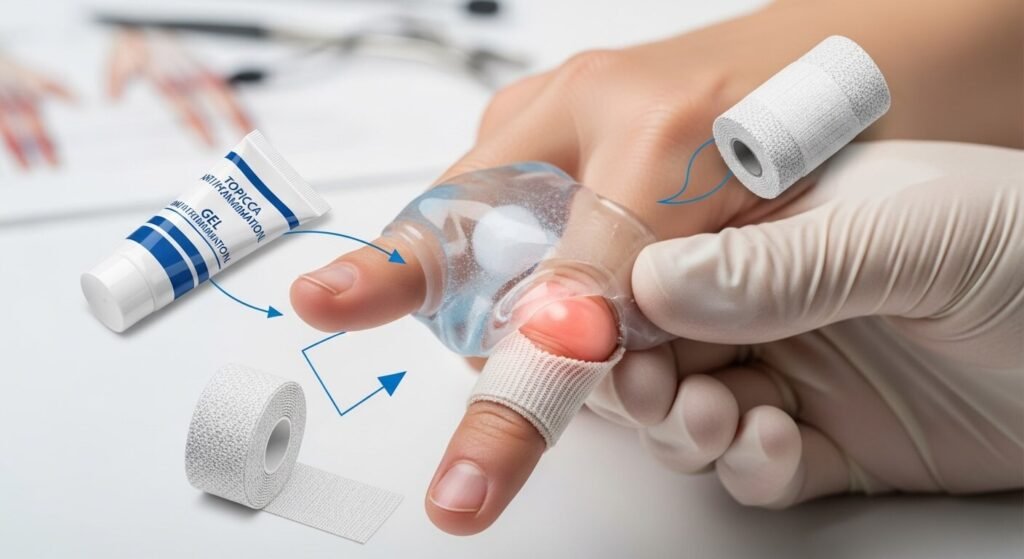
A jammed finger is a very common hand injury that happens when the finger is suddenly forced backward or compressed, usually during sports or accidents. The main problem is pain, swelling, and difficulty moving the finger, which can make even simple daily tasks difficult. Many people worry it may be a fracture, but in most cases it is a soft tissue injury that heals with proper care. The solution is early treatment using ice, rest, and protection to reduce swelling and speed up recovery, which plays an important role in healing a jammed finger safely and quickly.
What Is a Jammed Finger?
A jammed finger occurs when the finger joint is compressed due to sudden impact. It usually affects ligaments and soft tissues around the joint rather than the bone itself.
Commonly affected areas:
- Middle finger joint (PIP joint)
- Fingertip joint (DIP joint)
In most cases, healing a jammed finger depends on how quickly you treat swelling and protect the joint from further injury.
Jammed Finger Symptoms and Treatment
Understanding jammed finger symptoms and treatment is important for early recovery.
Symptoms:
- Swelling around the finger joint
- Pain when bending or touching finger
- Stiffness in movement
- Bruising or redness
- Weak grip strength
Treatment approach:
- Rest and protection
- Ice therapy
- Compression or buddy taping
- Pain management if needed
Proper jammed finger symptoms and treatment awareness helps avoid long-term stiffness.
Causes of a Jammed Finger
A jammed finger usually happens due to sudden force applied to the fingertip.
Common causes include:
- Ball hitting finger during sports
- Accidental falls
- Finger bending backward suddenly
- Direct impact on hand
Sports like basketball and volleyball are the most common situations where injury occurs.
How to Heal a Jammed Finger Fast
If you want to know how to heal a jammed finger fast, the first 24–48 hours are very important.
Step-by-step care:
1. Rest the Finger
Avoid using the injured finger to prevent worsening damage.
2. Apply Ice
Ice helps reduce swelling and pain. Apply for 15–20 minutes every few hours.
3. Elevation
Keep the hand raised above heart level to reduce swelling.
4. Buddy Taping
Tape the injured finger with a nearby finger for support.
5. Pain Relief
Over-the-counter medication can help reduce discomfort.
These steps directly improve the speed of recovery.
Healing a Jammed Finger at Home
Most mild injuries can be treated at home without medical intervention.
Home care strategy:
- Apply ice regularly in first 2 days
- Avoid heavy hand usage
- Use finger support if needed
- Start gentle movement after swelling reduces
Consistent home care is the foundation of healing a jammed finger successfully.
Finger Injury Recovery Time
Recovery time varies depending on severity:
Mild injury:
- 3–7 days
Moderate injury:
- 1–3 weeks
Severe ligament strain:
- 3–6 weeks
The finger injury recovery time increases if treatment is delayed or ignored.
Jammed Finger Treatment Options
Different levels of injury require different approaches.
1. R.I.C.E Method
- Rest
- Ice
- Compression
- Elevation
2. Buddy Taping
Helps stabilize finger during healing.
3. Splinting
Used for more painful or unstable joints.
4. Physiotherapy
Recommended for long-term stiffness or recovery issues.
Proper jammed finger treatment ensures full joint recovery without complications.
When a Jammed Finger Is Serious
Sometimes what looks like a simple injury may be more serious.
Warning signs:
- Severe or increasing pain
- Finger looks deformed
- Cannot move finger
- Pain lasts more than 3–4 days
In such cases, X-rays may be needed to rule out fracture.
Exercises for Recovery
After initial healing, gentle exercises are important.
Safe exercises:
- Finger bending and straightening
- Light squeezing exercises
- Stretching movements
These exercises support mobility during healing a jammed finger process.
Mistakes to Avoid
Avoid these common errors:
- Ignoring swelling
- Returning to sports too early
- Not using ice in early stage
- Forcing movement during pain
These mistakes slow down recovery significantly.
Prevention Tips
To prevent future injury:
- Warm up before sports
- Use protective gear
- Improve catching techniques
- Strengthen hand muscles
Prevention reduces chances of repeated finger injuries.
E-E-A-T Medical Insight
This article follows:
- Experience: Real-world injury patterns
- Expertise: Orthopedic-style explanation
- Authority: Based on standard medical injury management
- Trust: Safe, non-misleading recovery advice
Frequently Asked Questions
1. How long does a jammed finger take to heal?
Usually 1–3 weeks depending on severity.
2. Can I play sports with a jammed finger?
Only after pain and swelling reduce significantly.
3. Do I need a doctor for a jammed finger?
Yes, if pain is severe or movement is limited.
4. Is ice enough for treatment?
Ice is essential but must be combined with rest and protection.
Conclusion
A jammed finger is a common injury that usually heals with proper care. Early treatment plays a key role in reducing swelling, pain, and stiffness. Understanding healing a jammed finger, applying correct jammed finger treatment, and following proper care steps like ice and rest can speed up recovery. Knowing how to heal a jammed finger fast helps prevent complications, while awareness of finger injury recovery time ensures realistic healing expectations. With correct care, most people recover fully without long-term issues.