
Introduction
Finding a swollen lump in your neck or under your jaw can be frightening, especially during allergy season. Many people immediately worry about infections or serious diseases when they notice this change. In reality, allergy lymph node enlargement can happen when the immune system reacts strongly to allergens like pollen, dust, or pet dander. The good news is that this type of swelling is usually temporary and improves once allergy symptoms are controlled. By understanding the cause and treating allergies properly, most people can reduce discomfort and avoid unnecessary stress.
This article explains the causes, symptoms, diagnosis, and treatment options in a clear and simple way, helping you understand when swelling is harmless and when medical advice is needed.
What Are Lymph Nodes and What Do They Do?
Lymph nodes are small, soft, bean-shaped glands that are part of the immune system. Their main job is to filter harmful substances from the body and help fight infections. They contain immune cells that become active when the body detects something unusual.
Lymph nodes are found in many areas, but they are easiest to feel in the:
- Neck
- Under the jaw
- Behind the ears
- Armpits
- Groin
When the immune system is busy, lymph nodes can grow larger. This is a sign that your body is reacting to something, not always a sign of illness.
Can Allergies Cause Swollen Lymph Nodes?
Many people ask: can allergies cause swollen lymph nodes?
The answer is yes, sometimes — but it is not the most common cause.
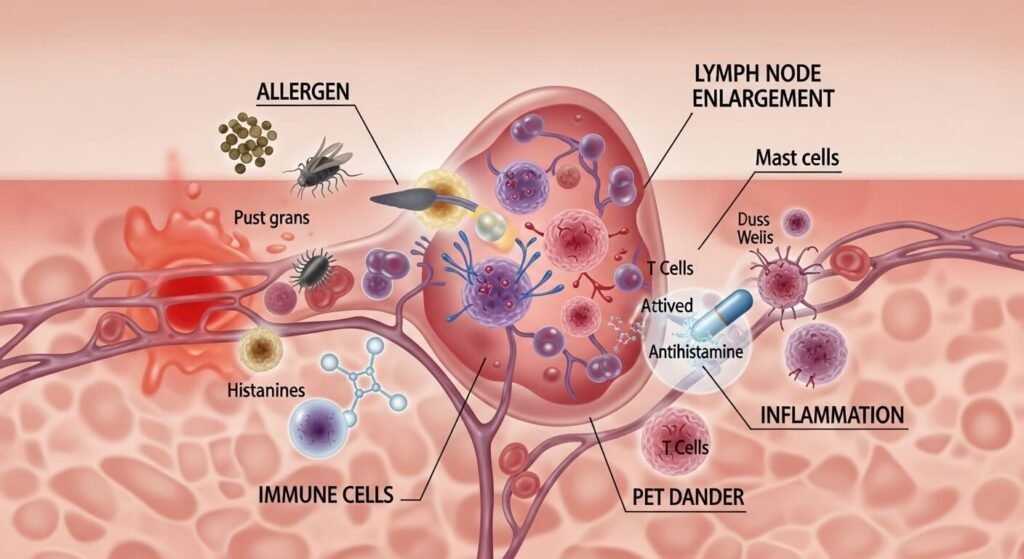
Allergies trigger the immune system to release chemicals like histamine. These chemicals cause inflammation in the nose, throat, and sinuses. When this inflammation is strong or long-lasting, nearby lymph nodes may become slightly enlarged as they help manage the immune response.
In most cases, swollen lymph nodes from allergies are:
- Mild
- Soft or slightly tender
- Temporary
- Linked with other allergy symptoms
This is how allergy lymph node enlargement may occur without infection.
Common Causes of Allergy-Related Lymph Node Swelling
1. Immune System Overreaction
When allergens enter the body, the immune system reacts as if they are harmful. This reaction can activate nearby lymph nodes, causing them to swell for a short time.
2. Sinus and Nasal Inflammation
Seasonal or year-round allergies often cause sinus congestion. This pressure and irritation can affect lymph nodes in the neck and jaw area, leading to allergy related lymph node swelling.
3. Secondary Infections
Allergies can block nasal passages and reduce natural drainage. This sometimes leads to sinus or ear infections, which are a more common reason for noticeable lymph node swelling.
4. Long-Term or Severe Allergies
People with chronic allergies may experience repeated immune activity. Over time, this can result in lymph node enlargement due to allergies, especially during flare-ups.
Symptoms to Look Out For
If swelling is linked to allergies, symptoms are usually mild and come with typical allergy signs.
Common Symptoms
- Small, soft swelling in the neck or under the jaw
- Mild tenderness when touched
- Sneezing and runny nose
- Nasal congestion
- Itchy or watery eyes
- Post-nasal drip
When these symptoms improve, the lymph nodes usually return to normal size. This pattern is typical of swollen lymph nodes from allergies.
Symptoms That Need Attention
Swelling may not be allergy-related if you notice:
- Fever
- Severe pain
- Hard or fixed lymph nodes
- Rapid growth
- Night sweats
- Unexplained weight loss
These signs require medical evaluation.
Where Does Allergy-Related Lymph Node Swelling Usually Occur?
The location of swelling often matches where the allergen affects the body most.
Common areas include:
- Neck (most common)
- Under the chin
- Behind the ears
- Upper throat region
Swelling in these areas often supports the idea of allergy lymph node enlargement, especially when combined with nasal or sinus symptoms.
How Doctors Diagnose the Cause
Doctors usually start with a simple evaluation.
Medical History
They ask about:
- Allergy symptoms
- Duration of swelling
- Recent infections
- Exposure to allergens
Physical Examination
Doctors check:
- Size and texture of the lymph nodes
- Pain or tenderness
- Mobility of the node
Additional Tests (If Needed)
If swelling lasts too long or looks unusual, tests may include:
- Blood tests
- Imaging scans
- Allergy testing
This helps rule out infection or other conditions and confirm lymph node enlargement due to allergies.
Treatment Options: What Really Helps
The best way to reduce swelling is to treat the underlying allergy.
1. Allergy Medications
- Antihistamines help reduce inflammation
- Nasal sprays calm nasal swelling
- Decongestants relieve sinus pressure
These treatments often reduce allergy lymph node enlargement naturally.
2. Home Care
Simple steps can ease discomfort:
- Warm compress on the swollen area
- Drinking plenty of water
- Adequate rest
- Saltwater gargles for throat irritation
3. Long-Term Allergy Control
For frequent allergy problems:
- Allergen avoidance
- Regular allergy medication
- Immunotherapy (in selected cases)
Long-term control reduces repeated immune reactions and prevents recurrence.
Allergies vs Infections: Key Differences
| Feature | Allergy-Related | Infection-Related |
| Fever | Rare | Common |
| Pain | Mild | Moderate to severe |
| Duration | Short | Longer |
| Other symptoms | Sneezing, itching | Chills, sore throat |
Understanding this difference helps identify whether can allergies cause swollen lymph nodes in your case or if another cause is likely.
When Should You See a Doctor?
You should seek medical advice if:
- Swelling lasts longer than two weeks
- Lymph nodes feel hard or fixed
- Pain increases
- Fever develops
- Swelling keeps growing
These signs suggest something other than allergy lymph node enlargement and should not be ignored.
Prevention Tips
To reduce the risk of allergy-related swelling:
- Avoid known allergens
- Keep indoor air clean
- Use allergy medicine early
- Stay hydrated
- Maintain good nasal hygiene
Preventive care lowers immune stress and helps avoid allergy lymph node enlargement during peak seasons.
Conclusion
Swollen lymph nodes can feel alarming, but they are often a normal immune response. In some people, allergies trigger inflammation strong enough to cause temporary swelling. Understanding the connection between allergies and lymph nodes helps reduce fear and promotes proper care. With good allergy management, symptoms usually improve quickly. If swelling lasts or worsens, medical evaluation ensures safety and peace of mind.
By recognizing symptoms early and treating allergies correctly, most cases of allergy lymph node enlargement can be managed easily and safely.