
Introduction
Many new pet owners wonder: what do iguanas eat? Iguanas need special diets to stay healthy. Feeding them the wrong food can cause sickness, weak bones, and slow growth.
The solution is simple. Focus on fresh, leafy greens, vegetables, and small amounts of fruit. Knowing proper iguana food, safe options, and feeding schedules ensures a healthy pet.
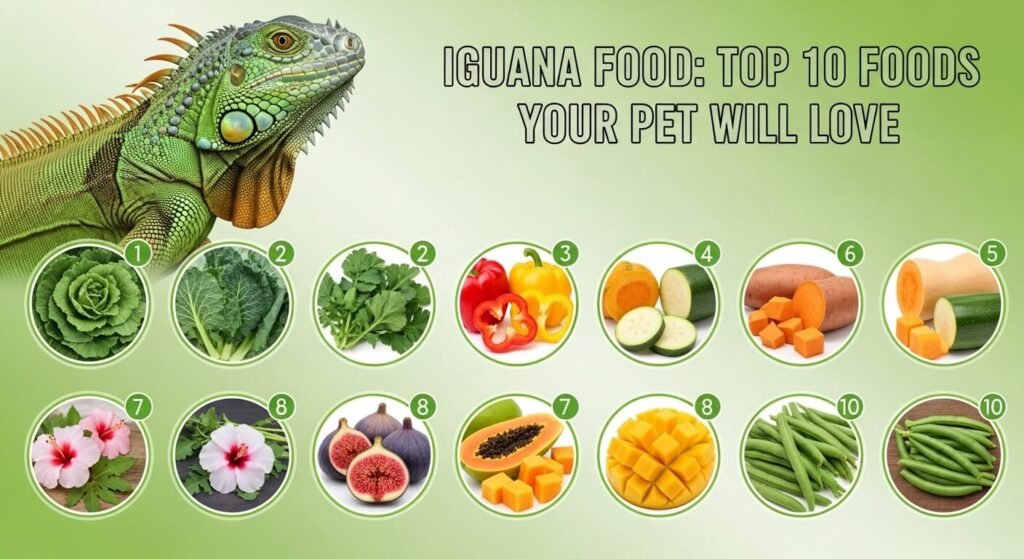
1. Leafy Greens – Daily Essentials
Leafy greens are the main part of iguana food. They provide calcium and fiber.
- Collard greens
- Mustard greens
- Dandelion greens
- Turnip greens
- Romaine lettuce
These greens strengthen bones and support digestion. Always wash leaves thoroughly before feeding.
2. Vegetables – Variety & Nutrition
Vegetables give essential vitamins and minerals. They also make meals more interesting.
- Zucchini
- Bell peppers
- Green beans
- Cucumber
- Butternut squash
Vegetables should make up around 30–40% of an iguana’s daily diet.
3. Fruits – Occasional Treats
Fruits are sweet but should be given sparingly. Too much sugar can harm iguanas.
- Mango
- Papaya
- Berries
- Figs
- Melon
Fruit should not exceed 10% of iguana food. Treat fruits as a snack, not a staple.
4. Flowers – Safe Edible Options
Some flowers are safe and enjoyable for iguanas. They add variety and enrichment.
- Hibiscus
- Nasturtiums
- Rose petals
Make sure flowers are pesticide-free before offering them. Avoid all toxic flowers.
5. Commercial Diets – Supplemental Food
Pellets or commercial iguana food can fill nutritional gaps. They are convenient but should not replace fresh foods.
- Choose products made specifically for iguanas.
- Use sparingly to supplement greens and vegetables.
Commercial diets support iguana diet and nutrition when fresh options are limited.
6. Calcium – Vital for Health
Even with good iguana food, calcium supplements are often needed.
- Dust leafy greens with calcium 2–3 times per week.
- UVB lighting is essential for calcium absorption.
Calcium prevents metabolic bone disease and promotes strong growth.
7. Safe Foods – Key Choices
Always focus on safe foods for iguanas. These are plant-based and easy to digest.
- Dark leafy greens
- Fresh vegetables
- Occasional fruit
- Edible flowers
Avoid animal products, processed foods, and toxic plants.
8. Foods to Avoid
Some foods are harmful and can cause illness.
- Avocado – toxic
- Spinach – blocks calcium
- Citrus fruits – too acidic
- Meat or eggs – can harm kidneys
Knowing what not to feed is as important as choosing safe foods.
9. Iguana Food Chart – Balanced Diet
A simple iguana food chart helps plan meals:
| Food Type | Daily Portion |
| Leafy greens | 60% |
| Vegetables | 30% |
| Fruits | 10% |
| Supplements | As needed |
This chart makes feeding easier and ensures proper nutrients every day.
10. Feeding Tips – Keep Iguanas Healthy
- Chop food finely for easy eating.
- Offer fresh food daily and remove leftovers.
- Provide clean water.
- Rotate foods to prevent picky behavior.
Following these tips keeps your iguana active, healthy, and happy.
Conclusion
Proper iguana food is essential for a long, healthy life. Focus on leafy greens, vegetables, and occasional fruit. Avoid toxic plants and animal products. Use supplements and UVB lighting for strong bones.
A balanced diet with consistent feeding routines ensures your iguana thrives and enjoys life. Healthy iguana diet and nutrition makes your pet happy and active every day.
FAQ
1. What do iguanas eat daily?
Mostly leafy greens and vegetables, with small amounts of fruit.
2. Can iguanas eat meat?
No. They are strict herbivores.
3. How often should iguanas be fed?
Offer fresh food daily. Remove leftovers.
4. Do iguanas need calcium supplements?
Yes, especially young iguanas.
5. Are flowers safe for iguanas?
Yes, edible flowers like hibiscus and nasturtiums are safe if free from chemicals.