
Introduction
Exploring new cuisines is exciting, but Nicaraguan food can be a mystery if you don’t know where to start. Many travelers wonder what to eat or which dishes are most popular. The problem is, without a clear guide, it’s easy to miss out on traditional flavors. The solution is simple: this guide will walk you through the most famous dishes, common meals, and even recipes you can try at home. By the end, you’ll understand why Nicaraguan cuisine is beloved by locals and food enthusiasts alike.
What Is Nicaraguan Cuisine?
Nicaraguan cuisine is a fusion of indigenous and Spanish traditions, shaped by local ingredients like corn, beans, plantains, and yuca. Each region has its specialties:
- Pacific coast: rice, beans, and smoky flavors.
- Caribbean coast: seafood, coconut, and tropical spices.
At the heart of traditional Nicaraguan dishes are simple, fresh ingredients combined to create rich and hearty flavors.
Key Ingredients in Nicaraguan Food
Understanding the main ingredients helps you appreciate the cuisine:
- Rice and beans – often served together as gallo pinto, a breakfast favorite.
- Corn (maíz) – used in tortillas, nacatamales, and güirilas.
- Plantains – fried green (tostones) or ripe (maduros).
- Yuca (cassava) – a starchy root used in dishes like vigorón.
- Meats – pork, beef, and chicken are common in everyday meals.
These ingredients form the base of most Nicaraguan meals and are used creatively in many dishes.
Popular Nicaraguan Dishes
1. Gallo Pinto
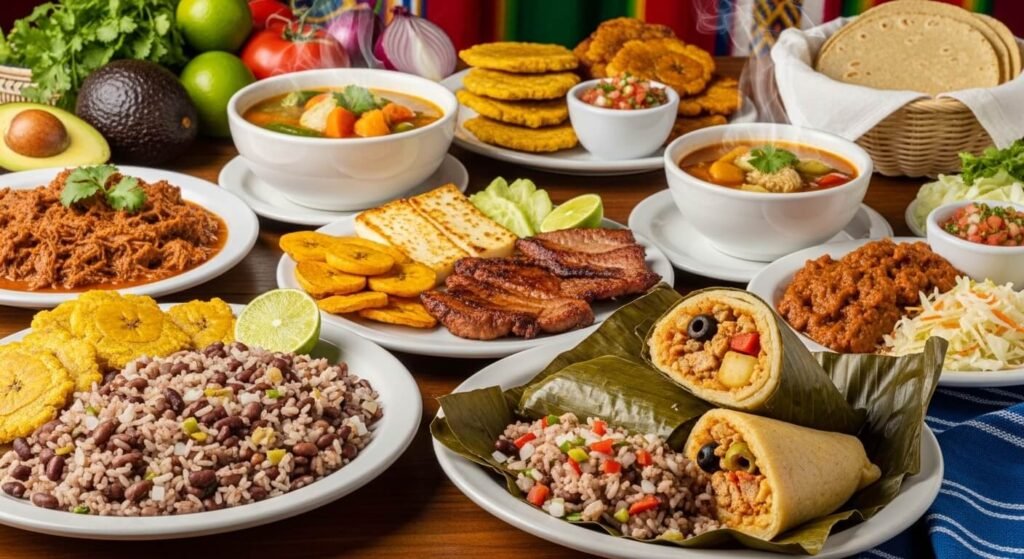
The most famous Nicaraguan food, gallo pinto, is a simple mixture of rice and beans sautéed with onions and spices. Often served with eggs, cheese, and fried plantains, it’s eaten at any time of day, especially breakfast.
2. Nacatamales
Nacatamales are large corn dough tamales filled with pork, rice, potatoes, and vegetables, wrapped in banana leaves, and steamed slowly. Traditionally, families prepare them on weekends or for special occasions.
3. Quesillo
A simple street food, quesillo is a soft corn tortilla filled with cheese, pickled onions, and sour cream. It’s light, delicious, and especially popular in León.
4. Vigorón
A street favorite, vigorón combines boiled yuca, fried pork skin (chicharrones), and cabbage salad served on a banana leaf.
5. Indio Viejo
A traditional beef stew with corn dough, onions, peppers, and sour orange. It’s rich in flavor and represents the country’s indigenous heritage.
6. Baho
Steamed beef with yuca and plantains, often served with vinegar cabbage. Perfect for weekend family meals.
7. Sopa de Mondongo
A comforting tripe soup with vegetables and citrus, usually served with avocado or cheese on the side.
8. Arroz a la Valenciana
A festive rice dish with meats, vegetables, and sometimes coconut flavors, similar to Spanish paella.
9. Pescado a la Tipitapa
Fresh fish, usually guapote or red snapper, fried and served with tomato sauce. A coastal specialty best enjoyed fresh.
Daily Nicaraguan Meals
| Meal | Typical Foods |
| Breakfast | Gallo pinto, eggs, cheese, plantains, tortillas |
| Lunch | Beef, Indio Viejo, Baho, or grilled meats |
| Dinner | Lighter meals or leftovers, often rice and beans |
Most meals are hearty and shared with family. Traditional Nicaraguan dishes are often prepared in large portions to bring people together.
Nicaraguan Recipes You Can Try
Gallo Pinto (Simplified Recipe)
- Cook rice and beans separately.
- Sauté onions and garlic in oil.
- Mix rice and beans with the sautéed onions.
- Serve with eggs or cheese.
Nacatamal (Simplified Recipe)
- Prepare corn masa dough.
- Add pork, rice, potatoes, and vegetables.
- Wrap in banana leaves and steam for 2–3 hours.
These recipes allow you to bring Nicaraguan food flavors into your home kitchen.
Drinks and Desserts
To complete a meal, try these:
- Arroz con leche – sweet rice pudding.
- Rosquillas – crunchy corn cookies.
- Buñuelos – fried dough balls with sugar.
These treats are often enjoyed during holidays and celebrations.
Why Nicaraguan Food Is Special
- Simple ingredients, big flavors: Meals rely on fresh, locally grown produce.
- Family and tradition: Many dishes are prepared for sharing with family and community.
- Cultural diversity: Every region offers unique flavors and cooking methods.
Exploring Nicaraguan cuisine gives you more than food—it’s a taste of the country’s culture and history.
Conclusion
Nicaraguan food is rich, diverse, and full of flavor. From everyday staples like gallo pinto to festive dishes like arroz a la Valenciana, there’s something for everyone to enjoy. Whether you’re visiting Nicaragua or trying traditional Nicaraguan dishes at home, this cuisine offers a delicious glimpse into the heart of the country.
Frequently Asked Questions (FAQ)
1. What is Nicaraguan food?
Nicaraguan food refers to the traditional dishes and flavors of Nicaragua, blending indigenous ingredients like corn, beans, and yuca with Spanish influences.
2. What are popular Nicaraguan dishes?
Popular dishes include gallo pinto (rice and beans), nacatamales (corn tamales with pork), quesillo (cheese tortilla), vigorón, baho, and Indio Viejo.
3. What ingredients are commonly used in Nicaraguan cuisine?
Staple ingredients are rice, beans, corn, plantains, yuca, pork, beef, chicken, and tropical fruits. Many dishes also include fresh vegetables and local spices.
4. Can I make Nicaraguan food at home?
Yes! Dishes like gallo pinto and simplified nacatamales can be prepared at home using basic ingredients. They offer an authentic taste of traditional Nicaraguan dishes.
5. What are typical Nicaraguan meals?
- Breakfast: Gallo pinto, eggs, cheese, and plantains.
- Lunch: Hearty dishes like Baho, Indio Viejo, or grilled meats.
- Dinner: Lighter meals or leftovers, often rice and beans.
6. What desserts and drinks are popular in Nicaragua?
Sweet treats include arroz con leche (rice pudding), rosquillas (corn cookies), and buñuelos (fried dough balls). They are often enjoyed with coffee fresh fruit drinks.