
Introduction
Seeing oily urine can be alarming because your pee looks different from normal. The main problem many people face is not knowing what it means — whether it’s a harmless change or a sign of an underlying health issue. In many cases, simple causes like dehydration or diet are responsible and resolve with basic care. But if the oily appearance continues, it could indicate a more serious issue, especially related to how your kidneys filter waste. In this article, we explain common oily urine causes, symptoms to watch for, when it might point to a kidney problem, and when it’s important to see a doctor.
What Does Oily Urine Look Like?
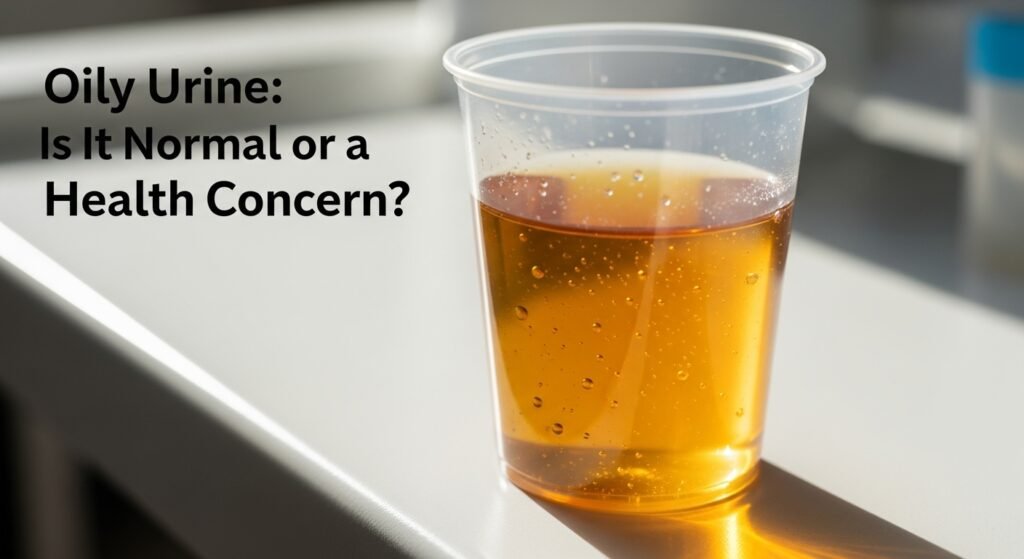
When people talk about oily urine, they mean urine that shows a greasy or rainbow-like film on the surface of the toilet water. In some cases, you might see tiny droplets that look like oil, or a thin shiny layer that doesn’t disappear quickly after flushing. This appearance is usually due to certain substances in the urine rather than literal oil from inside the bladder.
Common Oily Urine Causes
There are many potential reasons why urine might look oily or greasy. Some are harmless and temporary, while others require medical attention.
1. Dehydration
When your body doesn’t have enough fluid, urine becomes concentrated. This makes any fats or other substances in your urine more visible and can create an oily or shiny appearance. You might also notice dark yellow urine, dry mouth, or thirst with dehydration.
2. Diet and High-Fat Foods
Very fatty foods or a diet high in oils and fats can sometimes cause a temporary oily film when your body excretes small amounts of undigested fats. This is more common when digestion or absorption is not optimal.
3. Ketosis
Ketosis happens when your body uses fat instead of carbohydrates for energy. This can occur on very low-carb diets, fasting, or in some medical conditions like diabetes. Ketones produced during ketosis may appear in your urine and contribute to an oily look.
4. Vitamins and Supplements
Certain vitamins, especially large doses of water-soluble or fat-soluble vitamins, can change urine appearance. The extra vitamins pass through your kidneys into the urine.
5. Chyluria
Chyluria is a rare cause of oily or milky urine. It happens when lymphatic fluid, which contains fats and proteins, leaks into the urinary system. The urine may appear milky, oily, or creamy because of these fat droplets. This condition may be linked to lymphatic system issues or infections.
6. True Lipiduria and Kidney Filters
When fats or lipids show up in urine due to kidney filtering problems, this is called lipiduria. Conditions like nephrotic syndrome — where the kidney’s filters are damaged — allow fats and proteins to pass into urine, potentially making it look greasy or oily.
External contamination (like oil residue from the toilet surface or hygiene products) can sometimes make urine appear oily without it actually being caused by a health issue, so always check if nothing else explains the look before assuming a medical problem.
Oily Urine Symptoms to Watch For
Not all changes in urine need immediate concern, but certain symptoms alongside oily or greasy urine suggest a more serious problem:
- Persistent oily look for several days
- Pain or burning during urination
- Blood in the urine
- Strong or foul odor
- Swelling in legs, ankles, or face
- Frequent urination or urgency
- Fatigue or unusual weakness
- Unexplained weight loss
These symptoms, especially when combined with persistent oily urine, may point to issues like kidney damage, infection, or metabolic problems.
Understanding Oily Film on Urine and What It Means
The term oily film on urine refers to a thin layer or sheen that stays on the toilet water even after you flush. This is different from foamy urine caused by protein or bubbles that disappear quickly. An oily film often indicates the presence of fats, lipids, or concentrated substances in the urine.
This oily appearance is not caused by actual oil from inside your bladder, but by substances your body is excreting because of diet, dehydration, or rarely, dysfunction in kidney filtering or lymphatic leaks.
Oily Urine and Kidney Health
One important concern with persistent oily urine is its potential link to kidney issues. The kidneys normally filter blood, retaining important proteins and fats while excreting waste. When the kidney filters are damaged, proteins and lipids may slip into the urine, changing its appearance.
Proteinuria and Nephrotic Syndrome
Excess protein in urine (proteinuria) is not the same as oily urine, but when protein leaks alongside fats, urine may appear foamy, frothy, or oily. This is often a sign of kidney dysfunction, which may result from diabetes, high blood pressure, or immune conditions like lupus.
Chyluria and Lymphatic System Causes
Chyluria specifically means lymphatic fluid — rich in fats — is present in urine due to abnormal connections between the lymphatic system and urinary tract. This can make urine look milky white in addition to oily, and usually requires medical evaluation.
When to See a Doctor
A single episode of oily urine after a fatty meal or mild dehydration often isn’t serious. However, see a doctor if:
The oily appearance persists beyond a couple of days
It comes with pain, burning, or blood
You have swelling, fatigue, or other systemic symptoms
You have diabetes or high blood pressure
A healthcare provider may perform tests like urinalysis to check for fats, proteins, ketones, and signs of infection or kidney damage. Further tests, such as blood panels or imaging, may be recommended based on initial findings.
Simple Steps You Can Take at Home
If you first notice oily urine, these steps might help:
Drink more water: Staying hydrated often reduces urine concentration and appearance of oiliness.
Check your diet: Reducing high-fat meals temporarily may help determine if food is the cause.
Review supplements: Large doses of vitamins can affect urine appearance; pause them to see if things change.
If changes persist despite these measures, talk to a doctor.
Conclusion
Oily urine refers to urine with a greasy appearance or a thin film on the surface. Many oily urine causes are harmless and temporary, such as dehydration, recent high-fat meals, ketosis from diet, or vitamin supplementation. However, persistent oily urine with concerning symptoms may indicate an underlying health issue, including problems with kidney filtering or rare conditions like chyluria. If the symptom continues, is accompanied by pain or blood, or if you have risk factors like diabetes or high blood pressure, seek medical evaluation for proper diagnosis and care.