
Introduction
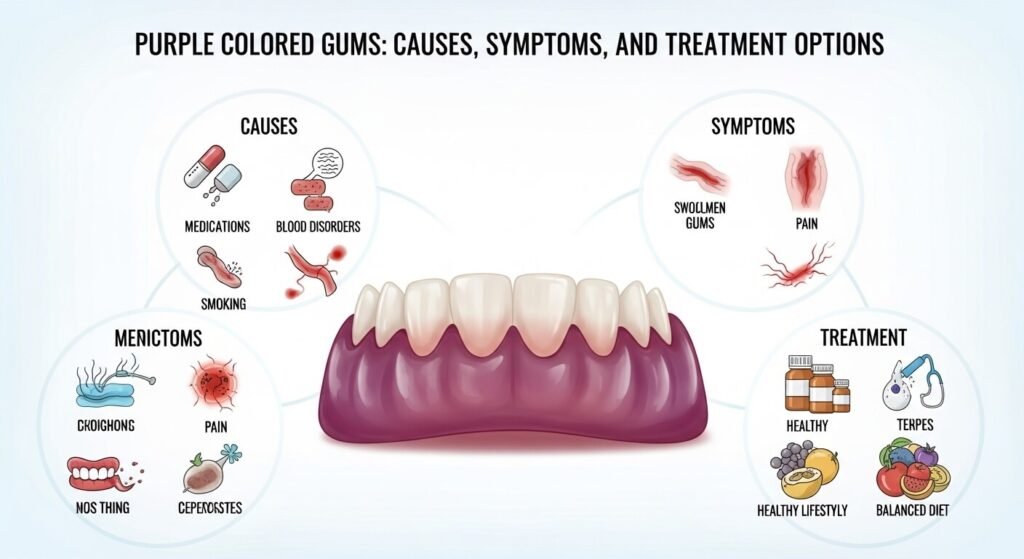
Healthy gums should be firm and pink. If you suddenly notice purple colored gums, it can be a warning sign that something is wrong. This change may happen due to gum disease, poor oral hygiene, smoking, vitamin deficiency, or an underlying health issue. The solution depends on the cause, but in most cases, early dental care, better hygiene habits, and lifestyle improvements can restore gum health. In this detailed guide, we will explain everything in simple language so you can understand the causes, symptoms, treatments, and prevention strategies clearly.
Understanding Healthy Gum Color
Before discussing problems, it is important to know what healthy gums look like.
Healthy gums are:
- Light pink (or naturally darker depending on skin tone)
- Firm and tight around teeth
- Free from swelling
- Not bleeding during brushing or flossing
- Smooth in texture
Some people naturally have darker gums due to melanin pigmentation. This is normal and not a disease. However, if the gum color changes suddenly or becomes uneven, it may indicate gum discoloration or infection.
What Does It Mean If Gums Turn Purple?
When gums appear dark red, bluish, or deep purple, it often signals inflammation or reduced blood flow. In many cases, purple colored gums are linked to bacterial infection along the gum line. The tissue becomes irritated, swollen, and darker due to increased blood accumulation.
Sometimes discoloration is temporary, such as after injury. But if it lasts more than a few days or is accompanied by bleeding or pain, professional evaluation is necessary.
Main Causes (Cluster Topic: Purple Gums Causes)
Understanding the root causes helps in choosing the right treatment. Below are the most common purple gums causes explained clearly.
1. Gum Disease (Most Common Cause)
Gum disease is the leading reason for purple colored gums.
Gingivitis (Early Stage)
- Caused by plaque buildup
- Redness and swelling
- Bleeding during brushing
- Mild discoloration
Gingivitis is reversible with proper care.
Periodontitis (Advanced Stage)
- Deep purple or dark gum tissue
- Receding gums
- Persistent bad breath
- Loose teeth
This stage can damage bone and may lead to tooth loss if untreated.
2. Poor Oral Hygiene
Not brushing or flossing regularly allows bacteria to grow. Over time, this causes gum inflammation and unhealthy gum color. Plaque hardens into tartar, which cannot be removed without professional cleaning.
3. Smoking and Tobacco Use
Smoking reduces oxygen supply in gum tissue and weakens the immune system. It also increases pigmentation in the mouth. Smokers are at higher risk of developing gum disease symptoms such as swelling and bleeding along with discoloration.
4. Vitamin Deficiency
Lack of essential nutrients weakens gum tissue.
- Vitamin C deficiency can cause swollen, bleeding gums.
- Vitamin K deficiency affects clotting and may increase bleeding.
- Poor diet reduces the body’s ability to fight infection.
Nutritional imbalance often contributes to gum discoloration.
5. Medical Conditions
Certain systemic health problems affect circulation and oxygen levels.
These include:
- Diabetes
- Heart disease
- Blood disorders
- Respiratory conditions
Poor oxygen supply may give gums a bluish or purple tone.
6. Medication Side Effects
Some medicines can cause pigmentation changes or gum overgrowth. If discoloration begins after starting a new medication, consult your doctor.
7. Injury or Trauma
Aggressive brushing, dental procedures, or accidental injury may bruise gum tissue. Bruising can temporarily make gums look dark purple. This usually heals within days.
Symptoms to Watch For (Cluster Topic: Gum Disease Symptoms)
When discoloration appears, look for additional warning signs. These may indicate a serious condition.
Common symptoms include:
- Bleeding during brushing
- Swollen or puffy gums
- Pain or tenderness
- Persistent bad breath
- Gum recession
- Loose teeth
- Pus near the gum line
If these symptoms occur with purple colored gums, immediate dental care is recommended.
Diagnosis: How Dentists Identify the Cause
Dentists use several methods to determine the problem:
- Visual examination of gum tissue
- Measuring pocket depth around teeth
- Checking plaque and tartar buildup
- Reviewing medical history
- Dental X-rays (if needed)
- Blood tests for systemic issues
Proper diagnosis ensures the correct treatment plan.
Treatment Options
Treatment depends on the cause of discoloration. The earlier treatment begins, the better the results.
1. Professional Cleaning
For mild cases, removing plaque and tartar through professional cleaning often restores healthy gum color.
2. Scaling and Root Planing
For advanced gum infection, deep cleaning below the gum line removes bacteria and helps gums reattach to teeth.
3. Improved Oral Hygiene Routine
Daily habits play a key role in preventing and reversing early gum problems.
- Brush twice daily with fluoride toothpaste
- Floss once daily
- Use antibacterial mouthwash
- Replace toothbrush every 3 months
Good oral hygiene reduces inflammation and prevents further gum discoloration.
4. Nutritional Improvement
Eating a balanced diet rich in fruits and vegetables supports gum health.
Include:
- Citrus fruits for Vitamin C
- Leafy greens for Vitamin K
- Dairy products for calcium
- Adequate water intake
Nutrition strengthens gum tissue and supports healing.
5. Quit Smoking
Stopping tobacco use improves blood flow and reduces inflammation. Many patients notice healthier gums within weeks after quitting.
6. Managing Medical Conditions
If discoloration is related to diabetes or heart disease, proper management of the condition improves oral health.
7. Medication Review
Doctors may adjust medication if it contributes to gum problems. Never stop medication without professional advice.
Can Gum Color Return to Normal?
In many cases, yes. If purple colored gums are caused by inflammation or infection, proper treatment can restore natural color. However, if the discoloration is due to natural pigmentation, it may remain darker but is not harmful.
Early care provides the best outcome.
Prevention Strategy (Cluster Topic: Unhealthy Gum Color Prevention)
Preventing unhealthy gum color is easier than treating it.
Follow these steps:
- Maintain daily brushing and flossing
- Visit the dentist every 6 months
- Avoid tobacco products
- Limit sugary foods
- Drink plenty of water
- Eat a balanced diet
Regular care keeps gums strong and healthy.
The Connection Between Oral Health and Overall Health
Gum health is closely connected to overall health. Studies show links between gum disease and:
- Heart disease
- Diabetes complications
- Respiratory infections
- Pregnancy complications
This means that purple colored gums should not be ignored, as they may indicate deeper health concerns.
When to Seek Immediate Help
You should consult a dentist immediately if:
- Discoloration lasts more than a week
- There is heavy bleeding
- Pain becomes severe
- Teeth feel loose
- Swelling spreads
Quick action prevents permanent damage.
Conclusion
Noticing purple colored gums can be worrying, but understanding the causes makes it easier to act quickly. Whether due to gum disease, poor hygiene, smoking, nutritional deficiencies, or medical conditions, most problems can be treated effectively. The key is early diagnosis, consistent oral care, and healthy lifestyle choices. If you observe gum discoloration along with other gum disease symptoms, do not delay seeking professional advice. Healthy gums are not just about a beautiful smile—they are essential for your overall health and well-being.