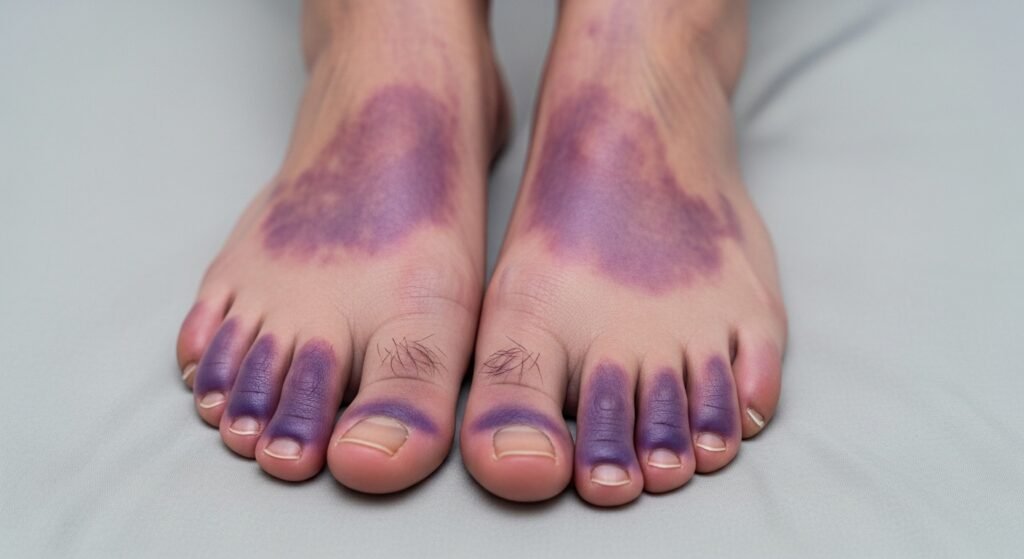

If you notice purple feet, it can feel scary and confusing. Many people worry about heart problems or poor blood flow. In some cases, the color change happens because of cold weather or sitting too long. In other cases, it may be linked to circulation issues or medical conditions. The good news is that understanding the cause helps you choose the right solution. Simple lifestyle changes may fix mild cases, but serious symptoms require medical care. In this detailed guide, we will explain everything in clear and simple language.
What Does It Mean When Feet Turning Purple Happens?
When you see feet turning purple, it usually means that blood is not flowing normally. Blood carries oxygen. When oxygen levels drop or blood moves slowly, the skin can look blue or purple.
This color change may be:
- Light purple
- Dark red
- Bluish purple
- Patchy or uneven
Sometimes it happens only in cold weather. Sometimes it stays for a long time.
Why Are My Feet Purple?
Many people ask, why are my feet purple even when they feel fine. The answer depends on how long the color lasts and if other symptoms are present.
Temporary causes include:
- Sitting or standing too long
- Crossing your legs
- Cold temperatures
- Tight shoes
More serious causes include:
- Blood circulation problems
- Raynaud’s phenomenon
- Vein disorders
- Artery blockage
- Heart or lung conditions
The key is to notice other symptoms like pain, swelling, or breathing problems.
Purple Feet Causes: Common Reasons Explained
Let’s look at the most common purple feet causes in easy terms.
1. Poor Blood Circulation
One major reason for poor circulation purple feet is slow blood flow in the legs.
When blood does not move properly:
- Feet may feel cold
- Skin may look purple
- Tingling may happen
- Swelling can appear
People with diabetes, high blood pressure, or smoking habits have a higher risk of circulation problems.
2. Raynaud’s Phenomenon
Raynaud’s is a condition where small blood vessels narrow in cold weather or stress.
Symptoms include:
- Toes turn white, then blue or purple
- Cold feeling in feet
- Numbness or tingling
- Color returns after warming up
This condition is often temporary but can be uncomfortable.
3. Peripheral Artery Disease (PAD)
PAD happens when arteries become narrow due to plaque buildup. This reduces blood flow to the legs and feet.
Symptoms may include:
- Pain while walking
- Weak pulse in feet
- Slow healing wounds
- Color changes
This condition needs medical attention.
4. Venous Insufficiency
This happens when leg veins cannot send blood back to the heart properly. Blood collects in the lower legs.
You may notice:
- Swelling
- Heavy feeling in legs
- Dark skin patches
- Visible veins
5. Acrocyanosis
Acrocyanosis is usually harmless. It causes constant bluish or purple color in the feet, especially in cold weather.
It does not usually cause pain.
6. Heart or Lung Problems
In rare cases, purple feet can be linked to low oxygen levels in the blood due to heart or lung disease.
Warning signs:
- Shortness of breath
- Chest pain
- Fast heartbeat
- Extreme tiredness
If these symptoms appear, seek medical care immediately.
When Should You Worry?
You should see a doctor if:
- Color stays purple for many days
- Pain becomes severe
- One foot is more affected than the other
- Swelling appears suddenly
- You feel chest pain or breathing difficulty
Persistent feet turning purple should not be ignored.
How Doctors Find the Cause
To understand the reason for purple feet, doctors may:
- Check your pulse in the feet
- Measure oxygen levels
- Order blood tests
- Perform ultrasound to see blood flow
- Check blood pressure
These tests help find circulation problems early.
Treatment Options
Treatment depends on the cause.
If It’s Circulation Related
- Regular walking
- Leg elevation
- Compression socks
- Healthy diet
- Stop smoking
If It’s Raynaud’s
- Keep feet warm
- Avoid sudden cold exposure
- Reduce stress
- Medication in severe cases
If It’s Vein or Artery Disease
- Medical treatment
- Lifestyle changes
- Sometimes minor procedures
If It’s Heart-Related
- Immediate specialist care
- Medication
- Ongoing monitoring
Home Tips to Improve Blood Flow
If the condition is mild, you can try:
- Move your feet often
- Stretch ankles daily
- Drink enough water
- Avoid tight footwear
- Massage feet gently
- Keep feet warm in winter
These simple steps may improve circulation naturally.
Risk Factors
Some people are more likely to experience this issue:
- Smokers
- People with diabetes
- Overweight individuals
- Older adults
- Those who sit for long hours
Managing these factors helps reduce risk.
Temporary vs Serious Causes
| Temporary Causes | Serious Causes |
| Cold exposure | Artery blockage |
| Sitting too long | Blood clot |
| Tight shoes | Heart disease |
| Mild circulation change | Severe vascular disease |
Knowing the difference helps reduce fear.
Can Lifestyle Changes Prevent Purple Feet?
Yes. Healthy habits improve blood circulation.
- Exercise daily
- Eat balanced meals
- Maintain healthy weight
- Avoid smoking
- Manage blood pressure and sugar
- Stay active during long sitting hours
Healthy blood vessels mean healthier feet.
Frequently Asked Questions
Are purple feet always dangerous?
No. Sometimes cold weather or sitting too long causes temporary color change.
Can dehydration affect foot color?
Yes. Low fluid levels can reduce blood flow slightly.
Is this common in older adults?
Yes. Aging naturally affects circulation.
Conclusion
Noticing purple feet can make you anxious, but the cause is often simple, like cold exposure or slow circulation. In mild cases, lifestyle changes and movement improve blood flow. However, persistent discoloration, pain, swelling, or breathing problems may signal a more serious condition such as artery disease or heart issues.
Pay attention to your symptoms. If the color change lasts or worsens, consult a healthcare professional. Early diagnosis ensures proper treatment and protects your overall health.
Your body gives signals for a reason. Understanding them helps you stay safe and healthy.
Red More:aspertaan