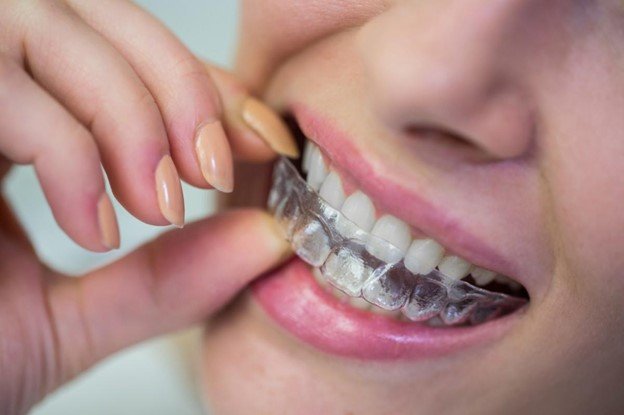

You’ve probably spent more time than you’d like to admit scrolling through smile transformation videos. The before-and-after ones. The ones where someone pulls out a clear tray and reveals perfectly aligned teeth. And somewhere between the third and fourth video, you start wondering whether that could be me?
Here’s the thing: the demand for Invisalign in India has exploded in recent years, and for good reason. As of now, over 18 million people worldwide have completed Invisalign treatment.
India is rapidly becoming one of the fastest-growing markets in the Asia-Pacific region a clear sign that Indians are done settling for metal-bracket smiles when a better option exists. But before you book that consultation, there’s quite a bit worth understanding. This guide covers everything that Invisalign actually is, whether you qualify, what the process looks like, and yes, what it’s going to cost you.
So, What Exactly Is Invisalign?
Think of Invisalign as orthodontics, but reimagined. Instead of metal brackets glued to your teeth with wires threaded through them, Invisalign uses a series of custom-made, clear plastic trays called aligners that fit snugly over your teeth. Each tray is slightly different from the last, applying gentle pressure to nudge your teeth incrementally into their correct position.
The material matters here. These aligners are made from SmartTrack, a medical-grade, BPA-free thermoplastic that’s FDA-approved and free of latex and gluten too. They’re trimmed right along your gum line, which means they’re nearly invisible when worn. Your colleagues won’t notice. Your friends probably won’t either. Most people don’t, unless you tell them.
What makes modern Invisalign even more impressive is the technology behind it. Before a single tray is made, your orthodontist uses an intraoral 3D scanner like the iTero Element to create a precise digital map of your mouth. You then get to see a simulation of your expected results before treatment even begins. It’s a bit like a GPS route preview for your teeth.
Are You Actually a Good Candidate?
Not everyone is. Let’s be honest about that.
Invisalign works beautifully for mild-to-moderate orthodontic issues, such as crowding, gaps between teeth, overbites, underbites, crossbites, and open bites. Adults and teenagers tend to be the best candidates, largely because the treatment depends on wearing the aligners consistently (more on that in a moment). It’s particularly popular among working professionals who can’t imagine sitting through client meetings with a mouth full of metal.
That said, severe skeletal discrepancies or highly complex jaw issues may still require traditional braces or at least a combination approach. A good orthodontist will tell you this honestly rather than just take your money. If anyone promises Invisalign can fix everything without even examining you properly, walk away.
The Treatment Process, Step by Step
This is where people’s anxiety usually lives. What does it actually involve? How many appointments? How long will this take?
Here’s a rough walkthrough. First comes the consultation, where your orthodontist examines your teeth, takes a 3D intraoral scan, and creates a ClinCheck treatment plan, which is essentially a digital animation showing how your teeth will move at each stage. You approve the plan, and the aligners are manufactured and shipped.
Once treatment starts, you’ll wear each set of aligners for about one to two weeks before switching to the next. You check in with your orthodontist every six to eight weeks. Treatment duration varies; minor corrections can wrap up in six to eight months, while more involved cases can take 18 to 24 months. After your final tray, you’ll move into a retainer phase to maintain the results. Skipping this part is a common mistake. Don’t skip this part.
What Does Invisalign Cost in India?
Let’s talk numbers because this is often the deciding factor, and there’s a lot of noise around it.
The Invisalign cost in India typically ranges between ₹1,25,000 and ₹3,50,000, according to Invisalign India’s official pricing guidelines. Some complex full-mouth cases at premium clinics can go higher, while simpler corrections may fall at the lower end.
The cost isn’t arbitrary it reflects the complexity of your case, the number of aligners required, the technology used for scanning and planning, and the experience level of your provider.
Speaking of providers: this is important. Invisalign has a tiered certification system. The higher the tier, Gold, Platinum, Diamond, the more cases an orthodontist has successfully completed. A Diamond Tier provider has handled thousands of cases. That experience makes a measurable difference in outcomes, especially for complex situations.
Now here’s the comparison that surprises most people: in the UK, Invisalign treatment can run anywhere from £3,000 to £5,500. In the US, it’s often $3,000 to $8,000. Getting the same treatment in India at an equally qualified, high-tier clinic can save you 60 to 70%. That’s why NRIs are increasingly flying in specifically for dental work, combining it with a family visit. It’s not compromise; it’s genuinely smart planning.
If upfront cost is a concern, many reputable clinics in India now offer EMI options, so the financial side doesn’t have to be a barrier.
5 Things Nobody Warns You About Before You Start
You know what? Most people learn these the hard way. Let me save you that experience.
Wear time is non-negotiable. Aligners need to be in your mouth for 20 to 22 hours every single day. Remove them only to eat, drink anything other than water, brush, and floss. Consistently under-wearing them doesn’t just slow progress it can derail your treatment entirely.
You will brush your teeth more than you ever have. Before putting aligners back in after a meal, your teeth need to be clean. Food particles trapped under the tray create a breeding ground for bacteria. This is one habit Invisalign patients pick up fast.
Switching trays feels uncomfortable. That pressure when you first put in a new tray is your teeth being asked to move. It usually eases within a day or two. It’s not pain so much as awareness. Switching trays at night helps a lot.
Speech may feel slightly different at first. A mild lisp in the first few days is common as your tongue adjusts to the tray. It resolves quickly for most people, usually within a week.
Your provider’s experience matters enormously. Invisalign is a sophisticated system, not a plug-and-play product. An experienced, certified orthodontist who has seen hundreds of cases will design a better treatment plan and catch issues early.
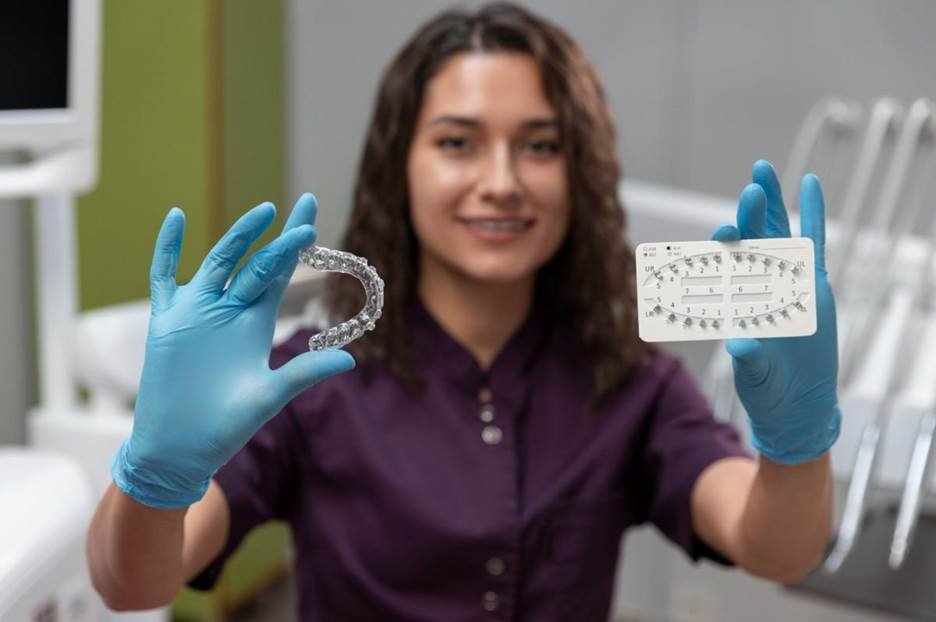
Invisalign or Traditional Braces, Which One Actually Wins?
Honestly, it depends on what you’re correcting.
For adults with mild to moderate issues who want discretion, comfort, and the ability to eat whatever they like, Invisalign is the stronger choice. You can take the trays out for a job interview or a wedding. You can brush normally. You don’t have to avoid popcorn or sticky sweets for two years.
Traditional braces still hold an edge for very young patients or complex cases where precise control over tooth movement is critical. They also require less patient discipline, which, for some people, is a genuine consideration.
Your Next Move
Here’s where most guides leave you hanging with a lot of information and no direction. So let me be direct.
If you’re seriously considering Invisalign, your first step should be a consultation with a certified, experienced Invisalign provider. Not a general dentist who “also does aligners,” but someone with verified training and a strong case history. Ask about their provider tier. Ask to see ClinCheck simulations. Ask how many cases similar to yours they’ve handled.
At Fort Dental Clinic, Dr. Arun Nayak is among India’s most decorated Invisalign orthodontists a Diamond Tier provider (top 1% globally) who has been invited as Global Faculty at Align events in Madrid, London, Budapest, and Singapore. That’s not a small distinction. If you want your smile in capable hands, it’s worth starting there.
A straight smile isn’t vanity. It’s confidence, oral health, and often a quality-of-life change you feel every single day. The right time to start looking into it? Probably sooner than you think.