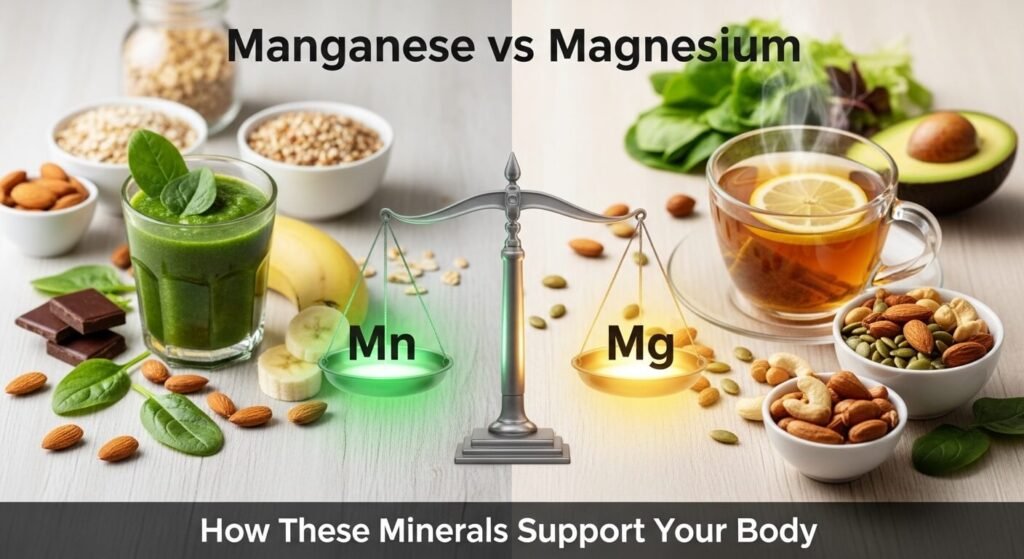

Introduction
Many people feel tired, weak, or have muscle cramps and bone problems, but they don’t know the real reason. Often, the problem is a lack of important minerals in the body. People also get confused between manganese vs magnesium because their names sound similar. Due to this confusion, they may take the wrong supplement or ignore an actual deficiency. The solution is simple: understand the difference between manganese and magnesium, learn how they work in the body, and know when you need them. This article explains everything in easy language so you can make the right health choice.
What Is Manganese?
Manganese is a trace mineral, which means the body needs it in very small amounts. Even though it is needed in small quantity, it is very important for many body functions.
Manganese helps:
- Enzymes work properly
- The body fight free radicals (cell damage)
- Bones grow and stay strong
- The body use carbohydrates and fats
You usually get enough manganese from food, so deficiency is rare.
What Is Magnesium?
Magnesium is a major mineral, and the body needs it in much larger amounts compared to manganese. Magnesium is involved in hundreds of chemical reactions in the body.
Magnesium helps:
- Produce energy
- Relax muscles and nerves
- Support heart health
- Maintain strong bones
- Improve sleep and mood
Many people today do not get enough magnesium because of poor diet and stress.
Manganese vs Magnesium: Key Differences
This magnesium vs manganese comparison helps you understand them better:
| Feature | Manganese | Magnesium |
| Type | Trace mineral | Major mineral |
| Daily Need | Very small (mg) | Large amount (300–400 mg) |
| Main Role | Enzymes, antioxidants, bones | Energy, muscles, nerves |
| Deficiency | Rare | Common |
| Supplements | Rarely needed | Commonly used |
In short, manganese and magnesium are not the same, and they cannot replace each other.
Difference Between Manganese and Magnesium in the Body
The main difference between manganese and magnesium is how they support your body:
- Manganese mostly helps enzymes and protects cells
- Magnesium supports muscles, nerves, and energy
Magnesium works throughout the whole body every day, while manganese works quietly behind the scenes.
Manganese vs Magnesium Benefits
Benefits of Manganese
Manganese supports the body in these ways:
- Helps form bones and cartilage
- Supports wound healing
- Helps the body use nutrients
- Protects cells from damage
Manganese also supports normal blood sugar metabolism.
Benefits of Magnesium
Magnesium has wider benefits:
- Reduces muscle cramps
- Supports heart rhythm
- Helps control blood pressure
- Improves sleep quality
- Helps manage stress and anxiety
This is why magnesium supplements are very popular.
Manganese vs Magnesium Supplements
Manganese Supplements
Manganese supplements are not commonly needed. Most people get enough from food. Taking too much manganese can be harmful, especially for the brain.
Only take manganese supplements if a doctor advises you.
Magnesium Supplements
Magnesium supplements are widely used for:
- Muscle pain
- Sleep problems
- Stress and anxiety
- Energy support
Common types include magnesium citrate and magnesium glycinate, which are easy to absorb.
Can You Take Manganese and Magnesium Together?
Yes, you can take both, but only in proper amounts. Most multivitamins already contain safe doses. Always avoid high doses without medical advice.
Food Sources of Manganese
You can get manganese naturally from:
- Whole grains
- Nuts and seeds
- Spinach and leafy greens
- Tea
- Pineapple
A balanced diet usually provides enough manganese.
Food Sources of Magnesium
Good magnesium-rich foods include:
- Almonds and cashews
- Pumpkin seeds
- Spinach
- Bananas
- Whole grains
- Beans and lentils
Eating these foods daily helps prevent deficiency.
Manganese vs Magnesium Deficiency Symptoms
Manganese Deficiency (Rare)
Symptoms may include:
- Weak bones
- Poor growth
- Low energy
This usually happens only in special medical conditions.
Magnesium Deficiency (Common)
Symptoms include:
- Muscle cramps
- Fatigue
- Headaches
- Anxiety
- Poor sleep
This is common in people with stress, diabetes, or poor diet.
Side Effects and Safety Concerns
Manganese Side Effects
Too much manganese can affect the nervous system. This usually happens from supplements or industrial exposure, not food.
Magnesium Side Effects
Too much magnesium from supplements may cause:
- Diarrhea
- Nausea
- Stomach pain
People with kidney problems should be extra careful.
Expert Tips for Better Mineral Balance
- Eat whole and natural foods
- Avoid unnecessary supplements
- Read supplement labels carefully
- Talk to a healthcare professional if unsure
These simple steps help maintain healthy mineral levels.
Conclusion
Understanding manganese vs magnesium helps you make smarter health decisions. Both minerals are important, but they work in different ways. Magnesium supports daily energy, muscles, and nerves, while manganese supports enzymes and bone health. A balanced diet usually provides enough manganese, but magnesium deficiency is more common. Always focus on food first and use supplements only when needed. Knowing the difference helps you protect your health and avoid mistakes.