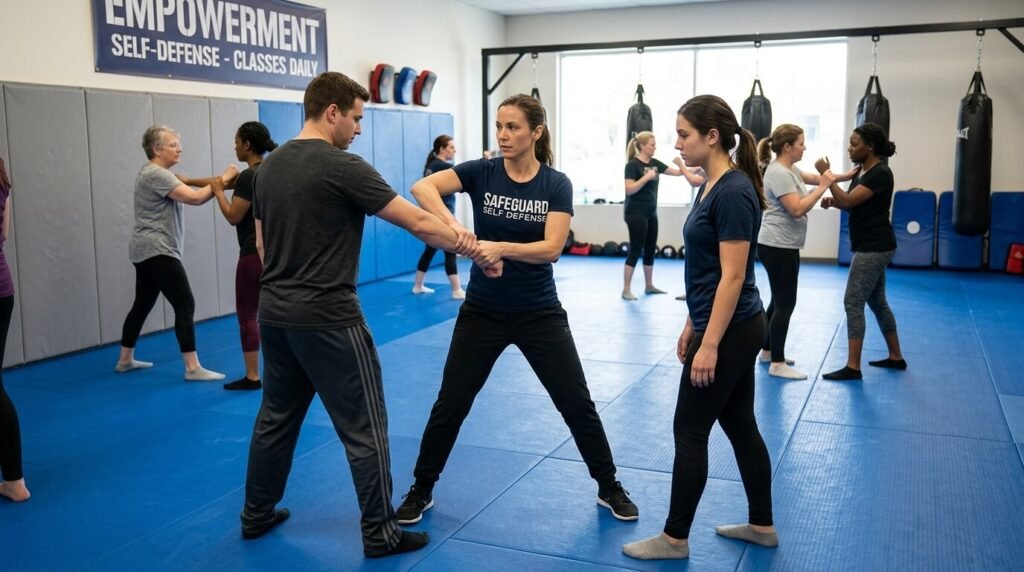

Self defense is more than learning how to react during a dangerous situation. It is a combination of awareness, confidence, prevention, and practical skills that help people stay safe in everyday life. Whether you are walking alone, traveling, working late, or simply going about your daily routine, understanding self defense can increase your confidence and improve your ability to respond to potential threats.
In today’s world, personal safety has become a priority for many individuals. Learning self defense provides valuable tools that can help you avoid danger, de-escalate conflicts, and protect yourself when necessary. This guide explores the fundamentals of self defense, effective techniques, benefits, and practical tips that anyone can apply.
What Is Self Defense?
Self defense refers to the actions and strategies people use to protect themselves from harm. It includes mental preparedness, situational awareness, verbal communication, and physical techniques designed to create an opportunity to escape from danger safely. The primary goal of self defense is not to win a fight but to protect yourself and reach safety.
Many people mistakenly believe that self defense requires extensive martial arts training. While martial arts can be beneficial, practical self defense focuses on simple, effective methods that anyone can learn and apply.
Why Self Defense Is Important
Learning self defense offers numerous benefits beyond physical protection. It helps individuals develop confidence, improve awareness, and build mental resilience.
Some key benefits include:
- Increased personal safety
- Greater confidence in public settings
- Enhanced situational awareness
- Better decision-making under pressure
- Improved physical fitness
- Reduced fear and anxiety about personal security
People who practice self defense often feel more empowered because they know they have the skills to respond effectively in challenging situations.
The Foundation of Self Defense: Situational Awareness
One of the most important aspects of self defense is situational awareness. Many dangerous situations can be avoided simply by paying attention to your surroundings.
Effective situational awareness includes:
- Staying alert in public places
- Avoiding distractions such as excessive phone use
- Identifying exits in unfamiliar locations
- Trusting your instincts
- Recognizing unusual behavior
- Maintaining awareness while parking or walking alone
When you remain aware of your environment, you can often identify potential threats before they escalate.
Prevention Is the Best Self Defense
The best self defense strategy is avoiding danger whenever possible. Prevention reduces the likelihood of needing physical confrontation.
Here are practical prevention strategies:
Stay in Well-Lit Areas
Choose well-populated and well-lit routes when walking at night. Criminals often target isolated locations.
Share Your Location
Inform a trusted friend or family member about your whereabouts when traveling alone.
Avoid Risky Situations
Trust your instincts. If a place or situation feels unsafe, leave immediately.
Keep Valuables Secure
Avoid displaying expensive items that may attract unwanted attention.
Maintain Personal Boundaries
Keep a safe distance from strangers and avoid situations that make you uncomfortable.
Verbal Self Defense and De-Escalation
Physical techniques should always be a last resort. Verbal self defense and de-escalation often prevent situations from becoming violent.
Effective de-escalation techniques include:
- Speaking calmly and clearly
- Using confident body language
- Avoiding insults or aggressive responses
- Maintaining personal space
- Listening without escalating emotions
- Setting clear boundaries with direct statements
For example, simple statements such as “Please step back” or “I do not want any trouble” can sometimes diffuse tension before it escalates.
Essential Physical Self Defense Techniques
When avoidance and de-escalation fail, basic physical self defense techniques may help create an opportunity to escape.
Palm Strike
The palm strike is one of the safest and most effective beginner techniques. Using the heel of the palm reduces the risk of injuring your hand while generating significant force.
Knee Strike
A knee strike can be effective at close range and may help create space between you and an attacker.
Elbow Strike
Elbows generate powerful force and are useful when someone is close to you.
Wrist Release
Learning how to escape wrist grabs is a practical self defense skill that can help you break free and move to safety.
Make Noise
Yelling loudly can attract attention, discourage an attacker, and alert nearby people to the situation.
Remember, the goal of these techniques is to create an opportunity to escape, not to remain engaged in a confrontation.
Building the Right Self Defense Mindset
A strong mindset is a critical component of self defense. Confidence and preparedness can discourage potential attackers and improve your ability to react effectively.
Develop a strong mindset by:
- Practicing awareness daily
- Trusting your instincts
- Remaining calm under pressure
- Learning to set firm boundaries
- Preparing mentally for emergencies
- Understanding that your safety comes first
Many experts agree that confidence alone can make someone appear less vulnerable.
Self Defense Training Options
There are many ways to learn self defense. Training provides practical experience and helps build muscle memory.
Popular options include:
Self Defense Classes
Dedicated self defense classes focus on realistic situations and practical techniques.
Martial Arts
Several martial arts emphasize personal protection, including:
- Krav Maga
- Brazilian Jiu-Jitsu
- Boxing
- Muay Thai
- Judo
Practice at Home
Regular practice improves reaction speed and confidence. Even basic drills can strengthen your skills over time.
Common Self Defense Mistakes
Many people make mistakes that reduce the effectiveness of their self defense efforts.
Avoid these common errors:
- Ignoring intuition
- Becoming distracted in public
- Escalating verbal conflicts
- Remaining in dangerous situations too long
- Overestimating physical abilities
- Failing to practice regularly
Understanding these mistakes can help you make safer decisions in real-world situations.
Self Defense for Different Age Groups
Self defense is valuable for people of all ages.
Children
Children benefit from learning awareness, boundary-setting, and how to seek help from trusted adults.
Adults
Adults can focus on situational awareness, de-escalation, and practical escape techniques.
Seniors
Older adults can benefit from confidence-building strategies, awareness training, and simple defensive movements designed for their physical abilities.
The Future of Self Defense
Modern self defense continues to evolve. Training programs now emphasize awareness, conflict prevention, emotional control, and realistic scenarios. Many instructors focus on empowering individuals through education rather than promoting aggression.
As personal safety concerns continue to grow, more people are recognizing the value of learning self defense as a life skill that supports confidence, independence, and security.
Conclusion
Self defense is not just about physical techniques. It involves awareness, prevention, communication, confidence, and practical skills that help individuals stay safe. By learning the fundamentals of self defense, you can reduce risk, respond effectively to threats, and increase your overall sense of security.
Whether you choose formal training, martial arts classes, or simple personal safety education, investing time in self defense can provide lifelong benefits. The most effective approach combines awareness, prevention, and preparedness, helping you stay safe while avoiding unnecessary conflict whenever possible.