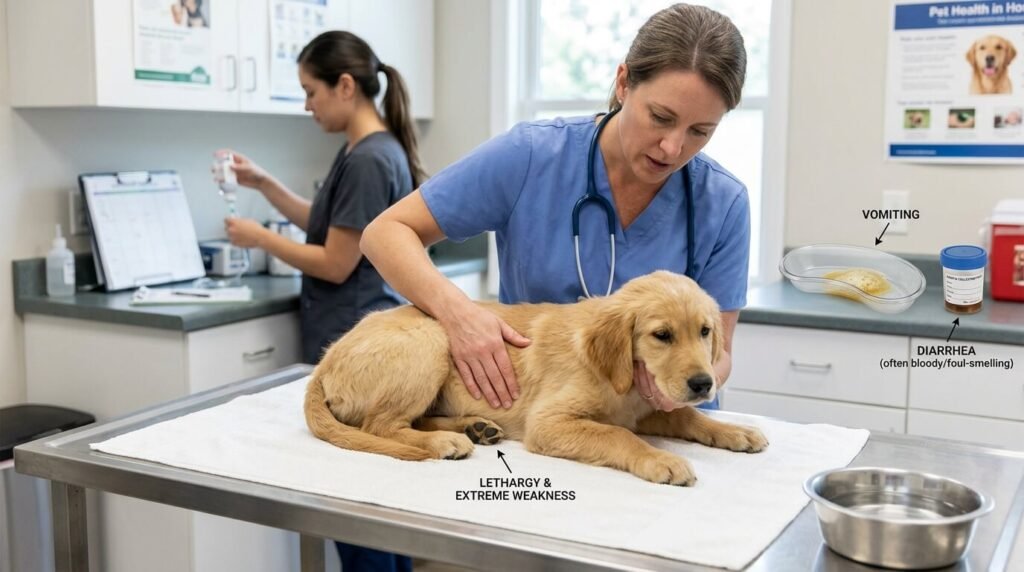

Parvo symptoms are among the most serious warning signs a dog owner should never ignore. Canine parvovirus (CPV) is a highly contagious viral disease that mainly affects puppies and unvaccinated dogs. It attacks the digestive system and weakens the immune system, leading to severe illness if treatment does not begin quickly.
Recognizing parvo symptoms early can significantly improve a dog’s chances of survival. This guide explains the causes, warning signs, stages, diagnosis, treatment, prevention, and recovery in simple language to help pet owners make informed decisions.
What Is Canine Parvovirus?
Canine parvovirus is a dangerous virus that spreads through infected dog feces, contaminated food bowls, toys, shoes, clothing, kennels, and even soil. The virus is extremely resilient and can survive outdoors for months under the right conditions.
Puppies between six weeks and six months old are at the highest risk. However, any unvaccinated dog can become infected.
Early Parvo Symptoms
The earliest parvo symptoms may seem mild at first, but they usually worsen rapidly within 24 to 48 hours.
Common early signs include:
- Loss of appetite
- Low energy and unusual tiredness
- Mild fever
- Depression or lack of interest in activities
- Vomiting
- Mild diarrhea
Many owners mistake these early symptoms for a minor stomach upset. Because the disease progresses quickly, immediate veterinary attention is essential.
Advanced Signs of Parvovirus
As the virus attacks the intestinal lining, symptoms become much more severe.
These include:
- Frequent vomiting
- Severe watery diarrhea
- Bloody diarrhea with a strong odor
- Rapid dehydration
- Weight loss
- Sunken eyes
- Dry gums
- Weakness
- Rapid heartbeat
- Low body temperature in severe cases
Without treatment, dehydration and secondary bacterial infections can become life-threatening.
Why Parvo Is So Dangerous
Parvovirus destroys rapidly dividing cells inside the intestines and bone marrow. This damage prevents the body from absorbing nutrients and weakens the immune system.
As a result, affected dogs may suffer from:
- Severe dehydration
- Electrolyte imbalance
- Malnutrition
- Blood infections
- Septic shock
Young puppies are especially vulnerable because their immune systems are still developing.
How Dogs Catch Parvovirus
Dogs usually become infected through direct or indirect contact with contaminated material.
Common sources include:
- Dog parks
- Animal shelters
- Boarding facilities
- Pet stores
- Veterinary waiting rooms
- Shared water bowls
- Contaminated shoes and clothing
The virus does not require direct contact with an infected dog. Even environments where an infected dog was present can remain infectious for months.
Stages of Parvovirus Infection
Exposure Stage
After exposure, the virus begins multiplying inside the dog’s body.
Incubation Period
The incubation period usually lasts three to seven days. During this time, dogs may appear healthy but can already spread the virus.
Illness Stage
Clinical signs develop rapidly. Vomiting and diarrhea become severe, leading to dehydration.
Recovery Stage
Dogs receiving prompt veterinary care may begin improving within several days. Full recovery often takes several weeks.
Diagnosing Parvovirus
Veterinarians diagnose parvovirus using several methods.
These may include:
- Physical examination
- Medical history
- Rapid fecal antigen test
- Blood tests
- Complete blood count
- PCR laboratory testing when necessary
Early diagnosis allows treatment to begin before complications become severe.
Treatment Options
There is currently no medication that directly kills canine parvovirus. Treatment focuses on supporting the dog’s body while its immune system fights the infection.
Treatment often includes:
- Intravenous fluids
- Electrolyte replacement
- Anti-vomiting medication
- Antibiotics to prevent secondary infections
- Pain management
- Nutritional support
- Hospital monitoring
Many dogs require several days of hospitalization.
Can Dogs Recover?
Yes. Many dogs recover when treatment begins early.
Survival rates vary depending on:
- Age
- Vaccination status
- Overall health
- Speed of treatment
- Severity of infection
Dogs treated promptly by a veterinarian have a much higher survival rate than those treated at home without professional care.
Preventing Parvovirus
Prevention remains the most effective defense against this deadly disease.
Important preventive measures include:
Vaccination
Vaccination is the best protection.
Puppies usually receive multiple vaccine doses beginning around six to eight weeks of age, followed by booster vaccinations as recommended by the veterinarian.
Avoid High-Risk Areas
Keep young puppies away from public dog parks, shelters, and unfamiliar dogs until vaccinations are complete.
Good Hygiene
Clean contaminated areas using disinfectants known to kill parvovirus, such as properly diluted bleach solutions.
Wash hands, shoes, bowls, bedding, and toys after exposure to potentially infected animals.
Isolate Sick Dogs
If one dog develops parvovirus, isolate it immediately to reduce transmission to other pets.
Caring for a Dog Recovering from Parvo
Recovery continues after leaving the veterinary hospital.
Helpful care includes:
- Provide fresh water at all times.
- Feed small, easily digestible meals.
- Give medications exactly as prescribed.
- Limit strenuous exercise.
- Maintain a clean environment.
- Attend follow-up veterinary appointments.
Most recovering dogs gradually regain their appetite and energy over several weeks.
When Should You Visit the Veterinarian?
Seek immediate veterinary care if your dog experiences:
- Repeated vomiting
- Bloody diarrhea
- Refusal to eat
- Severe weakness
- Signs of dehydration
- Collapse
- Persistent lethargy
Delaying treatment can significantly reduce the chances of recovery.
Can Humans Catch Canine Parvovirus?
No. Canine parvovirus does not infect humans.
However, people can carry the virus on shoes, clothing, or hands and unknowingly spread it to other dogs. Practicing good hygiene helps reduce this risk.
Frequently Asked Questions
How long does parvovirus last?
Most infected dogs require five to seven days of intensive treatment, while complete recovery may take several weeks.
Can vaccinated dogs get parvo?
Vaccinated dogs have much better protection, although no vaccine provides 100% immunity. Infections in vaccinated dogs are generally less severe.
What breeds are at higher risk?
Some breeds, including Rottweilers, Doberman Pinschers, American Pit Bull Terriers, German Shepherds, and Labrador Retrievers, may have a higher risk of severe disease.
Can parvo be treated at home?
Home treatment is generally not recommended because infected dogs often need intravenous fluids, medications, and close veterinary monitoring.
How long does the virus survive outdoors?
The virus can remain infectious in soil and contaminated environments for many months, making thorough cleaning and vaccination essential.
Conclusion
Recognizing parvo symptoms early can save your dog’s life. Loss of appetite, vomiting, diarrhea, lethargy, and dehydration should never be ignored, especially in puppies. Immediate veterinary care offers the best chance of recovery and helps prevent serious complications.
Vaccination, proper hygiene, and avoiding contaminated environments remain the most effective ways to protect your pet. By understanding parvo symptoms and acting quickly, dog owners can greatly improve their pet’s chances of surviving this dangerous disease while reducing the spread of infection to other dogs.