
Introduction
In many rural and underserved communities, access to healthcare remains a major challenge. People often struggle to receive basic medical services, maternal care, vaccinations, and health education. This gap between healthcare systems and local communities can lead to preventable diseases and poor health outcomes. A practical solution to this challenge is the Accredited Social Health Activist (ASHA) program, which places trained community health workers directly within villages to bridge the gap between people and healthcare services. An Accredited Social Health Activist, commonly known as an ASHA Worker, plays a vital role in promoting health awareness, supporting maternal and child health services, and connecting communities with government health programs. By empowering local women as health activists, the program strengthens primary healthcare and improves community well-being.
What Is an Accredited Social Health Activist?
An Accredited Social Health Activist is a trained female community health worker who acts as a link between the healthcare system and the local community. These workers operate under the Accredited Social Health Activist program, which was introduced by the Ministry of Health and Family Welfare in India as part of the National Rural Health Mission (NRHM) in 2005.
The main objective of the program is to ensure that even the most remote villages have access to basic health services. Each village generally has one ASHA worker responsible for spreading awareness about healthcare services and guiding families toward proper medical facilities.
An ASHA worker usually belongs to the same community she serves. This makes communication easier and helps build trust among villagers. Her role is not limited to providing information; she actively supports families in accessing healthcare services such as immunization, maternal care, and disease prevention.
Overview of the Accredited Social Health Activist Program
The Accredited Social Health Activist program is one of the largest community health initiatives in the world. It was created to strengthen grassroots healthcare systems and improve public health outcomes in rural areas.
Under this program:
- Local women are selected from the community.
- They receive training on basic healthcare and disease prevention.
- They work as community health educators and facilitators.
- They help people connect with hospitals, clinics, and government health programs.
The program focuses mainly on:
- Maternal and child health
- Immunization awareness
- Family planning
- Nutrition education
- Disease prevention
Today, millions of ASHA workers contribute to improving healthcare access across thousands of villages, making the program a cornerstone of community health initiatives.
Who Is an ASHA Worker?
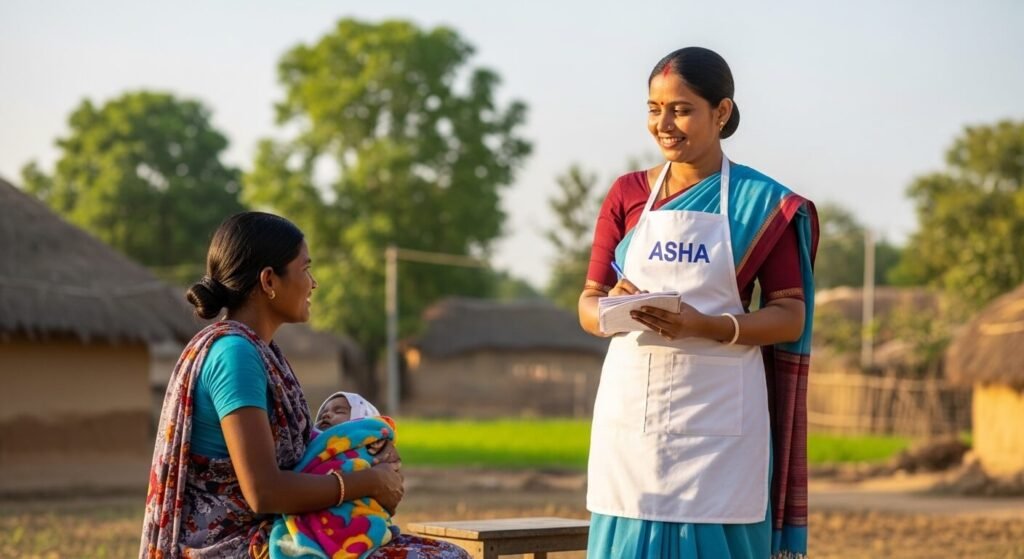
An ASHA Worker is a community-based female health activist trained to educate and assist families in improving their health. These workers are chosen by the local community and serve as a trusted source of health guidance.
Typically, an ASHA worker:
- Lives in the same village she serves
- Understands local culture and language
- Acts as a bridge between villagers and health facilities
- Promotes healthy behaviors and preventive healthcare
ASHA workers are not only health educators but also motivators who encourage families to seek medical care and participate in health programs. They ensure that government health services reach the most vulnerable populations.
Accredited Social Health Activist Roles and Responsibilities
The Accredited Social Health Activist roles and responsibilities are diverse and focus on improving healthcare awareness and access. Their responsibilities include health promotion, disease prevention, and community mobilization.
1. Health Education and Awareness
One of the primary duties of an ASHA worker is educating communities about health and hygiene. They organize awareness sessions on topics such as:
- Personal hygiene
- Nutrition
- Safe drinking water
- Sanitation practices
These awareness campaigns help prevent diseases and improve community health standards.
2. Maternal and Child Health Support
ASHA workers play a major role in supporting pregnant women and new mothers. Their tasks include:
- Encouraging institutional deliveries
- Providing prenatal and postnatal care guidance
- Monitoring newborn health
They ensure that pregnant women receive proper medical care and guidance during pregnancy.
3. Immunization Promotion
Immunization is essential for preventing childhood diseases. ASHA workers encourage parents to bring their children to vaccination clinics and ensure they complete the full immunization schedule.
4. Family Planning Counseling
ASHA workers also educate couples about family planning methods and reproductive health. They distribute contraceptives and guide families on birth spacing and reproductive health services.
5. Basic First Aid and Treatment
Although they are not doctors, ASHA workers provide basic healthcare support such as:
- First aid treatment
- Distribution of oral rehydration salts
- Basic medicines for minor illnesses
These services help address minor health issues before they become serious.
ASHA Worker Duties in Community Health
The ASHA Worker duties in community health extend beyond individual healthcare support. Their work focuses on strengthening the entire community’s health system.
Community Mobilization
ASHA workers encourage community members to participate in health programs such as immunization drives and sanitation campaigns.
Disease Prevention
They spread awareness about infectious diseases like malaria, tuberculosis, and diarrhea. Through education and early detection, they help reduce the spread of diseases.
Health Surveys and Record Keeping
ASHA workers collect important health data from villages, such as birth records, disease cases, and vaccination coverage.
Referral Services
If a patient requires medical attention, the ASHA worker refers them to the nearest healthcare facility and sometimes accompanies them.
These activities ensure that rural populations receive timely healthcare support.
Importance of Accredited Social Health Activists in Community Health
The importance of an Accredited Social Health Activist in community health cannot be overstated. These workers form the foundation of grassroots healthcare systems.
Bridging the Healthcare Gap
Many rural communities lack easy access to hospitals and doctors. ASHA workers act as a link between people and healthcare providers.
Improving Maternal and Child Health
Their involvement in pregnancy care, immunization, and child nutrition significantly reduces maternal and infant mortality rates.
Increasing Healthcare Awareness
Through continuous education and community engagement, ASHA workers help people understand the importance of preventive healthcare.
Strengthening Public Health Programs
Government health initiatives become more effective when ASHA workers mobilize communities and ensure participation.
Overall, these workers play a crucial role in achieving better health outcomes at the community level.
Eligibility and Selection of ASHA Workers
The selection of an ASHA worker follows specific guidelines to ensure they can effectively serve the community.
Typical eligibility criteria include:
- Female resident of the village
- Age usually between 25 and 45 years
- Basic literacy skills
- Strong communication ability
Community groups and local authorities participate in selecting the worker, ensuring that the chosen individual is trusted and respected by the community.
Training and Support for ASHA Workers
To perform their duties effectively, ASHA workers receive structured training programs. These training sessions cover essential health topics such as:
- Maternal and child healthcare
- Nutrition and sanitation
- Disease prevention
- Family planning
- Basic medical care
Training is often provided in phases so that workers can gradually develop their skills and knowledge.
In addition to training, ASHA workers receive incentives for achieving health targets such as successful immunization campaigns and institutional deliveries.
Challenges Faced by ASHA Workers
Despite their important role, ASHA workers face several challenges.
Limited Financial Incentives
Most ASHA workers receive performance-based incentives rather than a fixed salary, which can lead to financial instability.
Heavy Workload
They often manage multiple responsibilities, including household duties and community healthcare activities.
Limited Resources
Sometimes they lack proper medical supplies or infrastructure to perform their duties effectively.
Recognition and Support
Although they are essential to healthcare systems, their contributions are not always fully recognized.
Addressing these challenges is important for improving the effectiveness of the ASHA program.
Impact of ASHA Workers on Rural Healthcare
The impact of ASHA Worker duties in community health has been significant. Over the years, they have helped improve healthcare access and outcomes in rural areas.
Some key achievements include:
- Increased institutional deliveries
- Higher immunization coverage
- Improved maternal and child health indicators
- Greater community awareness about hygiene and sanitation
Their grassroots involvement ensures that healthcare initiatives reach even the most remote populations.
Future of the Accredited Social Health Activist Program
The Accredited Social Health Activist program continues to evolve as healthcare needs change. Governments and health organizations are focusing on:
- Expanding training programs
- Providing better financial incentives
- Improving digital health tools
- Strengthening support systems for ASHA workers
These improvements can enhance the efficiency and impact of the program.
For more detailed information, visit: Everside Health: Benefits of Employer-Sponsored Healthcare Clinics
Conclusion
The Accredited Social Health Activist plays an essential role in strengthening community healthcare systems. Through awareness campaigns, maternal care support, disease prevention initiatives, and healthcare referrals, ASHA workers ensure that essential health services reach even the most remote communities. Their dedication and close connection with local populations make them a powerful force in improving public health outcomes.
As healthcare systems continue to evolve, strengthening the Accredited Social Health Activist program will remain crucial for achieving universal healthcare access. By supporting and empowering ASHA workers, governments and communities can create healthier societies and ensure that quality healthcare reaches every household.
Frequently Asked Questions (FAQs)
1. What is an Accredited Social Health Activist?
An Accredited Social Health Activist is a trained community health worker who connects rural communities with healthcare services. These workers spread awareness about health, hygiene, maternal care, and disease prevention while guiding people to medical facilities.
2. Who is an ASHA Worker?
An ASHA Worker is a female community health volunteer selected from the village she serves. She acts as a health educator and facilitator, helping families access government health programs and essential healthcare services.
3. What are the main Accredited Social Health Activist roles and responsibilities?
The Accredited Social Health Activist roles and responsibilities include promoting health awareness, supporting maternal and child healthcare, encouraging immunization, guiding families on nutrition and hygiene, and connecting patients with hospitals and clinics.
4. What are the ASHA Worker duties in community health?
The ASHA Worker duties in community health include educating communities about disease prevention, helping with vaccination programs, supporting pregnant women, collecting health data, and referring patients to healthcare centers when needed.
5. What is the Accredited Social Health Activist program?
The Accredited Social Health Activist program is a community healthcare initiative launched under India’s National Rural Health Mission. It aims to improve healthcare access in rural areas by training local women to act as community health educators and facilitators.
6. What qualifications are required to become an ASHA Worker?
To become an ASHA worker, a candidate should typically be a female resident of the village, have basic education, good communication skills, and be willing to serve the community in healthcare activities.
7. Why are ASHA Workers important for rural healthcare?
ASHA workers play a vital role in rural healthcare because they bridge the gap between communities and healthcare facilities. Their work helps increase awareness, improve maternal and child health, and promote preventive healthcare practices.