
Introduction
Many women feel strange physical changes in the middle of their menstrual cycle and start worrying about their health. A very common question is can ovulation cause nausea when there is no pregnancy involved. Feeling sick or uneasy during this time can be confusing and stressful. The solution is understanding that hormonal changes during ovulation can affect digestion and trigger temporary nausea. Once the cause is clear, simple lifestyle steps can help reduce discomfort and bring relief.
This article explains ovulation-related nausea in detail, using simple language, so you can understand what is happening in your body and what to do about it.
What Is Ovulation?
Ovulation is a natural process that happens once during each menstrual cycle. It occurs when one ovary releases an egg. This usually happens around the middle of the cycle, but the exact timing can differ for each woman.
During ovulation:
- Hormones change quickly
- The body prepares for a possible pregnancy
- Physical symptoms may appear
Some women feel nothing at all, while others notice bloating, mild pain, mood changes, or stomach discomfort.
Can Ovulation Cause Nausea?
Many women wonder can ovulation cause nausea, and the simple answer is yes, it can happen for some people. Nausea during ovulation is not experienced by everyone, but it is considered a possible symptom.
This feeling is usually:
- Mild
- Short-term
- Linked to hormonal shifts
- Most noticeable around mid-cycle
This condition is commonly known as ovulation nausea and is usually not harmful.
Why Does Nausea Happen During Ovulation?
1. Hormonal Changes
The most common reason behind nausea during ovulation is hormone fluctuation. Estrogen rises sharply before ovulation, and progesterone increases afterward. These changes can slow digestion and upset the stomach.
This explains why people ask can ovulation cause nausea even when everything else feels normal.
2. Slower Digestion
Hormones affect the digestive system. During ovulation, digestion may slow down, leading to:
- A heavy feeling in the stomach
- Bloating
- Mild queasiness
This is a common cause of mid cycle nausea, especially after eating.
3. Ovulation Pain
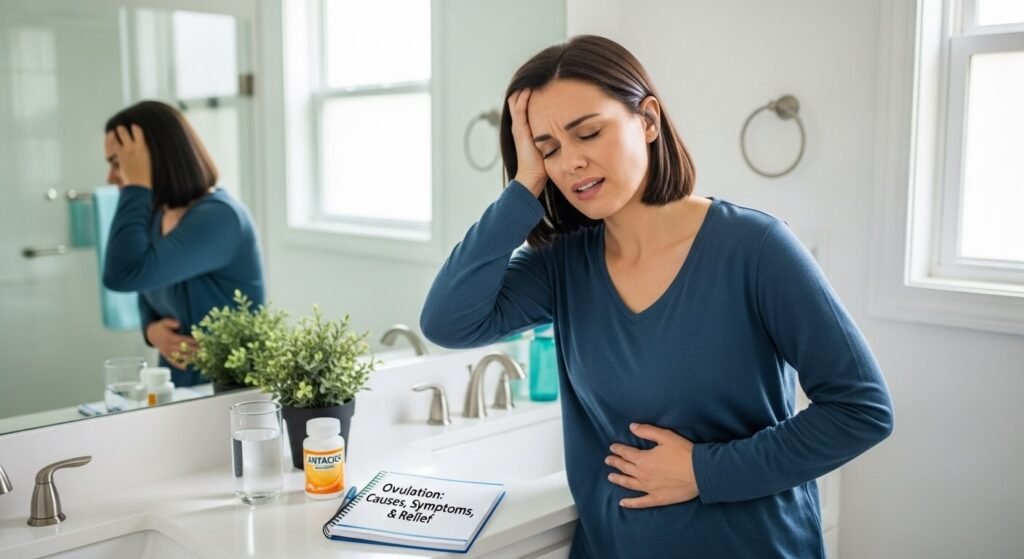
Some women feel mild pain or cramping on one side of the lower abdomen during ovulation. This pain can sometimes trigger nausea, especially in those who are sensitive to pain.
4. Low Energy or Dehydration
Not eating regularly or drinking enough water can make nausea worse during ovulation. Hormonal changes already affect the body, and low energy levels increase discomfort.
Common Symptoms Along With Ovulation Nausea
Nausea often appears with other ovulation-related signs.
Typical Ovulation Symptoms
- Mild lower abdominal pain
- Bloating
- Breast tenderness
- Increased cervical mucus
- Mood swings
- Mild headache
When nausea appears with these symptoms, it is often part of ovulation symptoms nausea rather than a serious health problem.
How Long Does Ovulation Nausea Last?
Ovulation-related nausea usually lasts:
- A few hours
- Up to one or two days
It often starts just before ovulation and fades soon after. If nausea lasts much longer, another cause should be considered.
How to Get Relief From Nausea During Ovulation
If you are asking can ovulation cause nausea because you feel uncomfortable, these simple steps may help.
1. Eat Small and Light Meals
Choose foods that are easy to digest, such as:
- Toast
- Rice
- Bananas
- Crackers
Avoid heavy, fried, or spicy foods.
2. Stay Hydrated
Drink water regularly. Herbal teas like ginger or peppermint can help calm the stomach.
3. Rest and Reduce Stress
Stress can worsen nausea. Gentle rest, deep breathing, or light stretching can help relax the body.
4. Track Your Cycle
Knowing when ovulation happens allows you to prepare in advance by eating well, resting more, and avoiding triggers.
Ovulation Nausea vs Pregnancy Nausea
Many women confuse ovulation nausea with early pregnancy nausea.
Key Differences
- Ovulation nausea happens mid-cycle
- Pregnancy nausea usually starts after a missed period
- Ovulation nausea is short-term
- Pregnancy nausea often lasts longer
If nausea continues and your period is late, a pregnancy test may be helpful.
When Should You See a Doctor?
You should seek medical advice if:
- Nausea is severe
- Vomiting occurs
- Symptoms last several days
- You feel dizzy or weak
- Daily activities become difficult
These signs may indicate something other than ovulation.
Can Ovulation Nausea Be Prevented?
Many women ask can ovulation cause nausea every month, and while it may not always be preventable, it can often be reduced.
Helpful habits include:
- Eating regular meals
- Drinking enough water
- Getting proper sleep
- Managing stress
- Avoiding known food triggers
These steps support hormonal balance and digestive comfort.
Conclusion
So, can ovulation cause nausea in healthy women? Yes, it can. Ovulation nausea is usually a normal reaction to hormonal changes in the body. It is often mild, short-lasting, and manageable with simple lifestyle changes.
Understanding your cycle helps reduce fear and confusion. If nausea is mild and passes quickly, there is usually no need to worry. However, if symptoms are strong or persistent, medical guidance is important. With awareness and self-care, most women can manage ovulation-related nausea with confidence.