
Introduction
You open your pantry, grab a handful of almonds, and suddenly wonder — do almonds go bad? Maybe they’ve been sitting there for months. They look fine, but you’re unsure if they’re still safe to eat. Eating rancid nuts can cause stomach discomfort and an unpleasant taste. The good news is that almonds last a long time when stored properly, and it’s easy to tell when they’ve gone bad. In this complete guide, we’ll explain almond shelf life, how long almonds last in different storage conditions, how to tell if almonds are bad, and practical almond storage tips to keep them fresh for months.
This article follows evidence-based food safety guidance and current storage recommendations from reputable food safety authorities and nutrition resources.
What Is the Shelf Life of Almonds?
Understanding almond shelf life helps prevent waste and protect your health.
Almonds contain natural oils. These oils are healthy fats, but over time, they can oxidize and turn rancid. Rancidity is the main reason almonds spoil.
The shelf life depends on:
- Storage temperature
- Exposure to air
- Light exposure
- Moisture levels
- Whether almonds are raw, roasted, sliced, or ground
General Shelf Life Guidelines
| Type of Almonds | Pantry | Refrigerator | Freezer |
| Raw whole almonds | 6–12 months | Up to 2 years | Up to 2 years |
| Roasted almonds | 6–9 months | 1 year | 1–2 years |
| Sliced or chopped | 3–6 months | 1 year | 1–2 years |
| Almond flour | 3–6 months | 6–12 months | 1 year |
These timelines assume almonds are stored in airtight containers.
How Long Do Almonds Last in Different Conditions?
Many people ask, how long do almonds last after opening? The answer depends largely on storage.
1. At Room Temperature (Pantry)
Almonds stored in a cool, dry pantry can last up to a year if unopened. Once opened, exposure to oxygen shortens freshness.
If your home is warm or humid, almonds may spoil faster.
2. In the Refrigerator
Refrigeration slows down oxidation. Cold temperatures preserve natural oils and extend almond shelf life significantly.
This is one of the best methods for long-term storage.
3. In the Freezer
Freezing almonds is completely safe and can preserve freshness for up to two years. The oils remain stable at low temperatures.
Many nutrition experts recommend freezing bulk nuts to maintain quality.
Do Almonds Go Bad After the Expiration Date?
The expiration or “best by” date is a quality indicator, not a strict safety deadline.
If stored properly, almonds may still be safe after this date. However, you must inspect them carefully.
The real question is not just do almonds go bad, but whether they show spoilage signs.
Always check smell, texture, and taste before consuming almonds past their printed date.
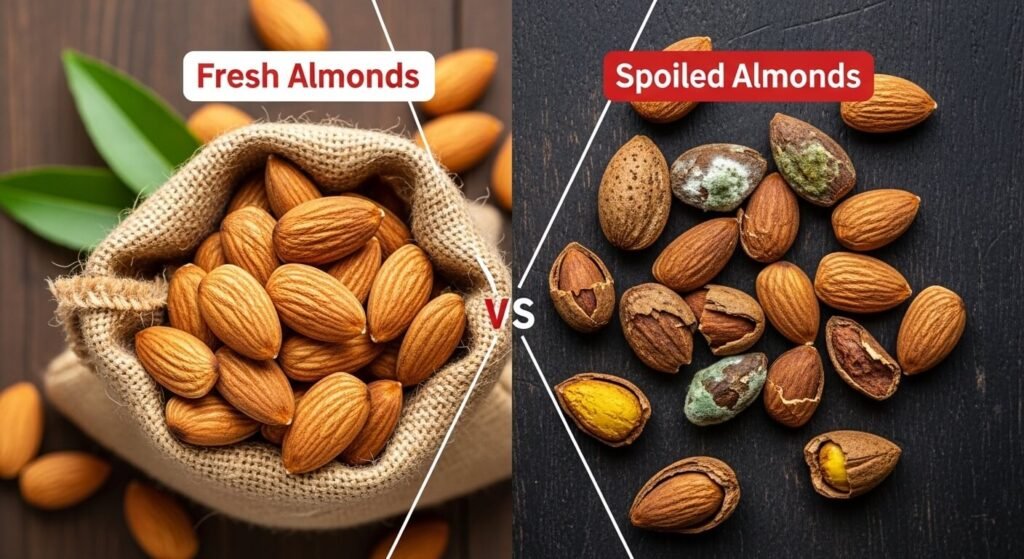
How to Tell If Almonds Are Bad
Knowing how to tell if almonds are bad is crucial for food safety.
Here are the main spoilage signs:
1. Sour or Chemical Smell
Fresh almonds have a mild, slightly sweet, nutty aroma.
Rancid almonds smell sharp, sour, or like paint thinner.
This happens because the fats have oxidized.
2. Bitter or Strange Taste
If almonds taste bitter or harsh, spit them out immediately.
Fresh almonds should taste smooth and slightly sweet.
3. Soft or Rubber-Like Texture
Almonds should be firm and crunchy.
If they feel soft, chewy, or oily, they may be spoiled.
4. Visible Mold
Though rare due to low moisture, mold can appear if almonds were exposed to humidity.
Discard immediately if mold is present.
5. Discoloration
Dark spots or unusual changes in color may indicate deterioration.
If you notice multiple signs, do not consume them.
Why Do Almonds Go Rancid?
To fully understand do almonds go bad, it helps to know the science.
Almonds are rich in unsaturated fats. These healthy fats react with oxygen in a process called oxidation.
Factors that speed up rancidity:
- Heat
- Air exposure
- Sunlight
- Moisture
- Poor packaging
Once oxidation begins, the flavor changes permanently.
Raw vs. Roasted Almonds: Which Lasts Longer?
Raw almonds generally last longer because roasting exposes oils to heat, making them more vulnerable to oxidation.
However, flavored or salted almonds may have slightly shorter shelf lives due to added ingredients.
Proper almond storage tips apply to both types.
Almond Storage Tips for Maximum Freshness
Following the right almond storage tips can significantly extend freshness.
1. Use Airtight Containers
Store almonds in sealed glass jars or food-grade containers.
Oxygen is the main enemy of nut freshness.
2. Keep Them Cool
Heat accelerates oil breakdown.
Store almonds below 70°F (21°C) if possible.
3. Avoid Sunlight
Light speeds oxidation.
Keep almonds in dark cupboards or opaque containers.
4. Refrigerate for Long-Term Storage
If you buy in bulk, refrigeration is recommended.
5. Freeze for Extended Storage
Freezing does not harm texture or taste.
Place almonds in freezer-safe airtight bags.
6. Avoid Moisture
Never store nuts near the stove, sink, or dishwasher.
Moisture increases risk of mold.
Can You Get Sick from Eating Bad Almonds?
Rancid almonds usually cause unpleasant taste and mild digestive discomfort.
However, severely spoiled nuts may cause:
- Nausea
- Stomach pain
- Diarrhea
While not typically dangerous, it is best to discard spoiled nuts.
Do Almonds Go Bad Faster in Hot Weather?
Yes. Warm temperatures speed up oxidation.
If you live in a hot climate, pantry storage may shorten almond shelf life significantly.
In such environments, refrigeration is strongly recommended.
What About Almond Butter and Almond Flour?
Almond butter and flour have shorter shelf lives due to increased surface exposure.
Almond Butter
- Pantry: 3–6 months
- Refrigerated: 6–12 months
Almond Flour
- Pantry: 3–6 months
- Refrigerated: Up to 1 year
Always check for sour smell or oil separation with an off odor.
Do Almonds Go Bad If Unopened?
Unopened vacuum-sealed packages last longer because oxygen exposure is limited.
Still, storage conditions matter.
Heat can damage even sealed almonds.
How to Extend Almond Shelf Life Naturally
To maximize almond shelf life:
- Buy smaller quantities if you rarely eat nuts
- Store bulk purchases in freezer
- Rotate older stock to the front
- Label containers with purchase date
These habits reduce food waste and maintain quality.
Nutritional Value and Why Freshness Matters
Almonds are rich in:
- Vitamin E
- Healthy monounsaturated fats
- Fiber
- Magnesium
- Protein
When almonds become rancid, not only does the taste change, but nutritional quality may decline.
Fresh almonds provide better health benefits.
Frequently Asked Questions
Do almonds go bad quickly?
Not if stored properly. Cool, airtight storage can preserve them for up to a year or longer.
How long do almonds last once opened?
Typically 6 months in pantry, longer in refrigerator.
Can freezing almonds change taste?
No. Freezing preserves flavor and texture.
Should almonds be refrigerated?
For long-term storage, yes.
Final Thoughts on Freshness and Food Safety
Many people wonder repeatedly, do almonds go bad, especially when buying in bulk. The simple answer is yes — but slowly. Almonds have a long shelf life when stored correctly. By understanding how long almonds last, recognizing spoilage signs, and applying smart almond storage tips, you can enjoy fresh, nutritious almonds without waste or risk.
Conclusion
So, do almonds go bad? Yes, they can — mainly due to natural oil oxidation. However, with proper storage in airtight containers, cool temperatures, and protection from light and moisture, almonds can stay fresh for months or even years. Always check smell, taste, and texture before consuming older almonds. Understanding almond shelf life and how to tell if almonds are bad empowers you to make safe, healthy choices. Proper storage is the key to preserving both flavor and nutrition.