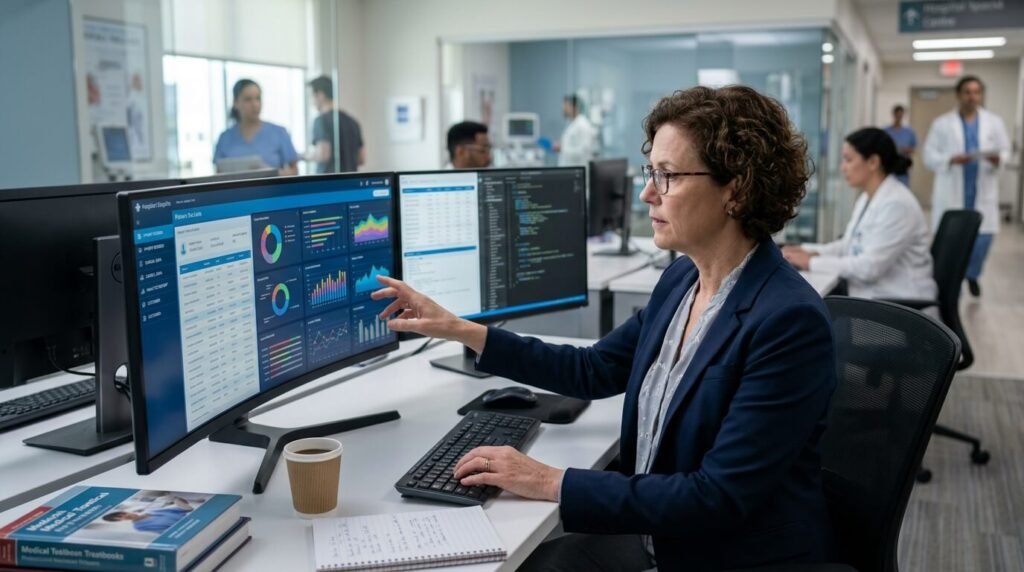

The healthcare industry is rapidly becoming more digital, but many students and professionals still struggle to understand which careers offer stability, strong salaries, and long-term growth. The good news is that health informatics jobs provide a solution by combining healthcare knowledge with technology and data management. These careers are in high demand because hospitals, clinics, insurance companies, and healthcare technology firms need professionals who can manage electronic health records, improve patient systems, and analyze healthcare data effectively.
What Are Health Informatics Jobs?
Health informatics is a field that combines healthcare, information technology, and data analytics. Professionals in this industry use technology and digital systems to improve patient care, reduce medical errors, and streamline healthcare operations.
Unlike traditional healthcare roles, health informatics focuses less on direct patient treatment and more on managing information systems, healthcare databases, and digital records. These professionals often work behind the scenes to ensure healthcare systems operate efficiently.
Many organizations now rely on health informatics specialists because modern healthcare depends heavily on electronic health records (EHRs), telemedicine platforms, cybersecurity systems, and healthcare analytics.
According to recent industry reports, the demand for healthcare technology professionals continues to increase as hospitals adopt AI-driven systems and digital patient management tools.
Why Health Informatics Jobs Are Growing Fast
Healthcare organizations generate massive amounts of data every day. Managing patient records, medical histories, billing systems, and clinical analytics requires trained professionals who understand both healthcare and technology.
Several factors are driving growth in the field:
- Expansion of electronic health records (EHRs)
- Increased use of telemedicine
- Rising focus on healthcare data security
- Demand for healthcare analytics
- Growth of artificial intelligence in medicine
- Need for accurate patient information systems
The healthcare industry is also considered more resistant to automation because patient systems require human oversight and specialized expertise.
Top Career Paths in Health Informatics
One of the biggest advantages of working in this field is the variety of available career paths. Professionals can choose technical, analytical, management, or clinical-focused roles depending on their interests and educational background.
Health Informatics Specialist
A health informatics specialist manages healthcare data systems and ensures patient records remain accurate and secure. These professionals often train healthcare staff on digital systems and improve healthcare workflows.
Typical responsibilities include:
- Managing EHR systems
- Monitoring data accuracy
- Supporting clinical staff
- Improving healthcare workflows
- Maintaining compliance standards
Many employers value certifications like ACHIP from the American Medical Informatics Association.
Clinical Informatics Specialist
Clinical informatics specialists bridge the gap between healthcare providers and IT departments. They often work with doctors, nurses, and administrators to improve patient care systems.
These roles are especially popular among nurses transitioning into technology-focused healthcare careers.
Health Data Analyst
Health data analysts collect and interpret healthcare information to identify trends, improve operations, and support business decisions.
Their work may involve:
- Analyzing patient outcomes
- Tracking healthcare performance
- Building reports and dashboards
- Supporting healthcare research
- Using data visualization tools
Data analytics skills are becoming essential across the healthcare industry.
Nursing Informatics Specialist
Nursing informatics combines nursing experience with healthcare technology. Professionals in this role help hospitals improve patient systems and nursing workflows.
Many registered nurses pursue this career because it allows them to move into technology leadership roles while still using their healthcare experience.
Informatics Manager
Informatics managers oversee healthcare IT teams, digital systems, and data strategies. These leadership roles typically require advanced education and significant experience.
Responsibilities may include:
- Leading healthcare technology projects
- Managing teams
- Improving system integration
- Developing healthcare data policies
- Coordinating with executives
Chief Medical Information Officer (CMIO)
The CMIO is one of the highest-paying positions in the industry. These executives oversee healthcare information systems at an organizational level and help align technology with patient care goals.
Senior leadership roles often require advanced clinical experience and graduate-level education.
Health Informatics Jobs Salary Explained
Salary potential is one of the major reasons professionals enter this field. Compensation varies based on experience, education, certifications, and job title.
Recent salary data shows strong earning potential across many positions.
Average Salaries by Role
| Job Title | Average Salary |
| Health Informatics Specialist | $78,000–$96,000 |
| Clinical Informatics Specialist | $118,000 |
| Health Data Analyst | $91,000–$92,000 |
| Nursing Informatics Specialist | $125,000 |
| Informatics Manager | $150,000–$160,000 |
| Chief Information Officer | $179,000+ |
Entry-level professionals often start between $60,000 and $80,000 annually, while experienced managers and executives can earn well above six figures.
Skills Needed for Health Informatics Careers
Success in health informatics requires a combination of technical knowledge, healthcare understanding, and communication abilities.
Technical Skills
Employers often look for candidates with skills in:
- Electronic health record systems
- SQL and database management
- Data analytics
- Cybersecurity
- Healthcare software platforms
- Interoperability standards like HL7 and FHIR
- Project management tools
Industry research shows that many job postings specifically request knowledge of clinical systems, healthcare regulations, and database technologies.
Soft Skills
Technical expertise alone is not enough. Professionals also need:
- Problem-solving abilities
- Communication skills
- Team collaboration
- Leadership
- Attention to detail
- Critical thinking
Because health informatics professionals often work with doctors, nurses, and executives, strong communication is extremely important.
Educational Requirements for Health Informatics Jobs
There are several educational paths into the field.
Bachelor’s Degree
A bachelor’s degree is usually the minimum requirement for entry-level roles. Common majors include:
- Health informatics
- Computer science
- Health information management
- Public health
- Nursing
- Data analytics
Bachelor’s graduates often qualify for analyst and specialist positions.
Master’s Degree
A master’s degree can improve salary potential and open doors to leadership roles. Many management and executive positions prefer graduate-level education.
Popular graduate programs include:
- Master of Health Informatics
- Master of Public Health
- MBA in Healthcare Management
- Healthcare Data Analytics
Certifications
Professional certifications can strengthen job applications and career advancement opportunities.
Popular certifications include:
- RHIA
- RHIT
- CHDA
- ACHIP
- Epic Certifications
Employers often value hands-on system certifications because they demonstrate real-world technical experience.
Best Industries for Health Informatics Professionals
Health informatics professionals are not limited to hospitals. Many industries now hire healthcare technology experts.
Hospitals and Healthcare Systems
Hospitals remain the largest employers in the field. They need specialists to manage patient systems and healthcare databases.
Insurance Companies
Insurance providers hire analysts and informatics professionals to improve claims processing, healthcare analytics, and fraud prevention.
Government Agencies
Public health organizations and government healthcare departments increasingly rely on health data experts.
Healthcare Technology Companies
Software companies that build EHR systems, telemedicine tools, and healthcare analytics platforms hire many informatics professionals.
Pharmaceutical and Research Organizations
Research institutions use health informatics experts to analyze clinical trial data and support medical innovation.
Remote Opportunities in Health Informatics
Remote work opportunities have expanded significantly in recent years. Many professionals now work from home in areas such as:
- Data analytics
- Healthcare consulting
- System support
- Project management
- Healthcare coding
- EHR optimization
Remote positions are especially common in large healthcare organizations and technology companies.
Challenges in the Health Informatics Field
Although the industry offers strong opportunities, there are also challenges.
Constant Technology Changes
Healthcare technology evolves quickly, so professionals must continue learning throughout their careers.
Data Privacy and Security
Protecting patient information is a major responsibility. Professionals must understand healthcare privacy regulations and cybersecurity practices.
Competitive Entry-Level Market
Some entry-level positions can be competitive, especially for candidates without healthcare or technical experience.
Community discussions show that many professionals recommend gaining healthcare experience first before transitioning fully into informatics roles.
How to Start a Career in Health Informatics
Breaking into the field may seem difficult at first, but several strategies can improve your chances.
Gain Healthcare Experience
Experience in healthcare settings can provide a major advantage. Many professionals begin as:
- Nurses
- Medical coders
- Health information technicians
- Clinical assistants
- IT support specialists
Learn Data and Technology Skills
Building technical skills in SQL, analytics, healthcare software, and cybersecurity can strengthen your resume.
Pursue Internships
Internships provide valuable experience and networking opportunities.
Build Professional Connections
Networking through LinkedIn, healthcare associations, and informatics conferences can help uncover job opportunities.
Future Trends in Health Informatics
The future of health informatics looks extremely promising.
Emerging trends include:
- Artificial intelligence in healthcare
- Predictive analytics
- Personalized medicine
- Healthcare automation
- Telehealth expansion
- Cloud-based healthcare systems
As healthcare continues moving toward digital transformation, organizations will need even more skilled informatics professionals.
Is Health Informatics a Good Career Choice?
For many people, health informatics offers an excellent balance of salary, stability, flexibility, and long-term growth.
The field is ideal for individuals who:
- Enjoy technology
- Want to work in healthcare
- Prefer analytical work
- Like solving problems
- Want strong job growth potential
Unlike many traditional healthcare careers, these roles often provide flexible schedules, remote work opportunities, and reduced physical demands.
Conclusion
Health informatics is one of the fastest-growing areas in modern healthcare. As hospitals and healthcare organizations increasingly depend on digital systems, the demand for skilled professionals continues to rise. From data analysts and nursing informatics specialists to executive leadership positions, there are many career paths available for people with different educational backgrounds and skill sets.
Whether you are a student exploring future careers, a healthcare worker considering a transition into technology, or an IT professional interested in healthcare systems, health informatics offers strong salaries, long-term stability, and exciting growth opportunities. By developing the right technical skills, gaining healthcare experience, and pursuing relevant education or certifications, you can build a rewarding career in this rapidly evolving field.
For reservations and additional information, visit : aspertaan.com