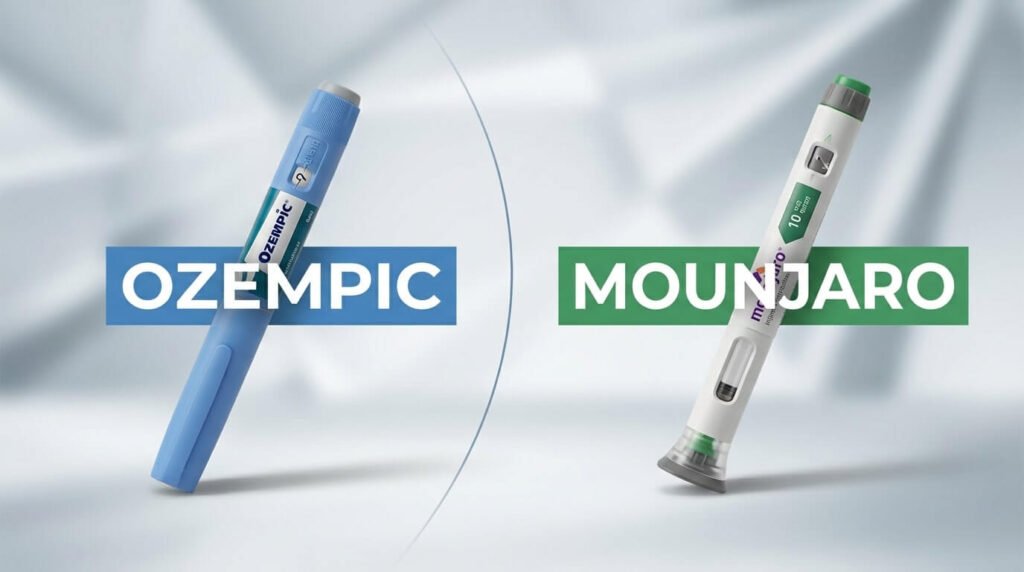

If you’re comparing ozempic vs mounjaro, you’re not alone. These two prescription medications have become some of the most discussed treatments for type 2 diabetes and weight management. While both medications help regulate blood sugar and can promote significant weight loss, they differ in how they work, their effectiveness, approved uses, and potential side effects.
Understanding the differences between ozempic vs mounjaro can help you have a more informed conversation with your healthcare provider. This guide explains everything you need to know, from how each medication works to which option may better fit your health goals.
What Is Ozempic?
Ozempic is the brand name for semaglutide, a medication that belongs to the GLP-1 receptor agonist class. It is approved to improve blood sugar control in adults with type 2 diabetes. It also helps reduce the risk of major cardiovascular events in certain people with diabetes and heart disease.
Ozempic works by:
- Stimulating insulin release when blood sugar rises
- Reducing glucagon production
- Slowing stomach emptying
- Increasing feelings of fullness
These effects help improve blood glucose control while supporting gradual weight loss.
What Is Mounjaro?
Mounjaro contains tirzepatide, which activates both GLP-1 and GIP receptors. This dual-action mechanism makes it different from Ozempic.
Like Ozempic, Mounjaro improves blood sugar control in adults with type 2 diabetes. Many patients also experience substantial weight loss while using it.
Mounjaro works by:
- Increasing insulin production after meals
- Lowering glucagon levels
- Delaying stomach emptying
- Reducing appetite
- Enhancing the body’s natural response to food
Its dual hormone action often produces greater improvements in blood sugar and weight management than GLP-1 medications alone.
ozempic vs mounjaro: Main Differences
When comparing ozempic vs mounjaro, several important differences stand out.
| Feature | Ozempic | Mounjaro |
| Active ingredient | Semaglutide | Tirzepatide |
| Drug class | GLP-1 receptor agonist | Dual GIP and GLP-1 receptor agonist |
| Injection frequency | Once weekly | Once weekly |
| Primary use | Type 2 diabetes | Type 2 diabetes |
| Weight loss potential | High | Often higher in clinical studies |
| Cardiovascular benefits | Established for eligible patients | Evidence continues to expand |
Both medications require a prescription and work best alongside healthy eating habits and regular physical activity.
Which Is Better for Weight Loss?
One of the biggest reasons people search for ozempic vs mounjaro is weight loss.
Clinical research has consistently shown that Mounjaro often produces greater average weight loss than Ozempic in people with type 2 diabetes. Researchers believe its dual GIP and GLP-1 activity provides additional metabolic benefits beyond GLP-1 alone.
However, results vary between individuals. Factors such as dosage, diet, exercise, medical history, and treatment duration all influence outcomes.
Some people achieve excellent weight loss with Ozempic, while others respond better to Mounjaro.
Blood Sugar Control
Another important comparison in ozempic vs mounjaro is blood sugar management.
Both medications effectively lower HbA1c levels, an important measure of long-term blood glucose control.
Studies comparing the two medications suggest that Mounjaro generally produces larger reductions in HbA1c than Ozempic. For many patients with poorly controlled diabetes, this difference may influence treatment decisions.
Side Effects
Because both medications affect digestion, they share many common side effects.
Common side effects include:
- Nausea
- Vomiting
- Diarrhea
- Constipation
- Stomach discomfort
- Reduced appetite
These symptoms often improve as the body adjusts to treatment.
Serious but uncommon risks may include:
- Pancreatitis
- Gallbladder disease
- Kidney complications related to dehydration
- Severe allergic reactions
Healthcare providers usually recommend starting with a lower dose and increasing gradually to reduce digestive side effects.
Cost and Insurance Coverage
When evaluating ozempic vs mounjaro, cost plays a major role.
Prices vary depending on:
- Insurance coverage
- Country
- Pharmacy
- Manufacturer savings programs
Some insurance plans cover one medication but not the other. Prior authorization requirements also differ between insurers.
Patients should verify coverage before starting treatment to avoid unexpected expenses.
Administration and Dosage
Both Ozempic and Mounjaro come as once-weekly injections using prefilled pens.
Healthcare providers usually begin with a low starting dose and gradually increase it over several weeks. This approach improves tolerability and reduces digestive side effects.
Patients should inject the medication on the same day each week, regardless of meals.
Who Should Choose Ozempic?
Ozempic may be a suitable choice for people who:
- Have type 2 diabetes
- Need cardiovascular risk reduction if they meet approved criteria
- Prefer a well-established GLP-1 therapy
- Respond well to semaglutide
A healthcare provider will determine whether Ozempic fits your overall treatment plan.
Who Should Choose Mounjaro?
Mounjaro may be appropriate for individuals who:
- Have type 2 diabetes
- Need stronger blood sugar reduction
- Want greater average weight loss potential
- Have not achieved desired results with another GLP-1 medication
Because every patient responds differently, individualized treatment remains essential.
Can You Switch Between Ozempic and Mounjaro?
Some patients switch between these medications under medical supervision.
Reasons for switching may include:
- Better blood sugar control
- Greater weight loss
- Side effect management
- Insurance changes
- Medication availability
Patients should never switch medications without consulting their healthcare provider, as proper dosing and timing require professional guidance.
Frequently Asked Questions
Is Mounjaro stronger than Ozempic?
Clinical studies suggest Mounjaro generally provides greater reductions in HbA1c and body weight for many patients, although individual responses vary.
Do both medications require weekly injections?
Yes. Both Ozempic and Mounjaro are administered once every week.
Which medication causes fewer side effects?
Both medications have similar gastrointestinal side effects. Individual tolerance differs, and many people notice improvements after dose adjustments.
Can either medication cure diabetes?
No. Neither medication cures type 2 diabetes. They help manage blood sugar and support long-term treatment when combined with lifestyle changes.
Final Thoughts
Choosing between ozempic vs mounjaro depends on your medical history, treatment goals, insurance coverage, and your healthcare provider’s recommendations. Both medications effectively improve blood sugar control and promote weight loss, but Mounjaro often demonstrates greater average improvements in clinical studies. Ozempic, meanwhile, offers proven cardiovascular benefits for eligible patients and remains an excellent option for many individuals.
Rather than asking which medication is universally better, focus on which one is better for your specific health needs. A healthcare professional can evaluate your condition, discuss potential risks and benefits, and recommend the treatment most appropriate for you.