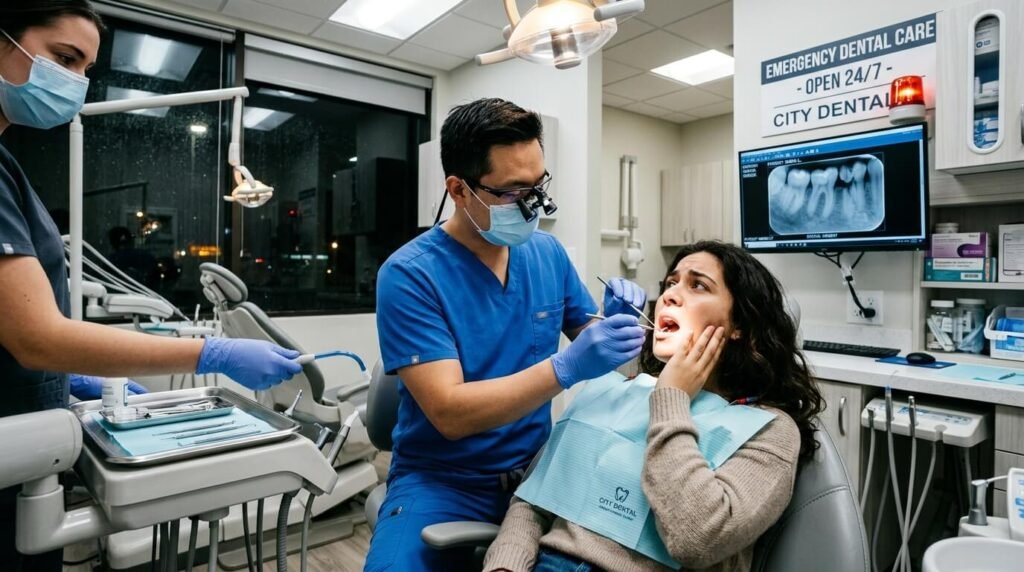

A dental emergency can happen at any time—while eating, playing sports, or even during sleep. Sudden tooth pain, broken teeth, swelling, or bleeding can feel scary and stressful. The main problem most people face is not knowing what to do immediately or where to find help quickly. The solution is to stay calm, take basic first-aid steps, and contact an emergency dentist as soon as possible for professional treatment. Quick action can often save a tooth, reduce pain, and prevent serious infections.
What Is a Dental Emergency?
A dental emergency is any situation involving your teeth, gums, or mouth that requires immediate care to stop pain, bleeding, or infection. According to dental health authorities, untreated emergencies can lead to long-term damage or tooth loss if not treated quickly (ADA, Mayo Clinic).
Common examples include:
- Severe toothache
- Knocked-out tooth
- Cracked or broken tooth
- Swollen gums or face
- Dental abscess (infection)
- Uncontrolled bleeding
A qualified emergency dentist is trained to handle these urgent situations safely and effectively.
Common Types of Dental Emergencies
Understanding different dental emergencies helps you react correctly.
1. Severe Tooth Pain
Sudden or intense tooth pain often signals infection, decay, or nerve damage.
2. Broken or Chipped Tooth
This can happen due to accidents, biting hard food, or sports injuries.
3. Knocked-Out Tooth
A tooth that has completely fallen out requires immediate attention—ideally within 30–60 minutes.
4. Dental Abscess
A serious infection at the root of the tooth or gums that may cause swelling, fever, and pain.
5. Lost Filling or Crown
This can expose sensitive parts of the tooth and cause discomfort.
What to Do Immediately During a Dental Emergency
Quick action is critical before reaching an emergency dentist.
For Tooth Pain
- Rinse mouth with warm salt water
- Take over-the-counter pain relief
- Avoid very hot or cold food
For Broken Tooth
- Save broken pieces if possible
- Rinse mouth gently
- Apply cold compress to reduce swelling
For Bleeding
- Apply gentle pressure with clean cloth or gauze
- Keep head elevated
For Swelling
- Use cold compress on the outside of the cheek
- Avoid pressing or massaging the area
What to Do If a Tooth Is Knocked Out
A knocked-out tooth is one of the most urgent dental emergencies.
Steps to follow:
- Hold the tooth by the crown (not root)
- Rinse gently with water (do not scrub)
- Try placing it back in the socket if possible
- If not, store it in milk or saliva
- Visit an emergency dentist immediately
According to dental experts (NHS, ADA), fast action greatly increases the chance of saving the tooth.
Severe Toothache: Causes and Relief
A severe toothache can result from:
- Tooth decay
- Infection
- Gum disease
- Cracked tooth
- Food stuck between teeth
Temporary relief methods:
- Warm saltwater rinse
- Painkillers (as directed)
- Cold compress
However, only a professional emergency dentist can treat the root cause.
Broken or Cracked Tooth Treatment
A cracked tooth may not always show visible damage, but it can cause sharp pain when chewing.
Treatment options include:
- Dental bonding
- Crown placement
- Root canal (if nerve is affected)
- Extraction in severe cases
Early treatment prevents infection and further damage.
Dental Abscess: A Serious Infection
A dental abscess is a pocket of pus caused by bacterial infection. It is considered a serious condition because it can spread to other parts of the body if untreated.
Symptoms include:
- Severe throbbing pain
- Swelling in gums or face
- Fever
- Bad taste in mouth
This condition requires urgent care from an emergency dentist or hospital.
When Should You Visit an Emergency Dentist?
You should seek emergency dental care if you experience:
- Persistent or severe pain
- Swelling in mouth or jaw
- Bleeding that won’t stop
- Knocked-out tooth
- Signs of infection
Medical experts from Cleveland Clinic and WebMD recommend immediate evaluation when pain or swelling is severe or worsening.
Cost of Emergency Dental Treatment
The cost of treatment varies depending on:
- Type of emergency
- Treatment required
- Location
- Dentist experience
Average costs may include:
- Consultation: $50–$200
- Tooth extraction: $100–$400
- Root canal: $300–$1500
- Crown replacement: $500–$2000
Many clinics offer payment plans or insurance coverage options.
How to Prevent Dental Emergencies
While not all emergencies can be avoided, good oral habits reduce risk.
Daily Prevention Tips:
- Brush twice daily
- Floss regularly
- Avoid hard foods like ice or nuts
- Wear mouthguards during sports
- Visit dentist every 6 months
Preventive care reduces the need for an emergency dentist visit in most cases.
What to Expect During an Emergency Dentist Visit
When you visit an emergency dental clinic, the process usually includes:
1. Examination
The dentist checks your mouth, teeth, and gums.
2. X-rays (if needed)
Used to identify hidden damage or infection.
3. Pain Management
Immediate steps are taken to reduce pain or swelling.
4. Treatment Plan
This may include filling, extraction, antibiotics, or repair work.
Emergency clinics focus on fast relief and stabilization.
Importance of Acting Quickly
Delaying treatment can lead to:
- Worsening pain
- Tooth loss
- Infection spread
- Higher treatment costs
Dental organizations like the ADA and NHS strongly emphasize immediate care in emergencies.
Role of an Emergency Dentist in Oral Health
An emergency dentist plays a crucial role in:
- Saving damaged teeth
- Treating infections
- Controlling pain quickly
- Preventing complications
- Restoring oral function
They are essential for protecting long-term oral health.
Final Thoughts
Dental emergencies are unpredictable, but knowing how to respond can make a huge difference. Quick first aid steps, combined with professional treatment from an emergency dentist, can save teeth, reduce pain, and prevent complications. The most important step is not to ignore symptoms and seek help immediately.
By maintaining good oral hygiene and staying prepared, you can reduce the chances of facing a dental emergency in the future. Remember, fast action always leads to better outcomes when it comes to dental health.
For reservations and additional information, visit : aspertaan.com