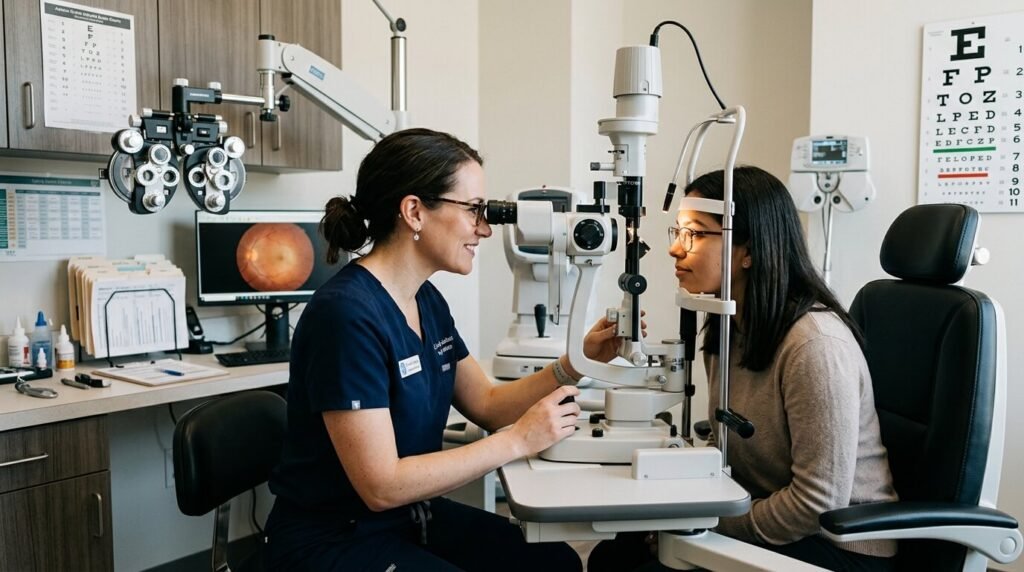

Many people ignore small vision problems like blurry sight, eye strain, or headaches, thinking they will go away on their own. The real problem is that delaying care can lead to serious eye conditions and even long-term vision loss. The solution is simple—visit an eye doctor as soon as symptoms appear or for regular checkups to protect your eyesight and detect problems early.
What Is an Eye Doctor?
An eye doctor is a trained medical professional who specializes in diagnosing, treating, and managing conditions related to vision and eye health. They help people maintain clear vision and prevent serious eye diseases.
Eye care professionals usually fall into three categories:
- Optometrist – Performs eye exams, prescribes glasses and contact lenses, and detects common eye issues.
- Ophthalmologist – A medical doctor who performs surgery and treats complex eye diseases.
- Optician – Helps fit and provide glasses or contact lenses based on prescriptions.
Together, they ensure complete eye health care from basic vision correction to advanced medical treatment.
Why Regular Eye Care Matters
Good vision is essential for daily life, including reading, driving, working, and studying. Many eye diseases develop slowly without obvious symptoms. Regular checkups help detect issues early before they become serious.
Early detection can help prevent:
- Permanent vision loss
- Glaucoma progression
- Cataracts worsening
- Diabetic eye complications
- Macular degeneration
Protecting your vision starts with awareness and timely checkups.
Signs You Need to See an Eye Doctor
You should never ignore warning signs related to your eyes. Even minor symptoms can indicate underlying problems.
Common symptoms include:
- Blurry or double vision
- Frequent headaches
- Eye redness or irritation
- Difficulty seeing at night
- Eye strain after screen use
- Sudden vision changes
- Dry or watery eyes
If you experience any of these issues, it may be time to consult an eye doctor for a proper evaluation.
When Should You Book an Appointment?
Knowing the right time to schedule an eye exam is important for maintaining long-term vision health.
You should book an appointment if:
- You have not had an eye exam in over a year
- You experience frequent headaches or eye strain
- Your vision is changing
- You have diabetes or high blood pressure
- You are over 40 years old
- Children show difficulty reading or seeing clearly
Routine checkups are essential even if your vision feels normal, as many conditions develop silently.
What Happens During an Eye Exam?
A comprehensive eye exam is simple, painless, and highly informative. During your visit, the eye doctor evaluates your vision and checks for eye diseases.
A typical eye exam includes:
- Vision testing (reading charts)
- Eye pressure measurement
- Retina and optic nerve examination
- Prescription check for glasses or contacts
- Pupil and eye movement tests
These tests help detect both vision problems and early signs of serious diseases.
Common Eye Conditions Treated by Eye Doctors
Eye specialists diagnose and manage a wide range of conditions, including:
- Nearsightedness (myopia)
- Farsightedness (hyperopia)
- Astigmatism
- Cataracts
- Glaucoma
- Dry eye syndrome
- Eye infections
Early treatment can significantly improve outcomes and protect long-term vision.
Eye Care for Children
Children’s eye health is very important for learning and development. Poor vision can affect school performance and confidence.
Parents should watch for:
- Squinting
- Sitting too close to screens
- Difficulty reading
- Frequent eye rubbing
- Poor attention in school
Regular checkups ensure early detection of vision problems in children.
Digital Eye Strain and Screen Time
Modern lifestyles involve long hours on phones, computers, and tablets, which can cause digital eye strain.
Symptoms include:
- Dry eyes
- Blurred vision
- Headaches
- Neck and shoulder pain
To reduce strain:
- Follow the 20-20-20 rule
- Take frequent screen breaks
- Adjust screen brightness
- Use proper lighting
If symptoms continue, consult an eye care specialist.
How to Choose the Right Eye Doctor
Choosing the right professional is important for quality care and accurate diagnosis.
Consider the following factors:
- Qualifications and certifications
- Experience and specialization
- Patient reviews
- Available technology
- Location and accessibility
- Communication style
A good specialist ensures comfort, trust, and clear guidance throughout treatment.
Cost of Eye Care Services
Eye care costs vary depending on location and type of service.
Typical costs may include:
- Basic eye exam: $50–$150
- Specialized tests: $100–$300
- Glasses or lenses: varies widely
- Surgical procedures: higher range depending on complexity
Many insurance plans cover routine eye exams, making regular checkups more affordable.
Preventing Eye Problems
Healthy habits can help protect your vision and reduce the risk of eye disease.
Tips include:
- Eat a balanced diet rich in vitamins
- Wear sunglasses outdoors
- Take breaks from screens
- Avoid rubbing your eyes
- Stay hydrated
- Get regular sleep
Preventive care supports long-term eye health and reduces future risks.
Importance of Early Diagnosis
Many eye diseases do not show early symptoms. That is why regular checkups are essential. Early diagnosis helps in:
- Slowing disease progression
- Preventing permanent damage
- Improving treatment success
- Maintaining clear vision
Timely care can make a significant difference in outcomes.
How Often Should You Get an Eye Exam?
Frequency depends on age and health:
- Children: every 1–2 years
- Adults under 40: every 2 years
- Adults over 40: annually
- High-risk patients: as advised by specialist
Regular visits ensure continuous monitoring of eye health.
Lifestyle Tips for Healthy Eyes
Healthy habits play a key role in maintaining vision:
- Eat leafy greens and fish
- Avoid smoking
- Manage blood sugar levels
- Exercise regularly
- Limit screen exposure
Good lifestyle choices support strong and healthy vision.
Conclusion
Taking care of your vision is one of the most important parts of overall health. Many people delay visiting an eye doctor, but early detection and routine checkups can prevent serious eye problems and protect long-term eyesight. Whether you are experiencing symptoms or simply due for a checkup, prioritizing eye care ensures clearer vision and a healthier future.
For reservations and additional information, visit : aspertaan.com