
Parents often struggle to keep their children’s teeth healthy because kids may resist brushing, love sugary snacks, or fear dental visits. These small issues can quickly turn into cavities, gum problems, and painful dental treatments. The good news is that early care, regular checkups, and guidance from a trusted pediatric dentist can help prevent most dental problems before they become serious. By building healthy habits early, parents can protect their child’s smile and confidence for years to come.
Why Children Need Specialized Dental Care
Children’s teeth and gums are very different from adult teeth. Their mouths are still developing, and they require gentle care designed for their age. A pediatric dental specialist focuses on oral health care for infants, toddlers, children, and teenagers.
Unlike general dentists, pediatric dental professionals receive additional training to understand child behavior, dental growth, and preventive treatments. Their clinics are usually designed to make children feel comfortable and relaxed.
Early dental care helps children:
- Develop healthy oral habits
- Avoid tooth decay
- Build confidence during dental visits
- Learn proper brushing and flossing techniques
- Detect dental issues early
Research and dental experts consistently recommend starting oral care during infancy to reduce future complications.
When Should a Child Visit the Dentist for the First Time?
One of the most common questions parents ask is when to schedule the first dental visit.
Dental experts recommend that children see a dentist:
- By their first birthday
- Or within six months after the first tooth appears
Many parents wait too long because baby teeth eventually fall out. However, primary teeth are essential for speech development, chewing, and guiding permanent teeth into the correct position.
Early visits also help children become familiar with the dental environment, reducing fear and anxiety later in life.
Start Oral Hygiene Early
Good dental care begins before the first tooth erupts.
Parents should gently clean a baby’s gums using a soft, damp cloth after feedings. Once teeth appear, brushing should begin immediately using a small, soft-bristled toothbrush.
Recommended toothpaste amounts:
- Under age 3: Rice-sized smear of fluoride toothpaste
- Ages 3 to 6: Pea-sized amount
Brushing twice daily is one of the most effective ways to prevent cavities in children.
Teach Proper Brushing Techniques
Many children brush too quickly or miss important areas of the mouth. Parents should supervise brushing until children can brush properly on their own.
Helpful brushing tips include:
- Brush for two full minutes
- Use gentle circular motions
- Clean the tongue daily
- Replace toothbrushes every three months
- Brush before bedtime every night
Making brushing fun can improve consistency. Parents can use songs, colorful toothbrushes, timers, or reward charts to encourage children.
Do Not Ignore Flossing
Flossing is just as important as brushing. Once two teeth touch each other, flossing should begin.
Food particles and plaque often remain between teeth where toothbrushes cannot reach. Without flossing, children have a higher risk of cavities and gum inflammation.
Parents should assist younger children with flossing until they develop enough coordination to do it independently.
Limit Sugary Foods and Drinks
Sugar is one of the biggest causes of childhood tooth decay. Bacteria in the mouth feed on sugar and produce acids that weaken enamel.
Parents should reduce:
- Candy
- Sticky snacks
- Soda
- Sports drinks
- Sugary juices
Instead, healthier options include:
- Cheese
- Yogurt
- Apples
- Carrots
- Water
- Milk
Frequent snacking on sugary foods can increase cavity risk even more than eating large amounts at once.
Why Fluoride Matters for Kids
Fluoride helps strengthen tooth enamel and protect against cavities.
Many parents worry about fluoride, but dental professionals widely support its safe use in small, age-appropriate amounts.
Sources of fluoride include:
- Fluoride toothpaste
- Fluoridated drinking water
- Professional fluoride treatments
Using the correct toothpaste amount is important because young children may swallow toothpaste accidentally.
How Often Should Kids Visit the Dentist?
Most children should visit the dentist every six months for regular cleanings and examinations.
Routine checkups allow dentists to:
- Identify cavities early
- Monitor tooth development
- Provide fluoride treatments
- Check bite alignment
- Teach better oral hygiene habits
Regular visits also help children feel more comfortable with dental care over time.
Common Dental Problems in Children
Several dental issues commonly affect children.
Cavities
Tooth decay remains one of the most common childhood diseases. Poor brushing habits and sugary diets are major causes.
Thumb Sucking
Thumb sucking after age four may affect jaw development and tooth alignment.
Gum Problems
Bleeding gums may indicate poor brushing or early gum disease.
Tooth Sensitivity
Children may experience discomfort from cavities, enamel wear, or dental injuries.
Teeth Grinding
Some children grind their teeth during sleep, which can wear down enamel over time.
Early treatment can prevent these issues from becoming more serious.
How to Reduce Fear of Dental Visits
Dental anxiety is very common among children. Parents play a major role in shaping how kids feel about the dentist.
Helpful strategies include:
- Avoid using scary words
- Stay calm and positive
- Read children’s books about dental visits
- Schedule appointments at convenient times
- Practice opening the mouth at home
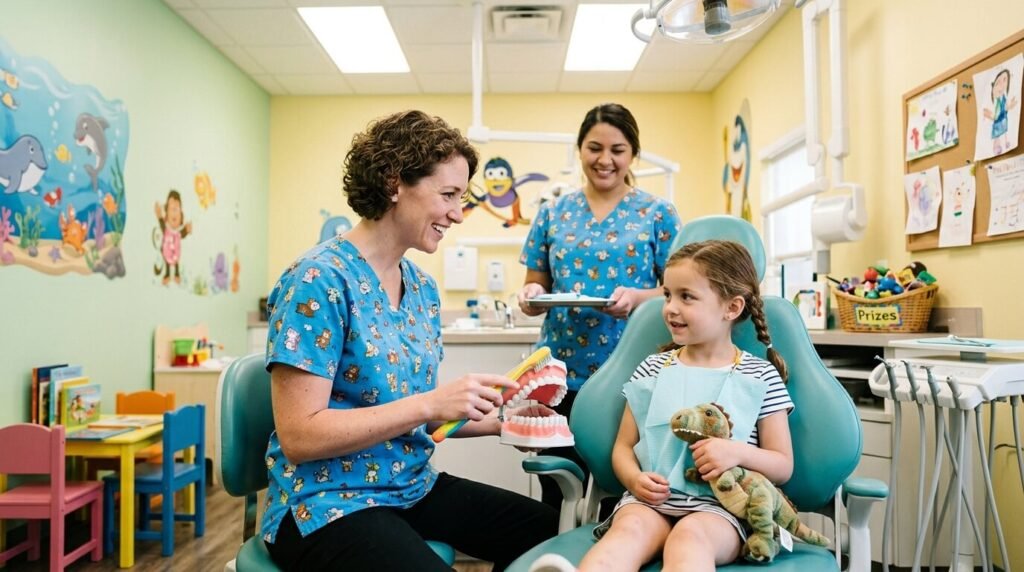
Pediatric dental clinics often create child-friendly environments with toys, colorful rooms, and gentle communication styles.
Signs Your Child May Need Dental Attention
Parents should watch for warning signs that may indicate dental problems.
These include:
- Tooth pain
- Bleeding gums
- Persistent bad breath
- White or brown spots on teeth
- Difficulty chewing
- Swollen gums
- Loose permanent teeth
Ignoring these signs can lead to infections and more complex treatments later.
The Connection Between Oral Health and Overall Health
Dental health affects more than just teeth. Studies show that poor oral hygiene may influence a child’s emotional well-being, concentration, sleep quality, and self-confidence.
Children with dental pain may struggle at school, avoid smiling, or experience difficulty eating properly.
Healthy teeth support:
- Better speech development
- Strong nutrition
- Positive self-esteem
- Improved social confidence
Good oral habits can have lifelong health benefits.
Choosing the Right Dental Specialist for Your Child
Finding the right provider is an important decision for parents.
Consider these factors:
- Experience treating children
- Friendly clinic environment
- Positive communication style
- Preventive care approach
- Emergency care availability
- Parent reviews and recommendations
A welcoming environment can make a huge difference in helping children feel safe and comfortable.
Healthy Habits Parents Should Encourage at Home
Parents can support strong oral health with simple daily habits.
Encourage Water Intake
Water helps rinse away food particles and sugar.
Create a Routine
Children respond well to consistent brushing and bedtime routines.
Lead by Example
Kids often copy their parents’ behavior. When parents brush and floss regularly, children are more likely to do the same.
Use Positive Reinforcement
Praise and rewards can motivate younger children to maintain healthy habits.
Avoid Bedtime Bottles
Sleeping with milk or juice bottles may increase the risk of severe cavities in babies.
The Role of Preventive Dental Treatments
Preventive care helps stop problems before they start.
Common preventive treatments include:
Dental Sealants
Thin protective coatings applied to molars to reduce cavity risk.
Fluoride Treatments
Professional fluoride applications strengthen enamel.
Regular Cleanings
Dental cleanings remove plaque buildup that brushing may miss.
Preventive treatments are often easier and less expensive than restorative procedures later.
Nutrition Tips for Strong Teeth
Nutrition plays a major role in oral health.
Foods that support healthy teeth include:
- Dairy products
- Leafy greens
- Nuts
- Eggs
- Fish
- Crunchy vegetables
Parents should limit acidic beverages and sticky sweets whenever possible.
Balanced nutrition supports stronger enamel and healthier gums.
Helping Children Build Lifelong Oral Health Habits
Teaching children healthy habits early creates long-term benefits.
Simple steps like:
- Brushing twice daily
- Flossing consistently
- Eating healthy foods
- Visiting the dentist regularly
can significantly reduce dental problems in adulthood.
Consistency matters more than perfection. Small daily efforts lead to healthier smiles over time.
Conclusion
Protecting a child’s oral health starts much earlier than many parents realize. From cleaning baby gums to scheduling regular dental visits, every small step matters. A trusted pediatric dentist can guide families through every stage of dental development while helping children feel safe and confident about oral care.
By encouraging healthy routines, limiting sugar, and prioritizing preventive care, parents can reduce cavities, avoid painful treatments, and support their child’s overall well-being. Strong dental habits developed during childhood often continue into adulthood, creating healthier smiles for life.
For reservations and additional information, visit : aspertaan.com