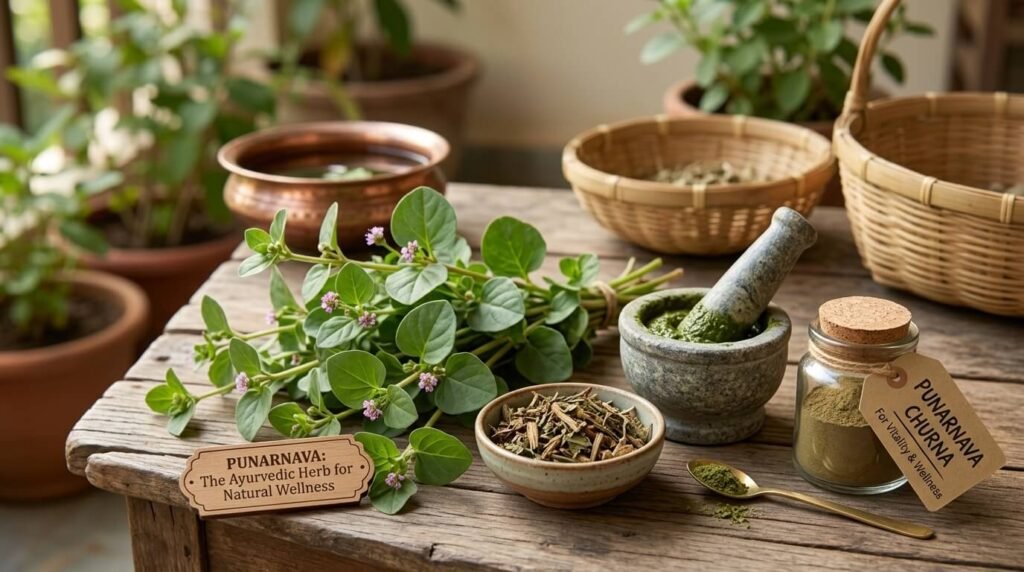

Punarnava is one of the most valued herbs in Ayurveda. Its name means “renewed again,” reflecting its traditional reputation for restoring health and vitality. For centuries, Punarnava has been used to support kidney function, liver health, digestion, and overall wellness. Today, growing scientific research has increased interest in this ancient herb, although many of its traditional uses still require more high-quality human studies.
In this guide, you’ll learn everything about Punarnava, including its benefits, uses, dosage, side effects, and precautions.
What Is Punarnava?
Punarnava (scientific name: Boerhavia diffusa) is a flowering plant commonly found across India and other tropical regions. Ayurveda classifies it as a rejuvenating herb because it helps maintain the body’s natural balance.
Traditionally, the roots, leaves, and whole plant are used in herbal preparations. Punarnava is available in several forms, including:
- Powder (Churna)
- Capsules
- Tablets
- Liquid extracts
- Decoctions (Kashayam)
Ayurvedic practitioners often combine Punarnava with other herbs to enhance its effects.
Nutritional and Active Compounds in Punarnava
The health benefits of Punarnava come from several naturally occurring compounds, including:
- Punarnavine
- Boeravinones
- Flavonoids
- Alkaloids
- Sterols
- Antioxidants
These compounds may contribute to the herb’s antioxidant, anti-inflammatory, and diuretic properties.
Health Benefits of Punarnava
1. Supports Kidney Health
One of the most well-known uses of Punarnava is kidney support. Ayurveda has traditionally recommended it to promote healthy urine flow and help maintain normal fluid balance.
Some early studies suggest that Punarnava may support kidney function, but more clinical research is needed before firm conclusions can be made.
2. Helps Reduce Water Retention
Punarnava is widely recognized for its natural diuretic effect. It may help reduce mild water retention and swelling by encouraging the body to eliminate excess fluids.
This traditional use remains one of the most common reasons people choose Punarnava supplements.
3. Supports Liver Function
Ayurvedic medicine has long used Punarnava to support liver health. Research suggests it contains compounds with antioxidant properties that may help protect liver cells from oxidative stress.
However, it should never replace medical treatment for liver disease.
4. Promotes Healthy Digestion
Many herbal formulations include Punarnava to improve digestion. It may help reduce bloating, improve appetite, and support smoother digestion.
Traditional Ayurvedic practitioners also recommend it for maintaining digestive balance.
5. May Help Manage Inflammation
Laboratory and animal studies suggest that Punarnava contains anti-inflammatory compounds that may help reduce swelling and discomfort.
Although these findings are promising, larger human studies are still needed.
6. Rich in Antioxidants
Antioxidants help protect cells from damage caused by free radicals.
Punarnava contains several antioxidant compounds that may support overall health and healthy aging.
7. Supports Heart Health
By helping maintain healthy fluid balance, Punarnava may indirectly support cardiovascular health. Some traditional texts also associate it with maintaining healthy blood pressure, but evidence remains limited.
Traditional Uses of Punarnava in Ayurveda
Ayurvedic practitioners have traditionally used Punarnava for:
- Water retention
- Kidney wellness
- Liver support
- Joint discomfort
- Digestive health
- Respiratory wellness
- General rejuvenation
- Healthy urinary function
These traditional uses are based on Ayurvedic practice and may not all be fully confirmed by modern clinical research.
How to Use Punarnava
Punarnava comes in several convenient forms.
Powder
Mix with warm water or honey as directed by an Ayurvedic practitioner.
Capsules or Tablets
These provide a standardized and convenient daily dose.
Herbal Tea
Some people prepare Punarnava as a traditional herbal decoction.
Liquid Extract
Liquid extracts may absorb quickly and are commonly used in Ayurvedic practice.
Always follow the dosage instructions provided by your healthcare provider or product manufacturer.
Possible Side Effects of Punarnava
Most healthy adults tolerate Punarnava well when used appropriately.
Possible side effects may include:
- Mild stomach discomfort
- Frequent urination
- Low blood pressure in sensitive individuals
- Allergic reactions (rare)
Stop use and seek medical advice if unusual symptoms occur.
Who Should Avoid Punarnava?
Speak with a healthcare professional before using Punarnava if you:
- Are pregnant or breastfeeding
- Have kidney disease requiring medical treatment
- Have severe liver disease
- Take blood pressure medications
- Use diuretics
- Take diabetes medication
Because Punarnava may influence fluid balance or blood sugar, medical supervision is important in these situations.
Can Punarnava Help with Weight Loss?
Some people use Punarnava while trying to lose weight because it may reduce water retention.
However, Punarnava does not directly burn body fat. Any short-term weight reduction is usually related to fluid balance rather than fat loss.
Healthy eating and regular exercise remain the foundation of sustainable weight management.
Tips for Using Punarnava Safely
To get the best results:
- Buy products from trusted manufacturers.
- Follow recommended dosages.
- Drink enough water.
- Eat a balanced diet.
- Avoid self-medicating for serious illnesses.
- Consult a qualified healthcare professional before long-term use.
Frequently Asked Questions
Is Punarnava safe for daily use?
Many people use Punarnava daily under professional guidance. Long-term use should be discussed with a healthcare provider.
What is the best time to take Punarnava?
Many Ayurvedic practitioners recommend taking Punarnava before meals or according to individual health needs.
Does Punarnava detox the kidneys?
The term “kidney detox” is commonly used in marketing, but there is limited scientific evidence supporting true detoxification claims. Punarnava may support normal kidney function and healthy urine flow, but it should not replace medical care.
Can Punarnava lower blood sugar?
Some early studies suggest possible benefits, but evidence is still limited. People taking diabetes medications should consult their doctor before use.
Conclusion
Punarnava remains one of Ayurveda’s most respected herbs because of its long history of supporting kidney health, liver function, digestion, and healthy fluid balance. Modern research continues to explore its potential benefits, but many traditional claims still require stronger scientific evidence.
When used responsibly and under professional guidance, Punarnava can be a valuable addition to a healthy lifestyle. It should always complement—not replace—medical advice, prescribed treatments, and balanced nutrition.