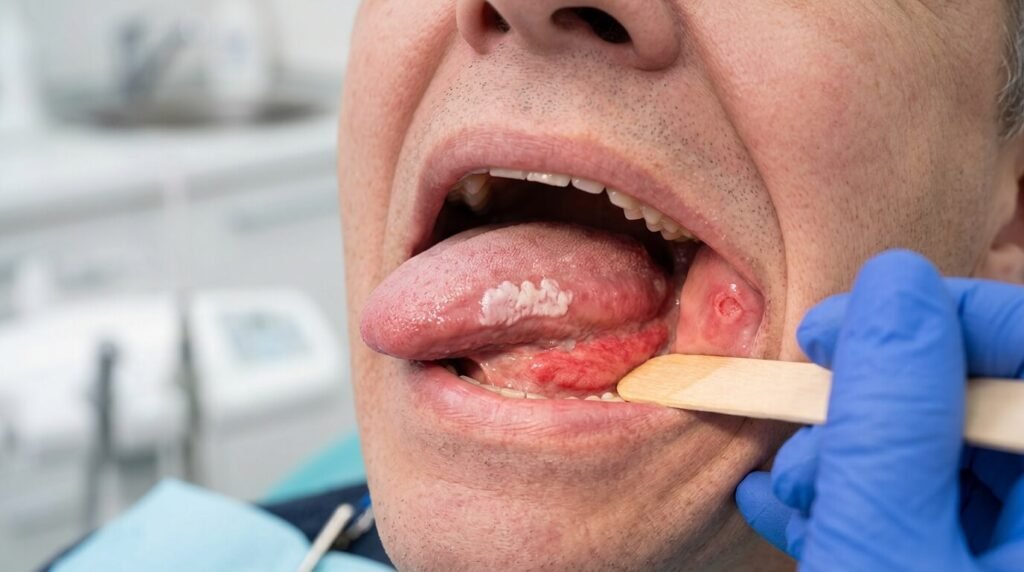

Oral cancer symptoms are often subtle in the beginning, making them easy to overlook. Many people mistake the early signs for common mouth ulcers, gum infections, or minor irritation. However, recognizing these symptoms early can make a significant difference in treatment success and overall survival.
Oral cancer affects the lips, tongue, cheeks, gums, floor of the mouth, roof of the mouth, and throat. It can develop in anyone, although certain lifestyle habits and medical conditions increase the risk. Understanding oral cancer symptoms helps you seek medical attention before the disease progresses.
In this guide, you’ll learn about the warning signs, causes, diagnosis, treatment options, and prevention strategies to protect your oral health.
What Is Oral Cancer?
Oral cancer is a type of head and neck cancer that develops when abnormal cells grow uncontrollably inside the mouth or surrounding tissues. It commonly begins in the thin, flat cells lining the mouth, known as squamous cells.
Although oral cancer can become life-threatening, early diagnosis greatly improves the chances of successful treatment.
Common Oral Cancer Symptoms
Recognizing oral cancer symptoms early is one of the best ways to improve outcomes.
Here are the most common warning signs:
1. A Mouth Sore That Doesn’t Heal
A sore lasting more than two weeks is one of the most important warning signs. Unlike regular canker sores, cancerous ulcers usually persist and may gradually enlarge.
2. White or Red Patches
White patches (leukoplakia) or red patches (erythroplakia) inside the mouth should never be ignored. These abnormal areas may become cancerous over time.
3. Persistent Mouth Pain
Ongoing pain without an obvious cause may indicate underlying tissue damage caused by oral cancer.
4. Lump or Thickened Area
A lump inside the mouth, cheek, neck, or jaw deserves prompt medical evaluation.
5. Difficulty Swallowing
Many people experiencing oral cancer symptoms report pain or difficulty swallowing food and liquids.
6. Loose Teeth
Teeth that suddenly become loose without gum disease or injury may signal cancer affecting the jawbone or surrounding tissues.
7. Jaw Pain or Swelling
Swelling around the jaw can interfere with chewing and wearing dentures comfortably.
8. Persistent Bad Breath
Bad breath that doesn’t improve despite good oral hygiene may indicate tissue breakdown caused by cancer.
9. Numbness
Loss of feeling in the lips, tongue, or mouth should never be ignored.
10. Voice Changes
Hoarseness lasting several weeks may indicate cancer affecting nearby tissues or the throat.
Less Common Oral Cancer Symptoms
Some people experience less obvious signs, including:
- Ear pain without infection
- Difficulty moving the tongue
- Pain while chewing
- Bleeding inside the mouth
- Chronic sore throat
- Feeling like something is stuck in the throat
- Unexplained weight loss
- Fatigue
These oral cancer symptoms often appear alongside more noticeable warning signs.
Causes of Oral Cancer
Oral cancer develops due to genetic changes that cause cells to grow uncontrollably.
Several factors increase the risk:
- Tobacco smoking
- Chewing tobacco
- Heavy alcohol use
- Human papillomavirus (HPV) infection
- Long-term sun exposure to the lips
- Poor oral hygiene
- Chronic mouth irritation
- Weak immune system
- Previous history of cancer
Most cases result from a combination of several risk factors rather than one single cause.
Who Is at Higher Risk?
Anyone can develop oral cancer, but higher-risk groups include:
- Adults over age 45
- Tobacco users
- Heavy alcohol drinkers
- People with HPV infection
- Men (slightly higher risk than women)
- Individuals with prolonged sun exposure
- Those with poor nutrition
Regular dental examinations become increasingly important for these groups.
When Should You See a Doctor?
Contact your dentist or healthcare provider if any oral cancer symptoms last longer than two weeks.
Seek evaluation for:
- Persistent mouth ulcers
- Unexplained bleeding
- Swelling
- Difficulty swallowing
- Voice changes
- Lumps
- White or red patches
Early diagnosis dramatically improves treatment success.
How Is Oral Cancer Diagnosed?
Doctors use several methods to confirm oral cancer.
Physical Examination
The dentist examines your mouth, tongue, throat, and neck for suspicious areas.
Biopsy
A small tissue sample is removed and examined under a microscope. This is the only way to confirm cancer.
Imaging Tests
Depending on the situation, your doctor may recommend:
- CT scan
- MRI
- PET scan
- X-rays
These tests determine whether cancer has spread.
Treatment Options
Treatment depends on the cancer stage, location, and overall health.
Surgery
Small tumors may be completely removed through surgery.
Radiation Therapy
High-energy radiation destroys cancer cells while preserving surrounding tissue whenever possible.
Chemotherapy
Chemotherapy uses medications to kill cancer cells or shrink tumors before surgery.
Targeted Therapy
Certain medications attack specific proteins involved in cancer growth.
Immunotherapy
Newer treatments help the immune system recognize and destroy cancer cells.
Many patients receive a combination of treatments for the best outcome.
Can Oral Cancer Be Prevented?
Although not every case can be prevented, healthy habits significantly reduce the risk.
Quit Tobacco
Avoid smoking and smokeless tobacco products.
Limit Alcohol
Reducing alcohol consumption lowers cancer risk.
Practice Good Oral Hygiene
Brush, floss, and schedule regular dental checkups.
Eat a Healthy Diet
Consume plenty of fruits and vegetables rich in antioxidants.
Protect Your Lips
Use lip balm with SPF when spending time outdoors.
Get HPV Vaccination
Vaccination helps reduce the risk of HPV-related oral cancers.
Perform Monthly Self-Exams
Check your mouth for unusual sores, lumps, or color changes.
Why Early Detection Matters
Early-stage oral cancer often has excellent treatment outcomes.
Unfortunately, many people ignore oral cancer symptoms because they resemble common mouth problems.
Regular dental visits help identify suspicious changes before symptoms become severe.
The earlier cancer is diagnosed, the less aggressive treatment may be required.
Living After Oral Cancer
Recovery varies depending on treatment.
Many patients regain normal speech, eating, and daily activities with rehabilitation and follow-up care.
Doctors usually recommend:
- Regular follow-up appointments
- Dental care
- Healthy nutrition
- Tobacco cessation
- Exercise
- Emotional support
Long-term monitoring helps detect recurrence early.
Frequently Asked Questions
What are the first oral cancer symptoms?
The earliest oral cancer symptoms often include a mouth sore that doesn’t heal, white or red patches, persistent pain, or a lump inside the mouth.
Can oral cancer be painless?
Yes. Early oral cancer may cause little or no pain, making regular dental checkups essential.
How long should a mouth ulcer last before seeing a doctor?
Any ulcer lasting more than two weeks should be evaluated by a healthcare professional.
Does everyone with white patches have oral cancer?
No. Many white patches are harmless, but some can become cancerous, so professional evaluation is recommended.
Can young adults develop oral cancer?
Yes. Although it is more common in older adults, younger people can also develop oral cancer, particularly if HPV infection is involved.
Conclusion
Recognizing oral cancer symptoms can save lives. Persistent mouth sores, unusual patches, swelling, pain, difficulty swallowing, or unexplained lumps should never be ignored. While these signs do not always indicate cancer, prompt medical evaluation is essential for an accurate diagnosis.
Regular dental checkups, avoiding tobacco, limiting alcohol, maintaining good oral hygiene, and adopting a healthy lifestyle are among the most effective ways to reduce your risk. If you notice oral cancer symptoms that persist for more than two weeks, seek professional care immediately. Early detection offers the best chance for successful treatment, quicker recovery, and a healthier future.