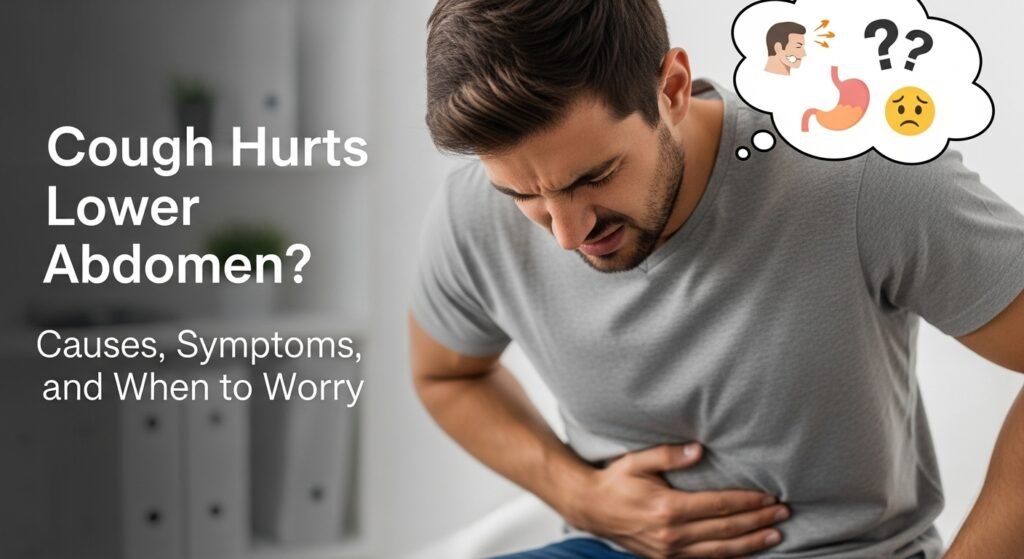

If your cough hurts lower abdomen, it can feel scary and uncomfortable. Many people think something serious is wrong. In most cases, the pain happens because repeated coughing puts pressure on your abdominal muscles and causes strain. The good news is that mild cases usually improve with rest, hydration, and proper cough treatment. However, sometimes the pain may point to a deeper problem like a hernia, infection, or appendix inflammation. This detailed guide explains the causes, symptoms, treatments, and warning signs so you know when to relax — and when to see a doctor.
Why Does Coughing Cause Lower Abdominal Pain?
When you cough, your body creates strong pressure inside your chest and abdomen. This pressure forces your abdominal muscles to contract quickly. If coughing continues for days or weeks, the muscles become tired, inflamed, or even slightly torn.
That is why many people experience lower abdominal pain when coughing. The discomfort may feel sharp, dull, pulling, or tight depending on the cause.
The abdomen contains:
- Muscles
- Intestines
- Bladder
- Appendix
- Reproductive organs (in women)
- Connective tissues
Pressure from coughing can affect any of these areas.
Most Common Causes
Let’s explore the main reasons behind this pain in simple language.
1. Abdominal Muscle Strain (Most Common Reason)
Frequent coughing from flu, bronchitis, allergies, or viral infections can strain the abdominal wall. This is the top reason why cough hurts lower abdomen in otherwise healthy people.
Symptoms include:
- Pain that increases when coughing, laughing, or sneezing
- Tenderness when touching the area
- Mild swelling
- Pain that improves with rest
Muscle strain usually heals within 1–2 weeks.
2. Hernia
A hernia happens when internal tissue pushes through a weak spot in the abdominal wall. Coughing increases internal pressure and makes the bulge more painful.
You may notice:
- A visible lump in the groin or near the belly button
- Burning or aching feeling
- Pain in lower stomach when coughing
If the bulge becomes painful or stuck, immediate medical help is needed.
3. Appendicitis
Appendicitis causes inflammation of the appendix, usually in the lower right abdomen. If you feel sharp lower abdominal pain when coughing, especially on the right side, this could be serious.
Other signs:
- Fever
- Nausea
- Loss of appetite
- Severe pain that worsens quickly
Appendicitis requires emergency surgery.
4. Urinary Tract Infection (UTI)
A bladder infection can cause pelvic discomfort. When pressure increases during coughing, pain may feel stronger.
Common symptoms:
- Burning during urination
- Frequent urge to urinate
- Lower pelvic pressure
Antibiotics are usually needed for treatment.
5. Ovarian or Pelvic Conditions (Women)
Women may experience why does my lower abdomen hurt when I cough due to:
- Ovarian cysts
- Endometriosis
- Pelvic infections
Pain may become worse around menstruation.
6. Digestive Issues
Gas, constipation, or irritable bowel syndrome (IBS) can create abdominal pressure. Coughing adds extra strain, leading to discomfort.
What Does the Pain Feel Like?
Understanding the type of pain helps identify the cause.
| Type of Pain | Possible Cause |
| Dull ache | Muscle strain |
| Sharp stabbing pain | Hernia or appendix |
| Burning sensation | Hernia |
| Cramping pain | Digestive issue |
| Deep internal pain | Organ-related issue |
If cough hurts lower abdomen but improves when you rest, muscle strain is likely.
When Should You Worry?
Most mild cases are not dangerous. However, seek medical attention if you notice:
- Severe or worsening pain
- Fever
- Vomiting
- Blood in urine or stool
- A visible abdominal bulge
- Pain lasting more than two weeks
If cough hurts lower abdomen and is combined with these symptoms, do not ignore it.
How Doctors Diagnose the Problem
A healthcare provider may:
- Ask about your cough duration and intensity
- Check for tenderness or swelling
- Order blood or urine tests
- Recommend ultrasound or CT scan
Proper diagnosis ensures correct treatment.
Treatment Options
Treatment depends on the cause.
For Muscle Strain
- Rest your body
- Apply warm compress
- Use mild pain relievers
- Support abdomen with a pillow while coughing
Most muscle-related pain heals naturally.
For Hernia
Small hernias may only need monitoring. Larger or painful hernias require surgery.
For Infections
UTIs and pelvic infections need antibiotics. Always complete the full course.
For Appendicitis
Emergency surgery is required.
Home Care Tips for Relief
If pain is mild and caused by muscle strain, these steps help:
- Drink warm fluids to calm cough
- Use honey for throat relief
- Avoid heavy lifting
- Stay hydrated
- Get enough sleep
Reducing cough frequency lowers abdominal pressure.
Can Chronic Cough Cause Long-Term Damage?
Yes, persistent coughing can:
- Tear abdominal muscles
- Trigger hernia formation
- Weaken pelvic floor muscles
- Cause rib pain
If your cough lasts more than three weeks, consult a doctor.
Risk Factors
Certain people are more likely to experience this pain:
- Smokers
- People with chronic lung disease
- Pregnant women
- Individuals with weak core muscles
- Overweight individuals
Strengthening abdominal muscles after recovery can help prevent recurrence.
Prevention Strategies
To avoid future discomfort:
- Treat cough early
- Stay hydrated
- Maintain healthy weight
- Practice gentle core exercises
- Avoid smoking
When cough hurts lower abdomen, prevention starts with managing the cough itself.
Muscle Pain vs Internal Organ Pain
It is important to tell the difference.
Muscle Pain:
- Gets worse with movement
- Improves with rest
- Tender when touched
Organ Pain:
- Constant and deep
- May include fever or nausea
- Does not improve with rest
If unsure, medical evaluation is safest.
Frequently Asked Questions
Is it normal if cough hurts lower abdomen?
Yes, especially after days of repeated coughing. Muscle strain is common.
Can coughing alone cause serious problems?
Rarely. But severe coughing can trigger hernias in weak abdominal walls.
How long should the pain last?
Muscle strain pain usually improves within 7–14 days.
Final Thoughts
If cough hurts lower abdomen, the most common reason is simple muscle strain from repeated pressure. In many cases, rest and proper cough treatment solve the issue. However, conditions like hernia, appendicitis, infections, or pelvic disorders may also cause pain.
Pay attention to warning signs such as fever, severe pain, vomiting, or swelling. When in doubt, consult a healthcare professional. Early diagnosis protects your health and prevents complications.
Your body sends signals for a reason — listen carefully and act wisely.
Red More:aspertaan