
Introduction
Many women schedule a cervical screening test but suddenly realize they have started their menstrual cycle. This situation creates confusion and worry because they are unsure whether a pap smear on period is possible or if the appointment should be rescheduled. Missing or delaying a screening test can increase anxiety, especially when cervical health is important for early detection of disease. The good news is that in some cases a Pap smear can still be performed during menstruation, although doctors usually recommend scheduling the test when you are not on your period to ensure the most accurate results. In this complete guide, we will explain whether you can have a pap smear on period, how menstruation affects the test, and what doctors recommend for the best results.
What Is a Pap Smear?
A Pap smear, also called a Pap test, is a medical screening procedure used to detect abnormal cells in the cervix. The cervix is the lower part of the uterus that connects to the vagina.
During the test, a healthcare provider gently collects cells from the cervix using a small brush or spatula. These cells are then examined in a laboratory to detect:
- Precancerous changes
- Cervical cancer
- Abnormal cervical cells
- Human papillomavirus (HPV) related changes
Regular Pap tests are one of the most effective methods for preventing cervical cancer because they allow doctors to detect problems early.
Can You Get a Pap Smear on Your Period?
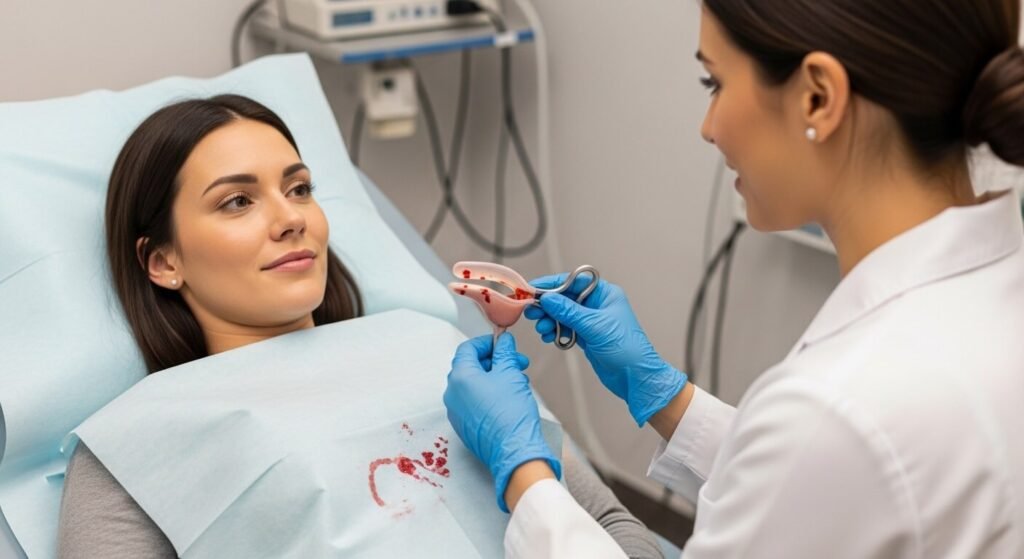
Many women ask whether a pap smear on period is possible. The short answer is yes, but it is usually not recommended.
Menstrual blood can mix with cervical cells collected during the test. This may make it harder for laboratory technicians to clearly examine the cells under a microscope.
Because of this, many doctors recommend scheduling the test when you are not menstruating, ideally about 10–20 days after the first day of your last period.
However, if the bleeding is very light, some healthcare providers may still perform the test.
Why Doctors Prefer Not to Do a Pap Smear During Menstruation
Healthcare professionals usually advise against a pap smear on period because menstruation can affect test accuracy.
1. Blood Can Obscure Cervical Cells
Menstrual blood may cover the cervical cells collected during the test. This makes it harder for the laboratory to analyze the sample correctly.
2. Increased Chance of Inconclusive Results
If the sample contains too much blood, the laboratory may not be able to analyze it properly. This may require repeating the test later.
3. Reduced Visibility for the Doctor
During menstruation, it may be more difficult for the doctor to clearly see the cervix while collecting the sample.
Because of these factors, most medical professionals recommend avoiding a pap smear on period whenever possible.
When It Might Be Okay to Have a Pap Smear on Period
Although it is not ideal, there are situations where a pap smear on period might still be performed.
Light Menstrual Flow
If the bleeding is very light or close to the end of your cycle, doctors may still collect a usable sample.
Urgent Medical Screening
If a patient is overdue for screening or has symptoms requiring immediate evaluation, doctors may perform the test even during menstruation.
Limited Appointment Availability
Sometimes scheduling conflicts make it difficult to reschedule quickly, so a doctor may proceed with the test if conditions allow.
Still, the best approach is usually to wait until menstruation ends.
Best Time to Schedule a Pap Smear
The ideal time to schedule a Pap smear is when you are not on your period.
Doctors generally recommend scheduling the test:
- At least 5 days after your period ends
- Around 10–20 days after the first day of your last period
At this time, cervical cells are easier to collect and analyze, which improves the accuracy of the screening.
Avoiding a pap smear on period helps ensure the best diagnostic results.
How to Prepare for a Pap Smear
Proper preparation helps doctors obtain the most accurate results.
Before your Pap smear appointment, you should avoid:
- Sexual intercourse for 24–48 hours
- Vaginal creams or medications
- Douching
- Tampons
- Birth control foams or gels
These products can interfere with cervical cells and affect test results.
If you accidentally schedule a pap smear on period, contact your healthcare provider to ask whether you should reschedule.
What Happens During a Pap Smear Test?
Many women feel nervous about the procedure, especially if they are considering a pap smear on period.
The test is quick and usually takes only a few minutes.
Step-by-step process
- You lie on an examination table.
- A speculum is inserted gently into the vagina to open it.
- The doctor collects cervical cells using a soft brush or spatula.
- The cells are placed in a container and sent to a laboratory.
The test may feel slightly uncomfortable but should not be painful.
How Often Should You Get a Pap Smear?
Screening recommendations vary depending on age and medical history.
General guidelines include:
Ages 21–29
Women should get a Pap smear every three years.
Ages 30–65
Women may get a Pap smear every three years, or combine it with HPV testing every five years.
Over Age 65
Women with normal screening history may no longer need routine tests.
These guidelines help detect cervical changes early and prevent cervical cancer.
Symptoms That May Require a Pap Test
Sometimes doctors recommend a Pap smear outside regular screening schedules.
You may need testing if you experience:
- Unusual vaginal bleeding
- Bleeding after sexual intercourse
- Persistent pelvic pain
- Abnormal vaginal discharge
If these symptoms occur, your doctor may still perform a pap smear on period if necessary for diagnosis.
Pap Smear vs HPV Test
Many people confuse Pap smears with HPV tests.
Pap Smear
Detects abnormal or precancerous cervical cells.
HPV Test
Detects human papillomavirus infections that may lead to cervical cancer.
In many cases, doctors perform both tests together for better screening results.
Even if you are considering a pap smear on period, the HPV test may also be affected by menstrual blood.
Tips for Women Scheduling a Pap Smear
If you are planning your screening appointment, these tips can help.
Track Your Menstrual Cycle
Knowing your cycle helps avoid scheduling a pap smear on period.
Choose Mid-Cycle Appointments
This timing often provides the best conditions for accurate testing.
Communicate with Your Doctor
If your period starts unexpectedly, call your clinic to ask whether you should reschedule.
Do Not Skip Screening
Regular cervical screening is essential for early detection and prevention of serious health problems.
Importance of Regular Cervical Screening
Pap smears have significantly reduced cervical cancer rates worldwide.
Early detection allows doctors to treat abnormal cells before they become cancerous.
Benefits of regular screening include:
- Early detection of precancerous cells
- Prevention of cervical cancer
- Monitoring cervical health
- Peace of mind about reproductive health
Even if scheduling conflicts occur due to menstruation, it is important not to skip screenings entirely.
Conclusion
A pap smear on period is sometimes possible, but it is generally not recommended because menstrual blood can interfere with the accuracy of the test results. Most healthcare professionals advise scheduling the screening when you are not menstruating, ideally about 10 to 20 days after the start of your last period.
However, if your menstrual flow is light or the test is medically urgent, a doctor may still perform the screening. The most important thing is to maintain regular cervical health checkups and follow your doctor’s recommendations.
By understanding the best time for screening and preparing properly, women can ensure accurate results and protect their long-term reproductive health.
Frequently Asked Questions (FAQs)
1. Can you have a pap smear on period?
Yes, a pap smear on period can sometimes be performed, but doctors usually recommend avoiding it because menstrual blood may interfere with the accuracy of the test results.
2. Will my pap smear results be affected if I am on my period?
Yes, menstrual blood can mix with the cervical cell sample, which may make it difficult for the laboratory to analyze the cells clearly. This may lead to unclear or inconclusive results.
3. Should I cancel my appointment if my period starts before a pap smear?
In most cases, it is recommended to reschedule your appointment if your period starts, especially if the bleeding is heavy. However, if the flow is very light, your doctor may still proceed with the test.
4. What is the best time to schedule a pap smear?
The best time to schedule a Pap smear is about 10 to 20 days after the first day of your last period. This timing helps ensure the cervix is clear and allows for more accurate test results.
5. Can I still get a pap smear if my period is almost finished?
Yes, if your period is very light or almost finished, many doctors may still perform the test. However, you should inform your healthcare provider before the procedure.
6. Is a pap smear painful during menstruation?
A Pap smear is generally not painful, even during menstruation. However, some women may feel slightly more discomfort because the body can be more sensitive during their period.
7. Why are regular pap smears important?
Regular Pap smears help detect abnormal cervical cells early, which can prevent cervical cancer. Early detection allows doctors to treat problems before they become serious.
For reservations and additional information, visit : aspertaan.com