
Introduction
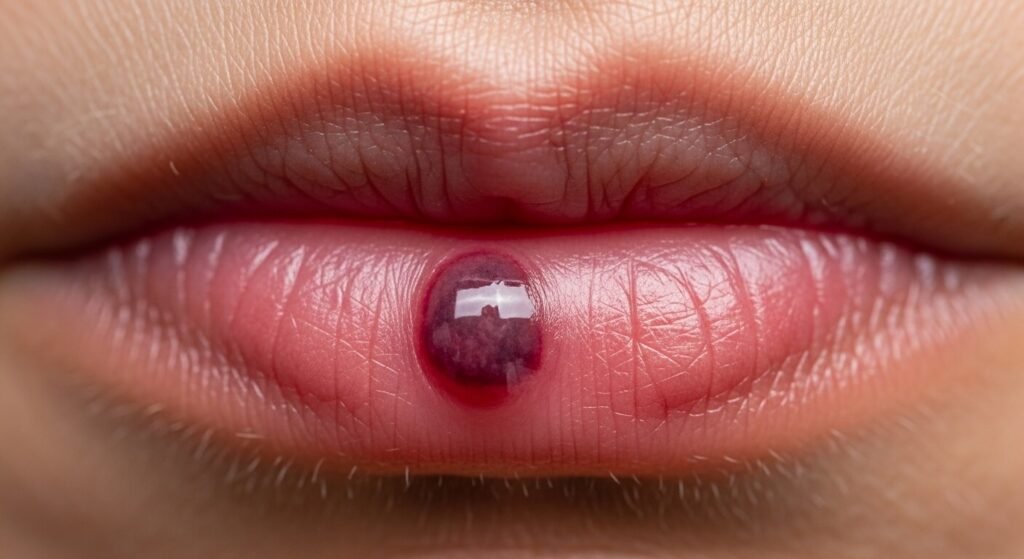
Seeing a dark or red bump on your lip can be worrying. This is usually a blood blister on lip, caused by small blood vessels breaking under the skin. Most blisters are harmless, but they can be painful and make eating or talking uncomfortable. The solution is simple: know the causes, take proper care, and use safe treatments. This guide explains why blood blisters appear, how to recognize them, and what you can do to heal faster.
What Is a Blood Blister on the Lip?
A blood blister on the lip is a small bubble filled with blood instead of clear fluid. It forms when tiny blood vessels under the skin are damaged. Lips are very thin and sensitive, so they are more likely to develop blisters from small injuries. These blisters may be tender, swollen, or slightly raised but usually heal on their own.
Common Blood Blister Lip Causes
Blood blisters on the lip can happen for several reasons:
- Lip biting or chewing: Accidentally biting your lip while eating or due to stress is the most common cause.
- Hot food or drinks: Burns from hot tea, coffee, or food can injure the lip.
- Dental appliances: Braces, dentures, or sharp teeth can rub against the lip and cause trauma.
- Allergic reactions: Some people develop blisters after using certain lip balms, toothpaste, or cosmetics.
- Medical conditions: Rarely, vitamin deficiencies or blood vessel problems may cause blisters.
Blood Blister on Lip Symptoms
Symptoms are usually easy to recognize:
- Dark red, purple, or black bubble on the lip
- Mild swelling and tenderness
- Smooth or slightly raised skin
- Sensitivity while eating or talking
Most blood blisters are small and stay the same size, but larger or repeatedly injured blisters may be more painful.
Blood Blister vs Cold Sore
It is important to know the difference:
- Blood blisters are caused by injury, cold sores by a virus
- Blood blisters contain blood, cold sores contain clear fluid
- Cold sores are contagious, blood blisters are not
Knowing the difference helps in choosing the right treatment.
Blood Blister on Lip Treatment Options
Most blood blisters heal on their own. You can help them heal faster by following these tips:
- Leave it alone: Do not pop the blister, or it may get infected.
- Cold compress: Ice wrapped in a cloth reduces swelling and discomfort.
- Pain relief: Over-the-counter painkillers help if the area is sore.
- Protect the lip: Avoid spicy foods, hot drinks, or biting the lip.
If the blister becomes infected or lasts more than two weeks, see a doctor.
Blood Blister on Lip Home Remedies
Safe home remedies can support healing:
- Aloe vera gel to soothe irritation
- Honey for natural antibacterial action
- Coconut oil to moisturize lips
- Saltwater rinse to reduce bacteria
Apply gently and only to intact blisters.
Blood Blister on Lip Healing Time
Most small blood blisters heal within 7 to 14 days. Larger blisters or those that are repeatedly irritated may take longer. Signs of healing include reduced swelling, color fading, and flattening of the skin. Persistent blisters should be checked by a doctor.
When to See a Doctor
Consult a doctor if:
- Blisters keep coming back
- Bleeding occurs frequently
- Severe pain develops
- Signs of infection appear (pus, redness, fever)
Persistent or unusual blisters may need medical evaluation.
How to Prevent Blood Blisters on Lips
Simple prevention steps include:
- Avoid lip biting and chewing
- Let hot food or drinks cool before eating
- Keep lips moisturized with balm
- Check dental appliances for sharp edges
- Maintain good oral hygiene
These habits can reduce the risk of future blisters.
FAQs
Q: Are blood blisters on the lip dangerous?
A: No, most are harmless and heal naturally.
Q: Can I pop a blood blister?
A: No, popping increases the risk of infection.
Q: Can stress cause blood blisters?
A: Stress may lead to lip biting, which can cause blisters.
Q: How long does a blood blister on lip last?
A: Usually 7 to 14 days. Larger or irritated blisters may last longer.
Q: Can blood blisters be a sign of something serious?
A: Rarely, but persistent or unexplained blisters should be checked by a doctor.
Conclusion
A blood blister on lip may look scary, but it is usually harmless. Most heal naturally within 1–2 weeks. By understanding the causes, recognizing symptoms, and using safe home care or medical treatments when needed, you can reduce discomfort and prevent recurrence. Simple habits like avoiding lip biting, cooling hot food, and moisturizing lips can keep your lips healthy and blister-free.