
Introduction
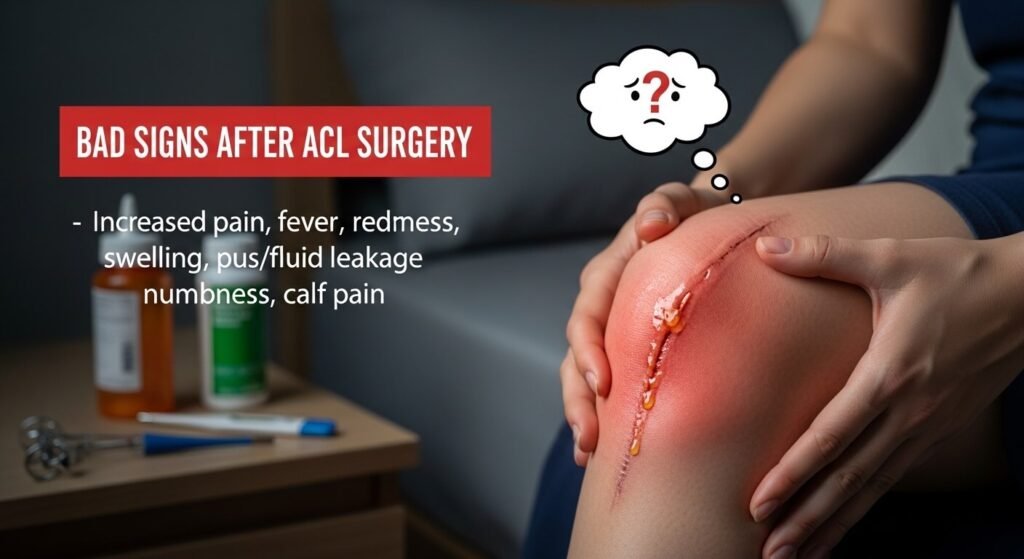
Recovering from ACL surgery can be physically and emotionally challenging. Many patients expect pain, swelling, and limited movement in the early stages, but it can be hard to know what is normal and what may signal a complication. Ignoring warning symptoms may delay treatment and affect recovery. The best solution is to understand the bad signs after acl surgery, monitor your progress closely, and contact your surgeon early when symptoms seem unusual or worsening.
What Is Normal After ACL Surgery?
Before discussing warning signs, it helps to know common early recovery symptoms.
Normal symptoms may include:
- Mild to moderate pain
- Swelling around the knee
- Bruising
- Stiffness
- Difficulty bending or straightening fully at first
- Fatigue after activity
- Mild warmth near incision area
These often improve gradually with time, rest, and physical therapy.
Why Monitoring Recovery Matters
ACL reconstruction recovery can take months. Early problems may become larger issues if ignored.
Recognizing bad signs after acl surgery can help prevent:
- Infection progression
- Poor range of motion
- Blood clots
- Graft problems
- Delayed healing
- Long-term stiffness
Early communication with your surgeon is one of the most important recovery habits.
1. Severe or Worsening Pain
Some pain is expected, but pain that sharply increases instead of improving may be concerning.
Watch for:
- Sudden intense pain
- Pain not relieved by medication
- Pain that worsens daily
- Pain with fever or swelling
This may indicate infection, clotting issue, or internal irritation.
2. Excessive Swelling
Swelling is common early on, but extreme swelling should be reviewed.
Possible warning signs:
- Knee becoming tighter each day
- Rapid swelling after minor movement
- Shiny skin or severe pressure feeling
- Swelling extending into calf or foot
Persistent or worsening swelling can be one of the bad signs after acl surgery.
3. Fever or Chills
A fever after surgery should never be ignored.
Warning symptoms include:
- Fever above what your surgeon advised
- Chills
- Night sweats
- Feeling generally unwell
These may signal infection and need prompt evaluation.
4. Redness or Drainage From Incisions
Incisions usually heal gradually, but infection may show through skin changes.
Concerning signs:
- Spreading redness
- Yellow or foul-smelling drainage
- Increasing tenderness
- Hot skin around incision
These are important bad signs after acl surgery to report quickly.
5. Calf Pain or Swelling
Pain in the calf can be serious because it may suggest a blood clot.
Seek urgent medical advice if you notice:
- Tight calf pain
- One-sided calf swelling
- Warmth in lower leg
- Pain when flexing ankle
Blood clots require immediate attention.
6. Trouble Breathing or Chest Pain
Though less common, this can be an emergency if related to clot movement.
Emergency signs include:
- Sudden shortness of breath
- Chest pain
- Fast heartbeat
- Dizziness
Seek emergency care immediately.
7. Inability to Straighten the Knee
Early stiffness is common, but failing to regain extension over time may cause long-term issues.
Potential causes:
- Scar tissue buildup
- Swelling blockage
- Poor rehab progress
- Mechanical issue
This can be one of the overlooked bad signs after acl surgery.
8. Knee Instability or Giving Way
The knee should gradually feel more stable.
Concerning symptoms:
- Buckling while walking
- Sudden shifting sensation
- Feeling the knee “slip”
- Loss of confidence bearing weight
This may need evaluation for graft or muscle control problems.
9. Locking or Catching Sensation
If the knee gets stuck or catches during movement, it may suggest:
- Meniscus issue
- Scar tissue
- Loose body
- Mechanical irritation
Persistent locking is not normal.
10. Numbness or Tingling That Worsens
Mild temporary numbness near incision sites may happen, but spreading or worsening nerve symptoms should be assessed.
Watch for:
- Burning pain
- Persistent tingling
- Foot weakness
- Loss of sensation
Week-by-Week Recovery: What May Be Normal
First Week
- Pain and swelling common
- Crutches often needed
- Limited motion expected
Weeks 2–6
- Gradual mobility improvement
- Therapy progression
- Swelling should trend downward
Months 2–6+
- Strength rebuilding
- Functional movement returns
- Sports progression guided medically
If symptoms worsen instead of improve, review for bad signs after acl surgery.
Common Causes of Complications
Problems after ACL surgery may be linked to:
- Infection
- Inadequate rehab adherence
- Overdoing activity too soon
- Scar tissue formation
- Blood clot risk factors
- Reinjury or falls
Following post-op instructions reduces risk.
When to Call Your Surgeon Immediately
Contact your care team promptly for:
- Fever
- Increasing redness
- Severe pain
- Calf swelling
- New instability
- Drainage from incision
- Loss of movement
Do not wait if symptoms feel significantly worse.
How to Support Healthy Recovery
Follow Rehab Plan
Physical therapy is critical.
Use Ice and Elevation
Often helpful for swelling management.
Protect the Knee
Avoid early twisting or jumping.
Take Medications as Directed
Including pain control or clot prevention if prescribed.
Communicate Early
Questions are better asked early than late.
Mental Health During Recovery
ACL recovery can feel frustrating. Temporary setbacks are common, but persistent severe symptoms should be checked rather than normalized.
Support can include:
- Clear milestones
- Therapist guidance
- Surgeon follow-up
- Patience with progress
Frequently Asked Questions
Is swelling normal after ACL surgery?
Yes, some swelling is expected, especially early on.
How long does pain last?
Pain usually improves gradually over weeks, though healing varies.
Is clicking normal?
Some harmless noises can happen, but painful catching should be checked.
When is fever concerning?
Any significant fever after surgery should be discussed with your surgeon.
Conclusion
Knowing the bad signs after acl surgery can make a major difference in recovery. While pain, swelling, and stiffness are common early on, worsening symptoms, fever, calf pain, incision drainage, instability, or loss of motion should not be ignored. ACL recovery takes time, but progress should generally move forward. If something feels wrong, contacting your surgeon early is the safest and smartest step.
For reservations and additional information, visit : aspertaan.com