
Introduction
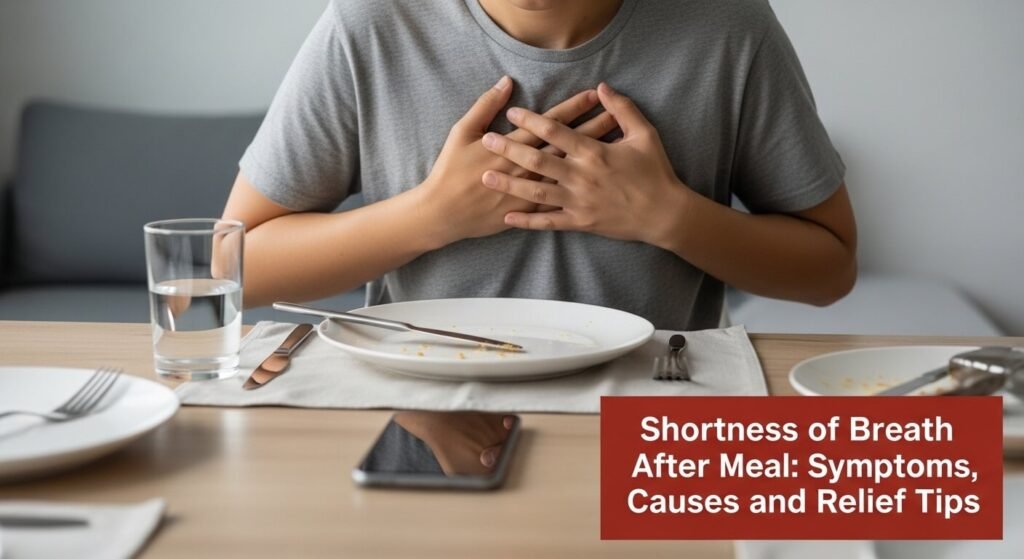
Feeling unable to breathe properly after eating can be scary and uncomfortable. Many people worry that something serious is wrong when they notice chest tightness, fullness, or air hunger after meals. The good news is that shortness of breath after meal is often linked to treatable causes such as bloating, acid reflux, overeating, or anxiety. In some cases, it may signal heart, lung, or allergic problems. Understanding the cause and taking the right steps can help you feel better and know when to seek medical care.
What Is Shortness of Breath After Meal?
Shortness of breath after meal means feeling breathless, tight-chested, or unable to take a full breath shortly after eating. Some people notice it immediately, while others feel symptoms 30 minutes later.
Common feelings include:
- Need to breathe deeper
- Pressure in chest or upper stomach
- Tight throat feeling
- Fast breathing
- Fullness with discomfort
- Panic or anxiety after eating
This symptom can range from mild to severe depending on the cause.
Common Causes of Shortness of Breath After Meal
There are several possible reasons for shortness of breath after meal.
1. Overeating
Eating too much can stretch the stomach and push against the diaphragm, making breathing feel harder.
2. Bloating and Gas
Gas buildup can create abdominal pressure and discomfort.
3. Acid Reflux (GERD)
Acid rising into the esophagus may cause chest tightness and breathing discomfort.
4. Food Intolerance
Some foods may trigger bloating or digestive distress.
5. Anxiety Response
Physical discomfort after eating can trigger anxious breathing patterns.
Can Digestive Problems Cause Breathlessness?
Yes, digestive issues are one of the most common reasons for shortness of breath after meal.
GERD
Acid reflux may cause:
- Burning chest pain
- Sour taste
- Throat irritation
- Need to clear throat
- Mild breathlessness sensation
Hiatal Hernia
This happens when part of the stomach pushes upward through the diaphragm.
Slow Digestion
Food staying longer in the stomach may increase fullness and pressure.
Heart-Related Causes
Sometimes breathlessness after eating can be linked to heart conditions, especially in older adults or those with risk factors.
Warning signs include:
- Chest pain
- Sweating
- Pain in arm or jaw
- Severe fatigue
- Dizziness
If these happen with shortness of breath after meal, seek urgent care.
Lung-Related Causes
People with lung conditions may feel worse after large meals.
Possible conditions:
- Asthma
- COPD
- Reduced lung function
- Obesity-related breathing difficulty
Large meals can reduce comfortable diaphragm movement.
Food Allergy Warning Signs
In some cases, breathing trouble after meals may be caused by allergy.
Emergency symptoms:
- Wheezing
- Swollen lips or throat
- Rash or hives
- Fast worsening breathing difficulty
- Faint feeling
Call emergency services immediately if these happen.
Symptoms That May Come With It
Shortness of breath after meal may happen with:
- Bloating
- Burping
- Heartburn
- Nausea
- Chest pressure
- Fast heartbeat
- Anxiety
These extra symptoms can help identify the cause.
Fast Relief Tips at Home
If symptoms are mild and not urgent, these steps may help.
Sit Upright
Do not lie down after eating.
Walk Slowly
Light movement may help digestion.
Loosen Tight Clothing
Reduces abdominal pressure.
Take Slow Breaths
Use calm breathing through the nose.
Drink Small Sips of Water
May ease mild discomfort.
These methods may reduce shortness of breath after meal caused by fullness or reflux.
Best Foods to Avoid if It Happens Often
Some foods may worsen symptoms:
- Fried foods
- Heavy creamy meals
- Carbonated drinks
- Spicy foods
- Very large meals
- Sugary desserts
- Fast food
Keeping a food journal can be useful.
Prevention Tips
To lower future episodes of shortness of breath after meal, try:
Eat Smaller Portions
Large meals are a common trigger.
Eat Slowly
Chew well and avoid swallowing excess air.
Stay Upright
Remain seated upright after meals.
Maintain Healthy Weight
This may reduce reflux and pressure.
Limit Trigger Foods
Especially if you notice a pattern.
When to See a Doctor
Speak with a doctor if symptoms are:
- Frequent
- Getting worse
- Causing fear of eating
- Paired with weight loss
- Linked with wheezing
- Disturbing sleep
Persistent shortness of breath after meal should be evaluated.
When to Seek Emergency Help
Get urgent help for:
- Severe trouble breathing
- Blue lips
- Chest pain
- Fainting
- Swollen throat
- Severe allergic reaction symptoms
Do not delay emergency care.
Tests a Doctor May Recommend
Depending on symptoms, doctors may consider:
- Physical exam
- Heart tests
- Chest X-ray
- Lung function tests
- Reflux evaluation
- Allergy testing
- Blood tests
Anxiety and Breathlessness After Eating
Sometimes fullness causes anxiety, and anxiety worsens breathing.
Helpful strategies:
- Slow breathing exercises
- Smaller meals
- Mindful eating
- Reducing caffeine if sensitive
- Stress management support
Frequently Asked Questions
Is it normal to feel breathless after eating?
Mild fullness can cause discomfort, but repeated symptoms should be checked.
Can reflux cause breathing trouble?
Yes, GERD can create chest and throat discomfort.
Why is it worse after large meals?
A full stomach can push upward and affect breathing comfort.
Can anxiety cause this?
Yes, anxiety can worsen or mimic breathing symptoms.
Conclusion
Shortness of breath after meal can happen for many reasons, including overeating, bloating, reflux, anxiety, food intolerance, or more serious heart and lung conditions. Mild cases often improve with smaller meals, slower eating, and staying upright after food. However, repeated episodes, chest pain, wheezing, or severe breathing difficulty should not be ignored. Understanding your triggers and getting medical advice when needed is the best way to stay safe and feel better.
For reservations and additional information, visit : aspertaan.com