
Introduction
Starting a career in healthcare can feel overwhelming, especially if you’re unsure where to begin. Many aspiring healthcare professionals want a stable, rewarding job but don’t know what training they need or how long it takes to get certified. The good news is that CNA training offers one of the fastest and most affordable paths into the healthcare industry. By completing a state-approved training program and passing the certification exam, you can begin a meaningful career helping patients while gaining valuable experience for future nursing or medical careers.
What Is CNA Training?
CNA training is a structured educational program designed to prepare students to become Certified Nursing Assistants (CNAs). These programs teach the essential knowledge and practical skills needed to provide basic patient care under the supervision of registered nurses (RNs) and licensed practical nurses (LPNs).
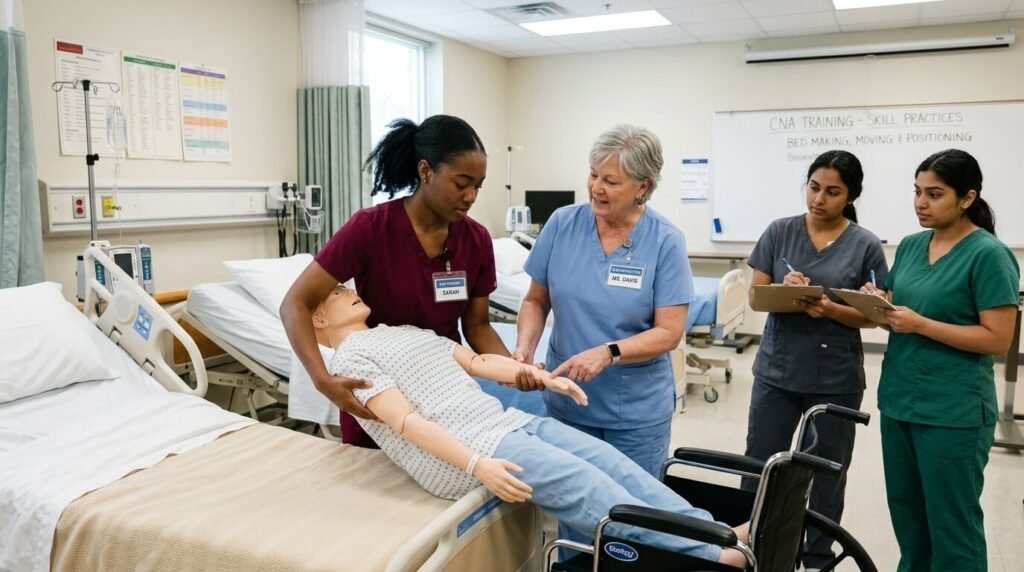
The curriculum combines classroom instruction with hands-on clinical experience, allowing students to practice real-world caregiving skills in healthcare settings.
What Does a Certified Nursing Assistant Do?
Certified Nursing Assistants play an important role in patient care. They assist patients with daily activities while ensuring comfort, dignity, and safety.
Typical responsibilities include:
- Assisting with bathing, dressing, and grooming
- Helping patients move safely
- Measuring vital signs
- Feeding patients who need assistance
- Recording patient information
- Maintaining clean patient rooms
- Communicating changes in patient conditions
- Supporting nurses with routine care
CNAs often spend more time with patients than any other healthcare professional, making them an essential part of the medical team.
Who Should Consider CNA Training?
CNA training is ideal for individuals who:
- Enjoy helping others
- Want to enter healthcare quickly
- Plan to become a nurse later
- Are looking for a stable career
- Prefer hands-on work
- Have good communication skills
- Are compassionate and patient
Many future registered nurses begin their careers as CNAs to gain valuable clinical experience.
CNA Training Requirements
Admission requirements vary by state and training provider, but many programs require:
- Minimum age requirement (often 16–18 years)
- High school diploma or GED (some programs accept current students)
- Background check
- Immunization records
- Tuberculosis screening
- CPR certification (for some programs)
- Physical examination
Always check your state’s specific CNA training requirements before enrolling.
What Will You Learn During CNA Training?
Most CNA programs cover both classroom education and clinical practice.
Classroom Topics
- Human anatomy and physiology
- Medical terminology
- Infection prevention
- Patient rights
- Ethics
- Communication skills
- Nutrition
- Safety procedures
- Emergency response
Clinical Skills
Students practice:
- Taking blood pressure
- Measuring temperature
- Pulse and respiration checks
- Safe patient transfers
- Bed making
- Personal hygiene assistance
- Feeding techniques
- Catheter care awareness
- Documentation procedures
Clinical practice builds confidence before students begin working.
How Long Does CNA Training Take?
Program length depends on your state and school.
Typical timelines include:
- 4 weeks (accelerated programs)
- 6–8 weeks (full-time)
- 8–12 weeks (part-time)
- Up to 6 months for flexible schedules
Most state-approved programs require both classroom hours and supervised clinical training before students are eligible for certification.
How Much Does CNA Training Cost?
Costs vary depending on location and institution.
Expenses may include:
- Tuition
- Books
- Uniforms
- Medical examination
- Background check
- Certification exam fee
- CPR certification
- Supplies
Many employers, healthcare facilities, workforce development programs, and community colleges offer financial assistance or tuition reimbursement.
Online vs. In-Person CNA Training
Online Programs
Advantages:
- Flexible schedules
- Learn theoretical concepts at home
- Good for working adults
Limitations:
- Clinical practice must still be completed in person.
In-Person Programs
Advantages:
- Direct instructor support
- Hands-on practice
- Immediate feedback
- Better preparation for patient care
Many schools now offer hybrid programs that combine online coursework with clinical training.
How to Choose the Best CNA Training Program
When selecting a program, consider:
- State approval
- Certification exam pass rates
- Clinical training opportunities
- Experienced instructors
- Tuition costs
- Class schedules
- Student reviews
- Job placement assistance
Choosing an accredited and state-approved program improves your chances of passing the certification exam and finding employment.