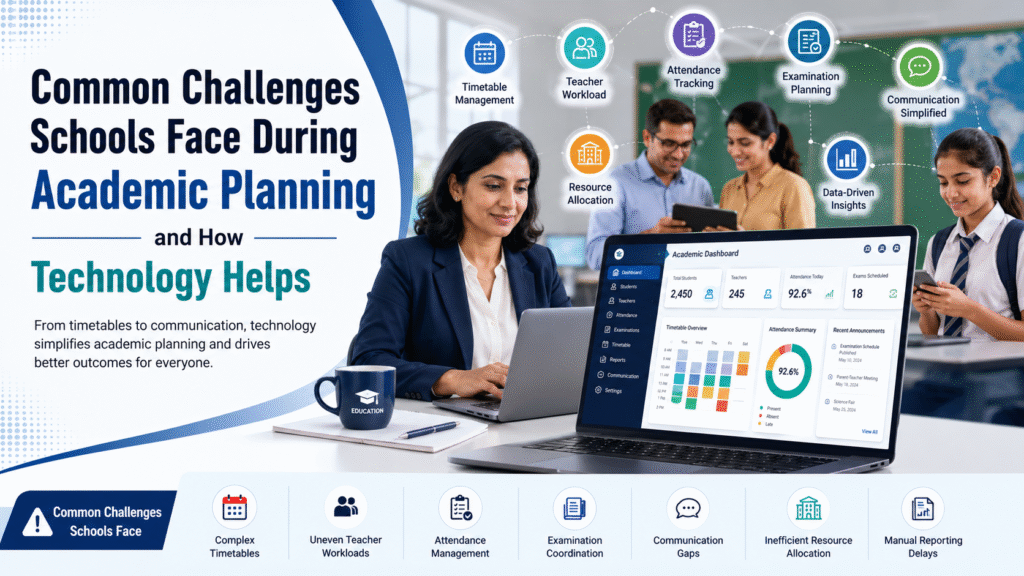

Academic planning is one of the most important responsibilities within any educational institution. Schools must manage timetables, examinations, teacher schedules, classroom availability, attendance tracking, and curriculum coordination throughout the academic year. As institutions grow, these responsibilities become harder to manage manually. Many schools now use Student Information System Software to simplify academic planning and improve operational efficiency across departments.
Why Academic Planning Has Become More Complex
Modern schools handle far more responsibilities than before. Educational institutions now manage larger student populations, multiple campuses, hybrid learning environments, and increasing parent expectations.
Academic planning no longer involves only preparing class schedules. Schools must coordinate examinations, assignments, teacher workloads, transport timing, resource allocation, and communication activities together.
Manual planning methods struggle to support this growing operational complexity.
Even small scheduling mistakes can affect students, teachers, and administrators significantly.
Timetable Management Creates Daily Challenges
Creating academic timetables is one of the most difficult tasks for schools.
Administrators must coordinate:
- Teacher availability
- Classroom allocation
- Subject schedules
- Student sections
- Examination timing
- Activity periods
Manual timetable preparation often requires repeated adjustments.
A single scheduling conflict can impact multiple classes and teachers.
When schools operate multiple branches, timetable management becomes even more difficult.
Digital planning systems help schools automate timetable preparation while reducing scheduling conflicts.
This improves operational efficiency and saves administrative time.
Managing Teacher Workloads Efficiently
Teachers play a central role in academic success. However, uneven workload distribution can create stress and reduce teaching quality.
Manual planning processes sometimes overload certain teachers while leaving scheduling gaps for others.
Schools must carefully balance:
- Teaching hours
- Subject allocation
- Examination duties
- Activity coordination
- Student mentoring responsibilities
Technology helps administrators monitor teacher schedules more effectively.
Centralized systems provide better visibility into workload distribution and resource planning.
This supports fair scheduling and improves staff productivity.
Attendance Tracking Becomes Difficult at Scale
Attendance management affects both academic planning and student performance monitoring.
Manual attendance systems create several challenges:
- Delayed reporting
- Missing records
- Data inconsistencies
- Increased paperwork
- Limited visibility
As student populations grow, tracking attendance manually becomes harder.
Schools now use automated attendance systems to improve tracking accuracy and reporting speed.
Many institutions also integrate campus management system platforms to centralize attendance, academic records, and communication within a single environment.
This improves operational coordination and reduces administrative burden.
Examination Planning Requires Strong Coordination
Examination management involves careful planning and coordination across departments.
Schools must prepare:
- Examination schedules
- Seating arrangements
- Teacher invigilation duties
- Result processing
- Report generation
Manual examination planning often creates operational pressure.
Last-minute schedule changes may confuse students and teachers. Result preparation may also require significant administrative effort.
Technology simplifies examination management through automation and centralized coordination tools.
Schools can generate schedules faster while reducing planning errors.
Communication Gaps Affect Academic Operations
Academic planning depends heavily on communication between administrators, teachers, students, and parents.
When communication is delayed, confusion increases.
For example:
- Students may miss examination updates
- Parents may not receive schedule changes
- Teachers may lack planning information
Manual communication methods often fail to provide timely updates.
Digital platforms improve communication through instant notifications and centralized information sharing.
This helps schools maintain smoother academic operations throughout the year.
Resource Allocation Is Often Inefficient
Schools manage many academic resources daily.
These include:
- Classrooms
- Laboratories
- Libraries
- Computer labs
- Sports facilities
Manual planning sometimes creates overlapping bookings or underutilized resources.
Technology improves resource management through centralized scheduling systems.
Administrators can monitor availability and allocate resources more efficiently.
This reduces operational conflicts and improves facility utilization.
Multi Campus Institutions Face Greater Complexity
Educational groups operating multiple campuses face additional planning challenges.
Different branches may follow different academic calendars, scheduling methods, and reporting practices.
This creates inconsistency and operational confusion.
Centralized systems help institutions standardize academic planning across campuses.
Leadership teams can monitor schedules, academic activities, and resource allocation from a single platform.
This improves visibility and operational alignment throughout the organization.
Manual Reporting Delays Decision Making
School leadership teams require timely academic reports to make informed decisions.
Manual reporting processes often create delays because staff members must collect information from multiple departments.
Delayed reports affect:
- Academic evaluations
- Performance analysis
- Resource planning
- Operational monitoring
Digital systems generate reports automatically using real-time data.
Administrators can review attendance trends, examination performance, and scheduling information quickly.
This supports faster and more effective decision-making.
Supporting Curriculum Coordination
Curriculum management requires careful coordination between teachers, department heads, and administrators.
Schools must ensure that lesson plans, assignments, and academic activities align with institutional objectives.
Manual tracking methods often create inconsistencies.
Technology helps schools organize curriculum planning through centralized academic management tools.
Teachers can track lesson progress, upload assignments, and monitor academic timelines more effectively.
This improves consistency across classrooms and departments.
Reducing Administrative Pressure
Academic planning creates heavy workloads for administrative teams.
Manual coordination requires significant time and effort throughout the academic year.
Administrative staff often manage:
- Timetable adjustments
- Attendance reports
- Examination coordination
- Student records
- Teacher schedules
Automation reduces repetitive tasks and improves operational speed.
This allows administrators to focus on strategic planning and student support instead of paperwork.
Helping Parents Stay Updated
Parents expect regular academic updates regarding their children’s progress and school activities.
Traditional communication methods may not provide information quickly enough.
Digital systems improve parent engagement through centralized communication tools.
Parents can receive updates related to:
- Attendance status
- Examination schedules
- Academic performance
- Homework reminders
- School activities
Improved communication helps parents stay involved in the learning process.
It also strengthens collaboration between schools and families.
Supporting Data Accuracy
Academic planning depends on accurate information.
Manual systems increase the risk of:
- Duplicate entries
- Missing records
- Incorrect schedules
- Reporting errors
Data inaccuracies can create operational confusion and affect decision-making quality.
Centralized digital platforms improve accuracy through shared databases and automated synchronization.
When information updates in one department, it becomes available throughout the institution instantly.
This reduces operational errors and improves planning reliability.
Adapting to Hybrid Learning Environments
Many schools now support hybrid and digital learning models.
Academic planning must accommodate both physical and online learning activities.
Manual systems often struggle to support this level of coordination.
Digital platforms help schools manage:
- Online classes
- Virtual assignments
- Digital attendance
- Remote communication
- Learning resources
This provides greater flexibility for modern educational environments.
Improving Long Term Academic Planning
Schools require long-term visibility for academic growth and operational planning.
Leadership teams must evaluate:
- Enrollment trends
- Teacher requirements
- Resource expansion
- Academic performance patterns
Technology provides data-driven insights that support long-term planning.
Real-time dashboards and reporting tools help institutions identify improvement opportunities earlier.
This improves operational readiness and academic planning quality.
Why Schools Are Investing in Academic Automation
Educational institutions are under pressure to improve efficiency while maintaining academic quality.
Manual processes often limit scalability and increase operational complexity.
Automation helps schools:
- Reduce planning errors
- Improve coordination
- Increase operational speed
- Enhance communication
- Support data accuracy
Schools investing in digital academic planning systems are better prepared to manage future educational demands.
Automation also improves institutional flexibility as operational requirements continue evolving.
Building Smarter Academic Environments
Modern educational institutions require connected systems that support collaboration, planning, and operational visibility.
Academic planning is no longer limited to scheduling classes. It now involves centralized coordination across departments, campuses, and communication channels.
Schools adopting digital planning systems gain better control over operations while improving the educational experience for students, teachers, and parents.
As education continues evolving, institutions that modernize their planning processes will remain more efficient and adaptable. Many schools begin this transformation through Student Information System Software and integrated academic management platforms that simplify operations while improving coordination across the institution.