
Introduction
Laser Treatment for Gum Disease has transformed modern dentistry by offering a minimally invasive alternative to traditional gum surgery. Gum disease affects millions of people worldwide and often begins with mild symptoms like bleeding gums, persistent bad breath, and gum inflammation. If left untreated, it can progress into severe periodontal disease, leading to tooth loss and even affecting overall health. Fortunately, Laser Treatment for Gum Disease provides a precise, comfortable, and effective way to eliminate infected tissue while promoting faster healing.
This article explores everything you need to know about Laser Treatment for Gum Disease, including its benefits, procedure, recovery, cost, and why many dentists now recommend it over conventional treatments.
What Is Laser Treatment for Gum Disease?
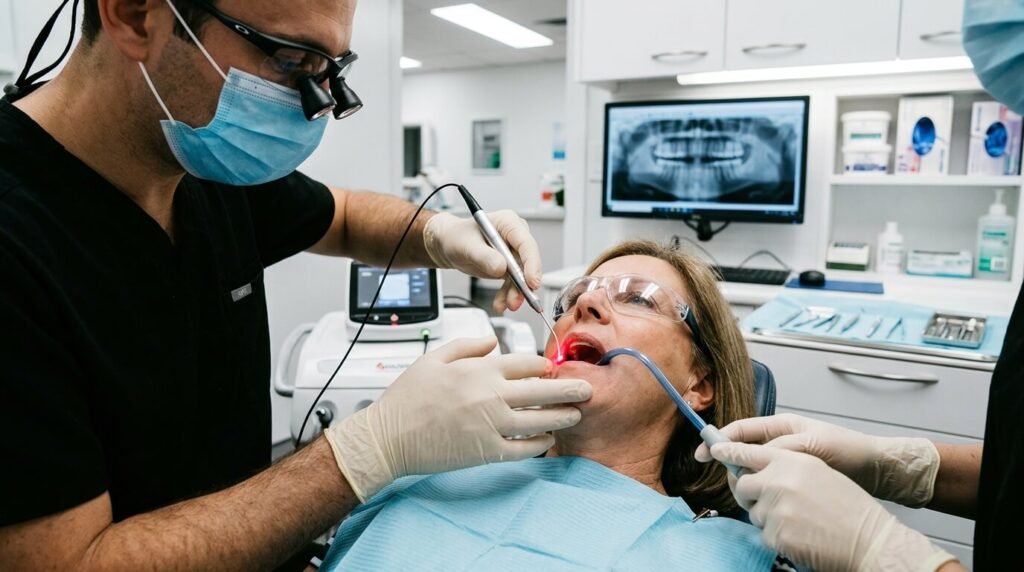
Laser Treatment for Gum Disease is an advanced dental procedure that uses concentrated laser energy to remove bacteria and infected gum tissue without making large surgical incisions. Unlike traditional gum surgery, laser therapy targets only diseased tissue while preserving healthy gums.
The procedure helps:
- Eliminate harmful bacteria
- Reduce gum inflammation
- Remove infected tissue
- Encourage healthy gum regeneration
- Minimize bleeding and discomfort
Because lasers are extremely precise, patients usually experience less pain and quicker recovery.
Understanding Gum Disease
Gum disease, also known as periodontal disease, develops when plaque and bacteria accumulate around the gumline.
There are two major stages:
Gingivitis
This early stage causes:
- Red gums
- Swollen gums
- Bleeding while brushing
- Mild bad breath
At this point, the condition is reversible with proper dental care.
Periodontitis
If untreated, gingivitis develops into periodontitis, leading to:
- Deep gum pockets
- Bone loss
- Loose teeth
- Gum recession
- Tooth loss
This is where Laser Treatment for Gum Disease becomes one of the most effective treatment options.
How Laser Treatment for Gum Disease Works
The treatment follows several carefully planned steps.
1. Examination
Your dentist examines the gums and measures periodontal pockets.
2. Local Anesthesia
The treatment area is numbed to ensure comfort.
3. Laser Removal
The dental laser removes infected tissue and harmful bacteria while protecting healthy tissue.
4. Cleaning
Deep cleaning removes plaque and tartar beneath the gums.
5. Laser Sealing
The laser helps seal blood vessels, reducing bleeding and encouraging clot formation naturally.
6. Healing
Healthy gum tissue begins reattaching to the teeth over the following weeks.
Benefits of Laser Treatment for Gum Disease
Many patients choose Laser Treatment for Gum Disease because of its numerous advantages.
Minimal Pain
Lasers cause far less discomfort than traditional gum surgery.
Less Bleeding
The laser seals blood vessels immediately during treatment.
Faster Recovery
Healing typically occurs much faster than conventional procedures.
Lower Infection Risk
The laser sterilizes the treatment area while removing bacteria.
Precision
Healthy tissue remains untouched, improving overall treatment outcomes.
Reduced Swelling
Patients often experience less inflammation after treatment.
Better Gum Attachment
The gums can naturally reattach to the teeth more effectively.
Who Is a Good Candidate?
Laser Treatment for Gum Disease is suitable for patients with:
- Moderate gum disease
- Advanced periodontal disease
- Gum pockets
- Gum recession
- Persistent gum infections
- Bleeding gums
- Bone loss caused by periodontal disease
Your dentist will determine whether laser therapy is the best option after a detailed examination.
Types of Dental Lasers Used
Different laser technologies are available depending on the severity of gum disease.
Diode Lasers
Commonly used for bacterial removal and soft tissue treatment.
Nd:YAG Lasers
Effective for treating deeper periodontal pockets.
Er:YAG Lasers
Useful for removing infected tissue while preserving healthy gums.
Each laser has specific advantages, and dentists choose the most appropriate one based on your condition.
Is Laser Treatment for Gum Disease Painful?
One of the biggest concerns patients have is pain.
Fortunately, Laser Treatment for Gum Disease is generally much more comfortable than traditional surgery.
Most patients report:
- Mild pressure
- Minimal discomfort
- Little to no bleeding
- Reduced need for pain medication
Many individuals return to work the following day.
Recovery After Laser Treatment for Gum Disease
Recovery is usually smooth and uncomplicated.
Patients should:
- Eat soft foods for several days
- Avoid smoking
- Brush gently
- Use prescribed mouth rinse
- Attend follow-up appointments
- Maintain excellent oral hygiene
Complete healing may take several weeks, but most daily activities resume within 24–48 hours.
Risks and Possible Side Effects
Although Laser Treatment for Gum Disease is considered very safe, minor side effects may occur.
Possible temporary effects include:
- Mild swelling
- Slight tenderness
- Temporary tooth sensitivity
- Minor gum discomfort
Serious complications are rare when the procedure is performed by an experienced dental professional.
Laser Treatment vs Traditional Gum Surgery
| Feature | Laser Treatment for Gum Disease | Traditional Surgery |
| Pain | Minimal | Moderate |
| Bleeding | Very little | More |
| Recovery | Faster | Longer |
| Stitches | Usually unnecessary | Often required |
| Infection Risk | Lower | Higher |
| Precision | Very high | Moderate |
This comparison explains why many dentists now recommend laser therapy whenever appropriate.
Cost of Laser Treatment for Gum Disease
The cost varies depending on:
- Severity of gum disease
- Number of teeth treated
- Geographic location
- Dentist’s experience
- Type of laser technology
Although laser therapy may initially appear more expensive than conventional treatment, its shorter recovery time and improved long-term results often provide excellent value.
Many dental insurance plans may cover part of the treatment when it is medically necessary.
How to Prevent Gum Disease
Prevention remains the best strategy.
Follow these habits:
- Brush twice daily
- Floss every day
- Visit your dentist every six months
- Avoid tobacco products
- Eat a balanced diet
- Control diabetes if applicable
- Use antimicrobial mouthwash when recommended
Good oral hygiene significantly reduces the risk of needing periodontal treatment.
Frequently Asked Questions
How long does Laser Treatment for Gum Disease take?
Most appointments last between 30 minutes and two hours, depending on the extent of treatment.
Is Laser Treatment for Gum Disease safe?
Yes. When performed by a trained dentist, it is a safe and well-established procedure.
Can Laser Treatment for Gum Disease save loose teeth?
In many cases, it helps stabilize teeth by removing infection and allowing the gums to heal. However, success depends on the severity of bone loss.
How soon can I eat after treatment?
Most patients can eat soft foods within a few hours after the procedure, following their dentist’s recommendations.
Does Laser Treatment for Gum Disease replace regular cleanings?
No. Routine dental cleanings and excellent oral hygiene remain essential for maintaining healthy gums.
Final Thoughts
Laser Treatment for Gum Disease represents one of the most significant advancements in modern periodontal care. Its precision, minimal discomfort, faster healing, and ability to preserve healthy tissue make it an attractive option for patients seeking effective treatment for gum disease. While not every case requires laser therapy, many individuals with moderate to advanced periodontal disease benefit from this innovative approach. Combined with regular dental checkups and excellent oral hygiene, Laser Treatment for Gum Disease can help restore healthier gums, protect natural teeth, and improve long-term oral health. By addressing gum disease early and choosing the appropriate treatment, patients can enjoy a healthier smile and reduce the risk of future dental complications.