
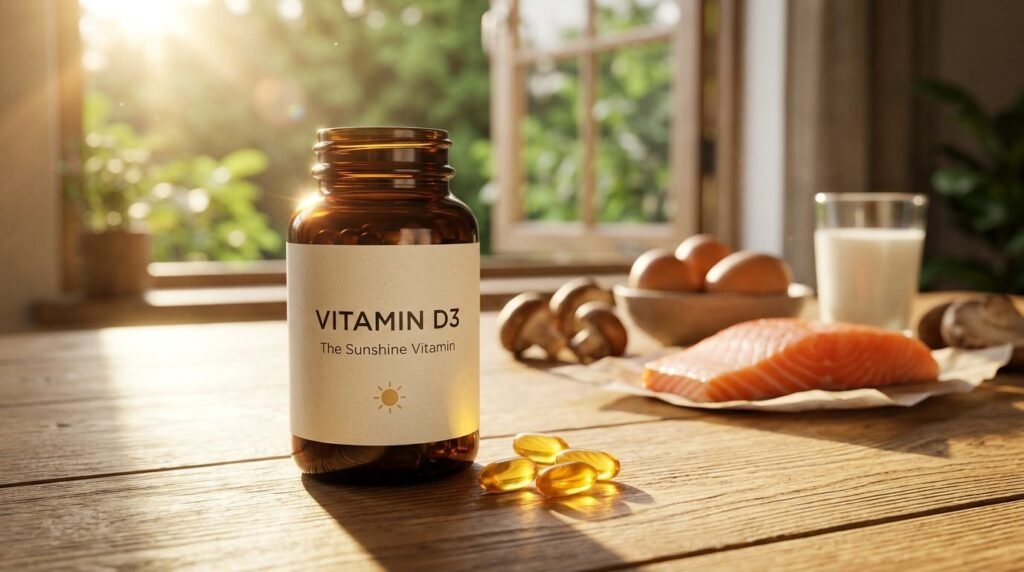

Vitamin D is often called the sunshine vitamin, because your skin makes it when sunlight touches it. This guide explains the key vitamin D benefits, the signs of deficiency, and simple ways to get enough. Yet deficiency is one of the most common nutrient gaps in the world, including in sunny countries, where people spend most of their time indoors. Low vitamin D can affect bones, immunity, mood and energy — and many people do not know they are low until a blood test shows it.
Vitamin D Benefits: What Does Vitamin D Do?
Vitamin D helps your body absorb calcium, which keeps bones and teeth strong. Without enough of it, calcium passes through unused, and bones can become thin and weak over time.
It also supports the immune system, helps muscles work properly, and plays a role in mood and energy. Researchers are still studying its links to heart health and diabetes, but the bone and immune roles are well established.
Signs You May Be Low in Vitamin D
Deficiency often has no obvious symptoms at first, which is why it is easy to miss. Common signs include:
- Feeling tired often, even after enough sleep
- Bone or back pain, or aching muscles that do not have a clear cause
- Getting sick often, such as frequent colds
- Slow healing of cuts or wounds
- Low mood, especially in winter months
- Hair shedding more than usual
None of these signs proves a deficiency on its own — each has many other causes. The only reliable way to know your level is a blood test for 25-hydroxyvitamin D, written as 25(OH)D. Ask your doctor if you should be tested, especially if you spend little time outdoors.
How Much Vitamin D Do You Need?
Most adults need 600 to 800 IU (15 to 20 micrograms) of vitamin D per day, according to most health authorities. Adults over 70 generally need the higher end of that range. The safe upper limit for adults is 4,000 IU per day — more than that should only be taken if a doctor prescribes it.
Children, pregnant women and older adults have their own recommended amounts, so check with a doctor for your age group rather than copying an adult dose.
Simple Ways to Get Enough Vitamin D
1. Sunlight
Sunlight is the main source. Short, regular exposure — about 10 to 30 minutes of midday sun on the face, arms and hands, a few times a week — is enough for many people. How much you need depends on your skin tone, where you live, the season and how much skin is exposed. Darker skin needs more time in the sun to make the same amount.
Avoid long unprotected sunbathing. A short daily walk outdoors is better than one long session, and it also helps sleep and mood.
2. Food
Few foods are naturally rich in vitamin D, but these help:
| Food | Why it helps |
|---|---|
| Fatty fish (salmon, sardines, mackerel) | The richest natural source |
| Egg yolks | Small but useful amounts |
| Mushrooms exposed to sunlight | One of the few plant sources |
| Fortified milk and yogurt | Vitamin D added by the maker |
| Fortified cereals and orange juice | An easy daily top-up |
A diet with fish twice a week and fortified dairy or cereals covers a good part of your needs, but food alone rarely provides all of it.
3. Supplements
If sunlight and food are not enough — in winter, if you work indoors, wear full cover, or live in a northern region — a supplement is the simplest fix. Vitamin D3 is the form most doctors recommend, because the body uses it well.
Take supplements with a meal containing some fat, because vitamin D is fat-soluble and absorbs better that way. Do not take very high doses without a blood test and a doctor’s advice: too much vitamin D can raise calcium levels and cause nausea, weakness and kidney problems.
Who Is Most at Risk?
Some people are more likely to be low:
- People who spend most time indoors, including office workers and night-shift workers
- Older adults, whose skin makes less vitamin D from sunlight
- People with darker skin, who need more sun exposure
- People who cover most of their skin outdoors for cultural or religious reasons
- People with gut conditions that reduce fat absorption, since vitamin D needs fat to absorb
- People living far from the equator, especially in winter
If any of these apply to you, a blood test is worth discussing with your doctor.
Conclusion
The vitamin D benefits are clear: vitamin D supports strong bones, a healthy immune system and steady energy, yet deficiency is common and often silent. Short regular time in sunlight, vitamin D-rich foods like fatty fish and eggs, and a supplement when needed are usually enough to keep your levels healthy. If you have symptoms or risk factors, get your level tested before taking high doses.
FAQs
1. Can I get enough vitamin D from food alone?
Usually not. Food provides only a small part of daily needs, even with fish and fortified foods. Most people need sunlight, a supplement, or both to reach healthy levels.
2. How long should I stay in the sun for vitamin D?
About 10 to 30 minutes of midday sun on the face, arms and hands, a few times a week, is enough for many people. Darker skin, winter, and higher latitudes all increase the time needed. Avoid burning.
3. Is vitamin D3 better than D2?
Vitamin D3 is generally preferred, because it raises blood levels more effectively and lasts longer. Most supplements and fortified foods use D3, and most doctors recommend it.
4. Can too much vitamin D be harmful?
Yes. Very high doses over time can raise blood calcium and cause nausea, weakness, frequent urination and kidney problems. Stay within 4,000 IU a day unless a doctor prescribes more.
5. Should I test my vitamin D level?
Ask your doctor if you have symptoms such as constant tiredness or bone pain, or if you are in a high-risk group. A simple blood test for 25(OH)D gives a clear answer, and your doctor can set the right dose from it.
Medical disclaimer: This article is for general information only and is not medical advice. It does not replace advice from your doctor, dietitian, or other qualified health professional. If you have a health condition or take medication, talk to your healthcare provider before taking vitamin D supplements.