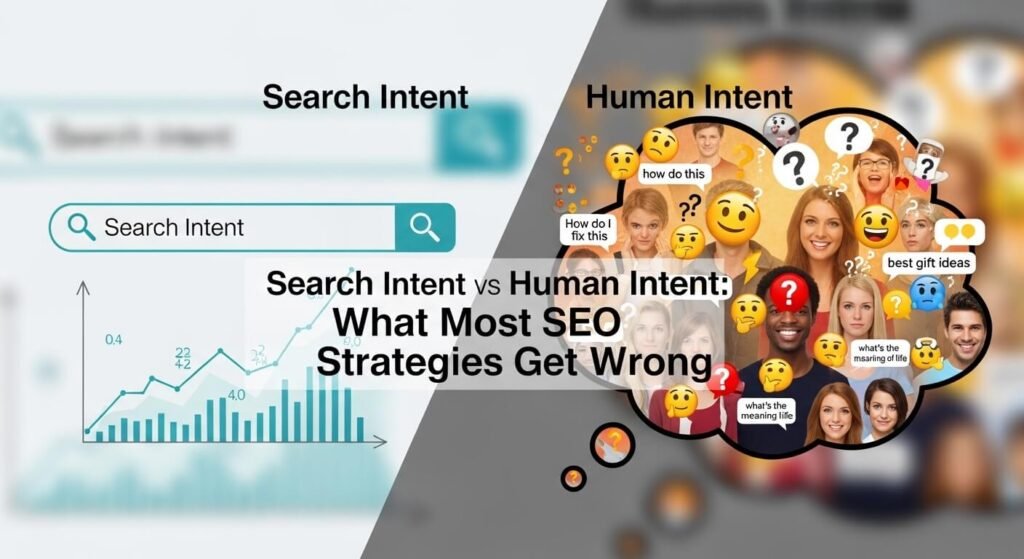

Search engine optimisation sounds very technical at first glance. Many people imagine algorithms and keywords doing all the heavy lifting. That idea feels neat and simple. However, the truth tells a very different story. SEO is not just about search engines. It is about people who use those search engines every single day.
So, here comes the big question: What is the difference between search intent and human intent?
Most strategies focus only on search intent. They study keywords and categorise them neatly. They label queries as informational or transactional or navigational. That method looks organised and scientific, but it often misses the deeper layer of reality.
Human intent goes beyond keywords. It includes emotions and fears and desires, reflecting what people actually want beneath the surface. That deeper layer often decides whether someone clicks or leaves. This is important for your SEO in Melbourne.
But first things first—
What Is Search Intent Really About?
Search intent refers to the purpose behind a query. It tries to answer a simple question. Why did the user type this keyword?
Experts divide search intent into common categories. Informational queries seek knowledge. Transactional queries aim to make a purchase. Navigational queries look for a specific website.
This system helps organise content strategies. It helps marketers create relevant pages. It improves rankings when done correctly. However, this system feels limited sometimes. It treats users like predictable machines, assuming everyone behaves in similar ways. That assumption creates gaps in understanding.
Moreover, search intent focuses on the “what.” It does not explore the “why” deeply enough.
Human Intent Goes Much Deeper
Human intent lives beneath the surface. It includes emotions and motivations. It reflects real-life situations and personal struggles.
For example, someone searching for “best running shoes” may want comfort. That person may also feel frustrated with past purchases. They may feel confused by too many options. They may even feel insecure about fitness goals.
Search intent labels this query as a commercial investigation. That label feels accurate, but it misses the emotional context completely. So, human intent answers deeper questions. What does the user feel right now? What problem keeps bothering them? What outcome do they secretly hope for?
Understanding this level creates powerful content. It builds stronger connections with readers.
Why Most SEO Strategies Miss the Mark
Many SEO strategies rely heavily on data tools. They analyse keywords and competition levels, then create content based on trends. This approach works to some extent. It helps pages rank on search engines. However, ranking does not guarantee engagement.
Many top-ranking pages feel robotic. They answer questions but lack personality. They provide information but fail to connect emotionally.
Users notice this quickly. They skim the content, lose interest, and bounce away within seconds. Moreover, many strategies copy competitors blindly. They replicate content structures without adding value. This creates a sea of similar articles online.
So, the problem becomes clear. Strategies focus on search engines instead of humans.
The Emotional Layer of Searches
Every search carries an emotional trigger. People rarely search without a reason. That reason often connects to a feeling.
Someone searching “how to fix slow websites” may feel stressed. That person may worry about losing customers. They may feel overwhelmed by technical issues.
A typical SEO article may list technical solutions. It may explain optimisation steps clearly. However, it may ignore the emotional context.
A better approach would acknowledge the frustration. It would offer reassurance. It would guide the reader gently. Moreover, emotional connection builds trust quickly. Trust keeps users engaged longer. Engagement improves overall performance.
Context Changes Everything
Search intent often ignores context. It treats queries as isolated events. However, real users live in complex situations. For example, a student searching for “best laptops” has different needs than a business owner. Both use the same keyword, yet their expectations differ completely.
Context includes location and budget and experience level. It includes urgency and personal preferences. Ignoring these factors creates generic content.
The Role of Storytelling in SEO
Storytelling bridges the gap between search intent and human intent. It adds life to content and makes information relatable.
People connect with stories naturally. They remember narratives better than facts. Stories create emotional engagement. For example, explaining SEO through a real-life scenario feels engaging. It helps readers visualise the situation. It makes concepts easier to understand.
Many SEO strategies ignore storytelling completely and focus only on delivering information. This creates dry and forgettable content.
Practical Ways to Align Both Intents
Start by researching keywords thoroughly. Understand search intent clearly. This forms the foundation.
Next, explore user emotions and motivations. Think about their problems and goals. Add this layer to your strategy.
Use conversational language consistently. Avoid unnecessary complexity. Keep the tone friendly and engaging.
Then, include real-life examples and scenarios. This improves relatability and makes content more memorable.
Test different approaches regularly. Analyse user behaviour and feedback. Adjust strategies based on insights.
Businesses focusing on SEO in Melbourne often see better results with this method. They connect with audiences more effectively. They create meaningful interactions.
Final Thoughts
Search intent provides a useful framework. It helps organise SEO strategies effectively. However, it tells only part of the story.
Human intent completes the picture. It reveals emotions and motivations. It explains real behavior.
Combining both creates powerful content. It improves engagement and performance. It builds lasting connections with users. So, the next time you plan an SEO strategy, think beyond keywords. Think about people and their experiences. That shift makes all the difference.
For more help, it’s wise to reach out to an experienced professional like Make My Website.
Red More: aspertaan