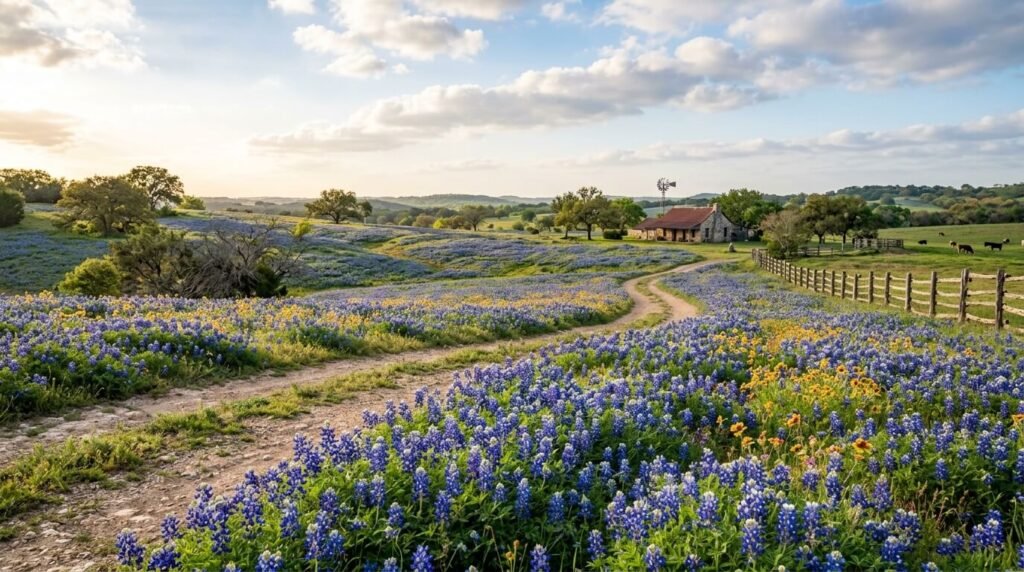

Spring in Texas is famous for colorful landscapes, but many travelers often miss the peak blooming period because they do not know the best time or locations to visit. Some people arrive too early, while others come after the flowers have already faded. The solution is proper planning during the right blooming months and understanding where wildflowers grow best. During the beautiful blue bonnet season, Texas highways, parks, and countryside areas transform into stunning fields of color that attract photographers, tourists, and nature lovers from around the world.
What Makes Texas Wildflowers So Special?
Texas is one of the best places in America for spring wildflower viewing. The state’s warm climate, open landscapes, and seasonal rainfall create perfect conditions for colorful blooms every year. Travelers enjoy scenic drives, hiking trails, photography sessions, and family picnics surrounded by natural beauty.
Among all spring blooms, the blue bonnet flower stands out as the most famous and recognizable wildflower in Texas. Its deep blue petals and white-tipped blooms create breathtaking views across fields and highways.
Wildflower tourism also supports local communities because thousands of visitors travel during spring months to enjoy nature, attend festivals, and explore small Texas towns.
Cardinal Health Jobs: Complete Career Guide for 2026
History Behind the Texas State Flower
The texas blue bonnet officially became the state flower in 1901. Over time, it became one of the strongest symbols of Texas culture and pride. Many families continue the tradition of taking spring photographs in flower fields every year.
Blue bonnets belong to the lupine family and naturally grow in open grassy areas. Several species grow throughout Texas, but the most common variety is Lupinus texensis.
Native Americans and early settlers admired these flowers because they appeared after winter and signaled the beginning of spring. Today, they remain an important part of Texas identity.
When Does Blue Bonnet Season Start?
The blooming season usually begins in late February and continues through April. However, weather conditions can slightly change bloom timing every year.
Typical Bloom Calendar in Texas
| Area | Best Bloom Time |
| South Texas | February to March |
| Central Texas | March to April |
| North Texas | April to early May |
| West Texas | February through March |
The best viewing period is normally between mid-March and mid-April when fields are at their brightest and fullest.
Rainfall during fall and winter plays a major role in bloom quality. Good rainfall produces thicker and healthier flower coverage during spring.
Best Places to See Wildflowers in Texas
Texas offers many incredible locations where visitors can enjoy colorful spring landscapes.
Texas Hill Country
Hill Country is considered one of the top destinations for spring flower viewing. Rolling hills, scenic roads, and open ranches create perfect photography opportunities.
Popular towns include:
- Fredericksburg
- Marble Falls
- Burnet
- Llano
- Johnson City
These areas become extremely popular during weekends because travelers come to enjoy scenic drives and outdoor activities.
Ennis Bluebonnet Trails
Ennis is known as the “Bluebonnet City of Texas.” The area features more than 40 miles of mapped driving trails that guide visitors through beautiful flower fields.
During spring, the city hosts festivals, live music events, and local markets celebrating Texas wildflowers.
Big Bend National Park
Big Bend offers unique desert landscapes mixed with colorful blooms. Wildflowers often appear earlier here because temperatures warm sooner than in northern regions.
Visitors can enjoy:
- Hiking trails
- Scenic photography
- Mountain views
- Desert flower landscapes
Brenham and Washington County
This region is famous for peaceful country roads surrounded by flowers and green farmland. Many travelers stop here during road trips across Texas.
Why Wildflower Season Changes Every Year
Many people expect identical flower blooms each spring, but nature changes every year depending on weather conditions.
Rainfall
Adequate rainfall during winter helps seeds develop properly. Dry conditions can reduce flower growth significantly.
Temperature
Warm winters may produce earlier blooms, while colder temperatures can delay flowering by several weeks.
Wind and Storms
Heavy storms sometimes damage flower fields or shorten bloom duration.
Because of these natural factors, checking local bloom reports before traveling can improve your experience.
Best Time of Day to Visit Flower Fields
Early morning and late afternoon provide the best viewing conditions.
Morning Benefits
- Cooler temperatures
- Softer sunlight
- Better photography lighting
- Smaller crowds
Evening Benefits
- Beautiful sunset colors
- Comfortable weather
- Golden lighting for photos
Midday heat can make outdoor visits less enjoyable, especially during warmer spring afternoons.
Photography Tips for Wildflower Trips
Flower photography has become a major spring activity across Texas. Families, couples, and travel bloggers often plan entire trips around seasonal blooms.
Helpful Photography Tips
- Visit during sunrise or sunset
- Wear bright or contrasting clothing
- Use natural lighting
- Stay on walking paths
- Avoid stepping on flowers
Respecting flower fields helps preserve landscapes for future visitors.
Other Wildflowers You May See
Although the blue bonnet flowers are the main attraction, many other plants bloom during spring.
Common Texas Wildflowers
- Indian paintbrush
- Mexican hat flowers
- Black-eyed Susans
- Evening primrose
- Purple horsemint
- Coreopsis
Together, these flowers create colorful natural landscapes across highways and open fields.
How to Grow Wildflowers at Home
Many gardeners want to create beautiful spring landscapes in their own yards. Learning how to grow blue bonnet plants is easier than many people think.
Plant Seeds in Fall
The best planting time is between September and November because cooler weather helps roots develop before spring.
Choose Sunny Locations
Wildflowers grow best in areas with:
- Full sunlight
- Open airflow
- Well-drained soil
Avoid Overwatering
Too much water can damage roots and reduce blooming quality.
Use Natural Soil
Wildflowers usually perform better in natural soil conditions without excessive fertilizer.
Once established, these plants require very little maintenance.
Common Mistakes Gardeners Make
Many beginners struggle with flower growth because of simple planting mistakes.
Planting Too Late
Late planting reduces root development before winter.
Poor Drainage
Standing water can damage seeds and roots quickly.
Too Much Fertilizer
Excess fertilizer often produces more leaves instead of flowers.
Lack of Sunlight
Shaded areas reduce blooming and weaken plant growth.
Understanding these problems can help gardeners grow healthier flowers successfully.
Family Activities During Spring Bloom
Wildflower season offers many enjoyable outdoor activities for families and travelers.
Popular Activities
- Scenic road trips
- Family photography
- Nature walks
- Picnic outings
- Camping adventures
- Hiking trails
Small towns across Texas often organize festivals, craft fairs, and food events during spring tourism season.
Why Travelers Love Texas in Spring
Spring weather in Texas feels comfortable compared to hot summer months. Cooler temperatures and colorful landscapes make outdoor travel more enjoyable.
Visitors also enjoy:
- Country drives
- Historic towns
- Local food markets
- Outdoor festivals
- State parks
Many travelers consider spring the best season to explore Texas naturally.
Safety Tips During Wildflower Trips
Outdoor travel requires basic safety preparation.
Important Tips
- Carry drinking water
- Wear sunscreen
- Watch for snakes or insects
- Avoid standing on highways
- Respect private property
Some flower fields are located near busy roads, so visitors should stay careful while taking photographs.
The Importance of Protecting Wildflowers
Wildflowers support pollinators like bees and butterflies. They also help maintain healthy ecosystems and improve soil quality.
Protecting natural flower fields helps future generations continue enjoying Texas landscapes.
Visitors should:
- Avoid damaging plants
- Stay on trails
- Leave no litter
- Respect fences and landowners
Responsible tourism protects natural beauty for everyone.
How Social Media Increased Wildflower Tourism
Social media platforms have made Texas flower fields even more popular. Every spring, travelers share colorful pictures online that inspire others to visit.
Travel bloggers, photographers, and influencers often create seasonal travel guides showing:
- Scenic highways
- Flower trails
- Photography locations
- Small Texas towns
This online exposure continues increasing tourism during spring months.
Economic Impact of Wildflower Tourism
Spring tourism helps many small businesses throughout Texas.
Hotels, restaurants, local shops, gas stations, and tour services benefit from thousands of seasonal visitors.
Many rural communities depend on spring travelers to support local economies during peak blooming weeks.
Conclusion
Texas spring landscapes offer one of the most beautiful natural experiences in America. During the famous blue bonnet season, highways, parks, and countryside areas become filled with colorful blooms that attract visitors from around the world. From Hill Country road trips to peaceful flower fields near small towns, there are countless opportunities to enjoy nature and create unforgettable memories.
Whether you want scenic photography, family travel, gardening inspiration, or outdoor adventure, spring is the perfect time to explore Texas. With proper planning, respect for nature, and the right timing, you can fully enjoy the beauty of the blue bonnet season and experience why these flowers are such an important part of Texas culture.