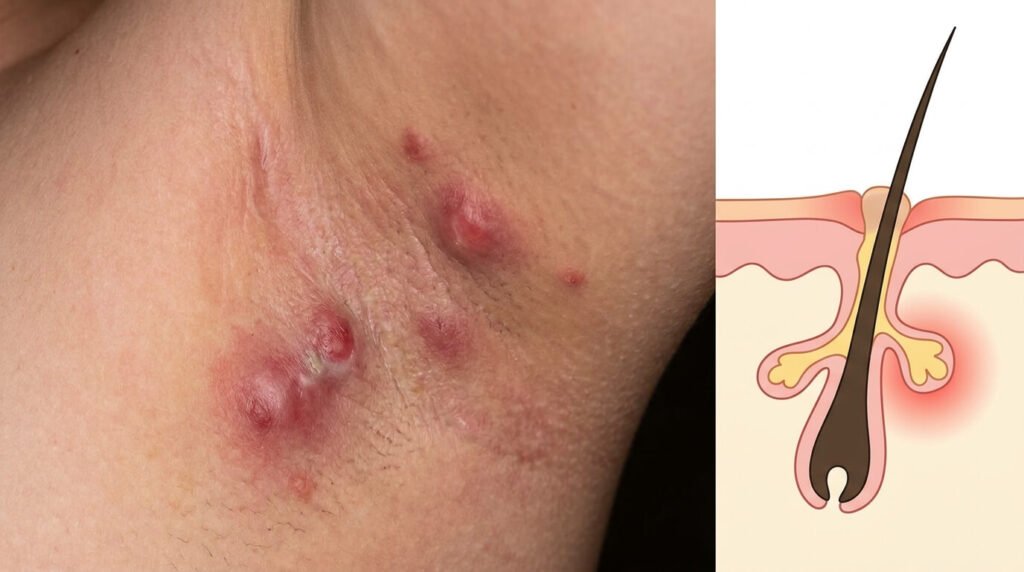

What Is HS Skin Condition?
HS skin condition is the common name for hidradenitis suppurativa, a chronic inflammatory skin disease that causes painful lumps beneath the skin. These lumps often develop in areas where skin rubs together, such as the armpits, groin, buttocks, under the breasts, and inner thighs. Over time, they may burst, drain fluid, and leave scars.
Although there is no permanent cure, early diagnosis and proper treatment can reduce flare-ups, relieve pain, and improve quality of life. Many people live well with the condition by combining medical care with healthy lifestyle habits. Research also shows that early treatment helps prevent permanent skin damage.
What Causes HS Skin Condition?
The exact cause of HS skin condition is not fully understood. Experts believe it develops when hair follicles become blocked, leading to inflammation. It is not caused by poor hygiene and it is not contagious.
Several factors may increase the risk:
- Family history
- Hormonal changes
- Smoking
- Obesity
- Friction between skin folds
- An overactive immune response
Many people notice that stress, sweating, heat, or tight clothing can trigger flare-ups.
Common Symptoms
Symptoms vary from person to person and may become worse over time if left untreated.
Common signs include:
- Painful lumps under the skin
- Blackheads in affected areas
- Abscesses filled with pus
- Draining wounds with an unpleasant odor
- Tunnels beneath the skin (sinus tracts)
- Thick scars after healing
- Repeated flare-ups in the same location
The disease usually affects:
- Armpits
- Groin
- Inner thighs
- Buttocks
- Under the breasts
- Around the genital area
Stages of the Disease
Doctors often classify hidradenitis suppurativa into three stages.
Stage 1
- One or more painful lumps
- No scarring or tunnels
- Mild symptoms
Stage 2
- Recurrent abscesses
- Early tunnel formation
- Small areas of scarring
Stage 3
- Multiple connected tunnels
- Extensive scarring
- Severe pain and drainage
- Significant impact on daily life
Early treatment can help prevent progression to advanced stages.
How Doctors Diagnose HS Skin Condition
There is no single laboratory test for HS skin condition.
Doctors usually diagnose it by:
- Examining the affected skin
- Reviewing your medical history
- Asking how often flare-ups occur
- Checking whether lesions appear in typical body areas
Sometimes additional tests are performed to rule out infections or other skin diseases.
Treatment Options
Treatment depends on disease severity, symptom frequency, and overall health.
Medications
Doctors may recommend:
- Topical antibiotics
- Oral antibiotics
- Anti-inflammatory medicines
- Pain relievers
- Hormonal therapy for selected patients
- Biologic medicines for moderate or severe disease
Several newer biologic treatments are improving outcomes for many patients with persistent disease.
Surgical Treatment
If tunnels and scars become severe, surgery may be necessary.
Procedures include:
- Drainage of painful abscesses
- Removal of damaged tissue
- Laser surgery
- Wide excision of affected skin
Surgery often works best when combined with ongoing medical treatment.
Daily Self-Care Tips
Good skin care can reduce irritation and help prevent new flare-ups.
Helpful habits include:
- Wash gently with mild cleansers.
- Wear loose cotton clothing.
- Avoid excessive friction.
- Maintain a healthy body weight.
- Stop smoking if you smoke.
- Keep affected areas dry.
- Use warm compresses for painful lumps.
- Follow your treatment plan consistently.
These simple changes cannot cure the disease but often reduce symptom severity.
Foods That May Help
Although no specific diet cures HS, some people experience fewer flare-ups by improving their eating habits.
A balanced diet may include:
- Fresh fruits
- Vegetables
- Whole grains
- Lean protein
- Fish rich in omega-3 fatty acids
- Plenty of water
Some individuals notice improvement after reducing:
- Sugary foods
- Highly processed foods
- Excess dairy
- Brewer’s yeast-containing products
Dietary triggers differ from person to person, so keeping a food diary may help identify patterns.
Possible Complications
Without treatment, complications may include:
- Permanent scarring
- Chronic wounds
- Skin infections
- Restricted movement
- Emotional stress
- Depression
- Anxiety
Many patients also experience reduced confidence because of pain, drainage, and visible scars. Mental health support can be an important part of treatment.
Living Well with HS Skin Condition
Living with HS skin condition can be challenging, but many people successfully manage it with long-term care.
Helpful strategies include:
- Keep follow-up appointments.
- Take medicines as prescribed.
- Track symptom triggers.
- Manage stress through relaxation techniques.
- Stay physically active when possible.
- Join patient support groups.
- Speak openly with your dermatologist.
A personalized treatment plan often provides the best long-term results.
When to See a Doctor
Seek medical care if you notice:
- Painful recurring boils
- Lumps that do not heal
- Frequent drainage
- Fever with skin lesions
- Severe pain
- Rapidly spreading symptoms
Early diagnosis allows treatment before extensive scarring develops.
Frequently Asked Questions
Is HS skin condition contagious?
No. It cannot spread from one person to another.
Can HS be cured?
There is currently no permanent cure, but treatments can effectively control symptoms and reduce flare-ups.
Does poor hygiene cause HS?
No. The disease is not caused by poor hygiene.
Who is most likely to develop HS?
It commonly begins after puberty and is more frequently diagnosed in women, though anyone can develop it.
Can losing weight help?
For overweight individuals, weight management may reduce skin friction and improve symptoms, although it is not a cure.
Conclusion
HS skin condition is a chronic inflammatory disease that affects both physical and emotional well-being. While it can be painful and frustrating, modern treatments, healthy lifestyle changes, and early medical care can significantly improve symptoms and quality of life. If you experience recurring painful lumps or draining sores, consult a dermatologist promptly. Early intervention remains the most effective way to prevent complications and long-term scarring.