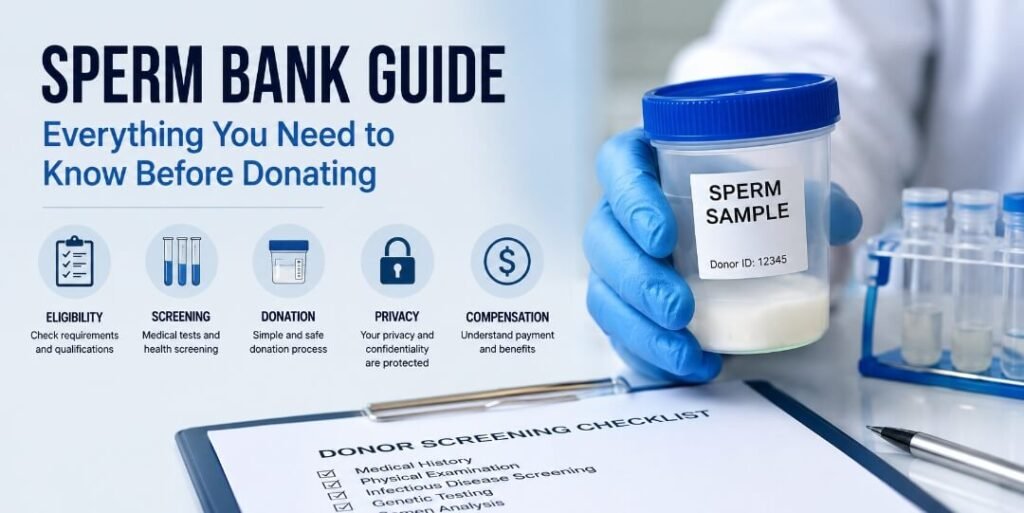

Many people think about becoming a sperm donor but feel confused about the medical tests, privacy rules, and legal responsibilities involved. Some are unsure if they qualify, while others worry about safety and confidentiality. Without clear information, the process can feel stressful and complicated. The good news is that modern sperm bank facilities follow strict medical and legal standards to make donation safe, private, and simple. Understanding the sperm donation process can help people make informed decisions and feel more confident before donating.
What Is a Sperm Bank?
A sperm bank is a medical facility that collects, tests, freezes, and stores sperm samples for fertility treatment. These samples are later used by individuals or couples who need help becoming parents.
A sperm bank works closely with doctors and fertility clinic specialists to make sure every donation meets medical safety standards.
People may need donor sperm for several reasons, including:
- Male infertility
- Same-sex parenting
- Single parenthood
- Genetic health concerns
- Fertility treatment support
Today, fertility centers use advanced medical technology to safely store and manage sperm samples for future use.
Why People Become a Sperm Donor
There are many reasons why someone chooses to become a sperm donor.
Helping Families
Many donors feel proud knowing they are helping people start families.
Financial Compensation
Most clinics provide payment for approved donations.
Free Medical Testing
Donors often receive free health evaluations and medical screening.
Supporting Reproductive Healthcare
Donation helps fertility clinic patients who need reproductive support.
For many people, donation feels meaningful because they are helping others achieve parenthood.
Understanding the Sperm Donation Process
The sperm donation process includes several steps to protect both donors and recipients.
Application Form
The first step is completing an application with personal and medical information.
Questions may include:
- Family medical history
- Lifestyle habits
- Education background
- Personal health information
Medical Screening
Approved applicants go through detailed health testing.
Testing may include:
- Blood tests
- Genetic screening
- Infectious disease testing
- Semen analysis
Interview and Counseling
Some clinics provide counseling sessions to explain donor responsibilities and privacy policies.
Sample Collection
Approved donors provide sperm samples at the clinic.
Freezing and Storage
Samples are frozen and stored safely for future fertility treatment.
This careful sperm donation process helps maintain safety and quality standards.
Who Can Become a Sperm Donor?
Not everyone qualifies for donation. Most clinics follow strict eligibility rules.
Age Requirements
Most sperm bank programs accept donors between ages 18 and 39.
Good Physical Health
Donors should be healthy and free from serious medical conditions.
Healthy Lifestyle
Smoking, drug use, or heavy alcohol use may reduce eligibility.
Family Medical History
Doctors review family history to reduce genetic risks.
Strong Sample Quality
Laboratory tests check sperm count, movement, and overall quality.
These screening steps help clinics provide healthy donor sperm for fertility patients.
Medical Testing and Health Screening
Health testing is one of the most important parts of becoming a sperm donor.
Genetic Testing
Doctors check for inherited diseases and genetic conditions.
Infectious Disease Testing
Testing may include:
- HIV
- Hepatitis
- Sexually transmitted infections
Semen Analysis
This test measures:
- Sperm count
- Sperm movement
- Sample quality
Ongoing Health Monitoring
Some clinics continue monitoring donor health throughout the donation period.
These medical evaluations help ensure safe fertility treatment for recipients using donor sperm.
Privacy and Confidentiality
Privacy is very important for many donors.
Most sperm bank facilities use secure systems to protect donor information.
Anonymous Donation
Some programs keep the donor’s identity completely private.
Open-Identity Donation
Other programs may allow donor-conceived children to contact donors after adulthood.
Secure Data Protection
Modern fertility clinic systems use strict security measures to protect personal records.
Before joining a program, donors should carefully review all privacy policies.
Legal Responsibilities of a Donor
Legal rules may vary depending on location and clinic policies.
No Parental Responsibilities
In most legal sperm bank programs, donors are not considered legal fathers.
Legal Agreements
Donors usually sign documents explaining:
- Privacy policies
- Compensation details
- Donor rights
- Legal responsibilities
Medical Regulations
Licensed fertility clinic facilities follow reproductive healthcare laws and regulations.
Understanding legal rules helps donors feel more comfortable and informed.
Compensation for Sperm Donation
Most clinics provide payment for approved donations.
Compensation may depend on:
- Donation frequency
- Clinic policies
- Sample quality
- Location
Some programs also provide:
- Flexible schedules
- Free health testing
- Travel reimbursement
Although payment is helpful, many donors say helping families is their biggest motivation.
Challenges of Becoming a Donor
Donation can be rewarding, but there are also challenges.
Time Commitment
Regular appointments and medical testing may require several visits.
Emotional Questions
Some donors think carefully about biological children in the future.
Strict Screening Rules
Many applicants are not approved because of medical or quality requirements.
Lifestyle Restrictions
Some clinics require healthy lifestyle habits during the donation period.
Understanding these challenges helps people prepare realistically before applying.
How Fertility Clinics Use Donor Sperm
A fertility clinic may use donor sperm in several reproductive treatments.
Intrauterine Insemination (IUI)
Doctors place sperm directly into the uterus to improve pregnancy chances.
In Vitro Fertilization (IVF)
Eggs are fertilized in a laboratory before embryo transfer.
Fertility Preservation
Frozen sperm samples may also be stored for future use.
Doctors carefully match donor sperm based on patient preferences and medical needs.
Important Questions to Ask Before Donating
Before joining any sperm bank program, donors should ask important questions.
What Are the Privacy Policies?
Understand whether the program is anonymous or open-identity.
What Medical Tests Are Required?
Learn about all screening procedures before applying.
How Long Is the Commitment?
Some clinics ask donors to participate regularly for several months.
What Compensation Is Offered?
Understand payment details and clinic policies clearly.
What Are the Legal Rules?
Always review legal agreements carefully before signing.
These questions help donors choose the right sperm bank and clinic.
Common Myths About Sperm Donation
Myth: Donors Become Legal Fathers
Fact: Most legal programs protect donors from parental responsibility.
Myth: Anyone Can Donate
Fact: Clinics follow very strict medical screening requirements.
Myth: Donation Is Unsafe
Fact: Professional fertility clinic facilities follow strict health and safety standards.
Myth: The Process Takes Only One Day
Fact: The sperm donation process usually includes multiple appointments and ongoing testing.
Understanding the facts helps reduce fear and confusion.
Emotional Side of Donation
For many people, donation is more than a medical process.
Some donors feel proud because they are helping families grow. Others feel satisfied supporting reproductive healthcare and fertility treatment.
At the same time, some donors may have emotional questions about genetics and future family connections.
Professional counseling can help donors understand these feelings before making decisions.
Future of Fertility Treatment and Sperm Banks
Modern reproductive medicine continues improving every year.
Better Genetic Screening
Advanced testing improves donor safety and medical evaluation.
Improved Fertility Technology
New medical tools are increasing pregnancy success rates.
Digital Matching Systems
Online systems help patients find suitable donor sperm more easily.
Growing Public Awareness
More people openly discuss fertility treatment and reproductive healthcare today.
These improvements continue making sperm bank services safer and more accessible worldwide.
Conclusion
Becoming a sperm donor is an important personal decision that includes medical testing, privacy protection, legal agreements, and emotional understanding. Modern sperm bank facilities follow strict healthcare standards to protect both donors and patients throughout the process.
Learning about donor sperm screening, fertility clinic procedures, and reproductive healthcare rules helps people make informed choices with confidence. Whether someone wants to donate for financial reasons, personal values, or the desire to help families grow, proper information and professional guidance are essential for a safe and positive experience.
For reservations and additional information, visit : aspertaan.com