
Accidents and medical emergencies can happen at any time, whether you are at home, traveling, driving, or enjoying outdoor activities. Many people panic during emergencies because they do not have the right first aid kit or essential medical supplies nearby. The good news is that preparing a well-stocked emergency kit can help you respond quickly and safely before professional medical help arrives. A complete first aid kit gives peace of mind, protects your family, and helps treat minor injuries effectively.
Why Every Home Needs a First Aid Kit
A properly prepared home first aid kit is one of the most important safety essentials for every household. Small injuries like cuts, burns, sprains, insect bites, and headaches can happen daily. Without quick treatment, minor injuries may become serious problems.
Keeping a first aid kit at home allows you to:
- Treat injuries immediately
- Reduce infection risks
- Stay prepared for emergencies
- Handle situations before medical help arrives
- Protect children, elderly family members, and pets
Medical experts from leading health organizations recommend keeping at least one first aid kit at home and another in your vehicle.
What Should a Basic First Aid Kit Include?
A standard first aid kit should contain basic tools, medicines, and emergency medical supplies. The contents may vary depending on family size, health conditions, and activities.
Essential Bandages and Wound Care Supplies
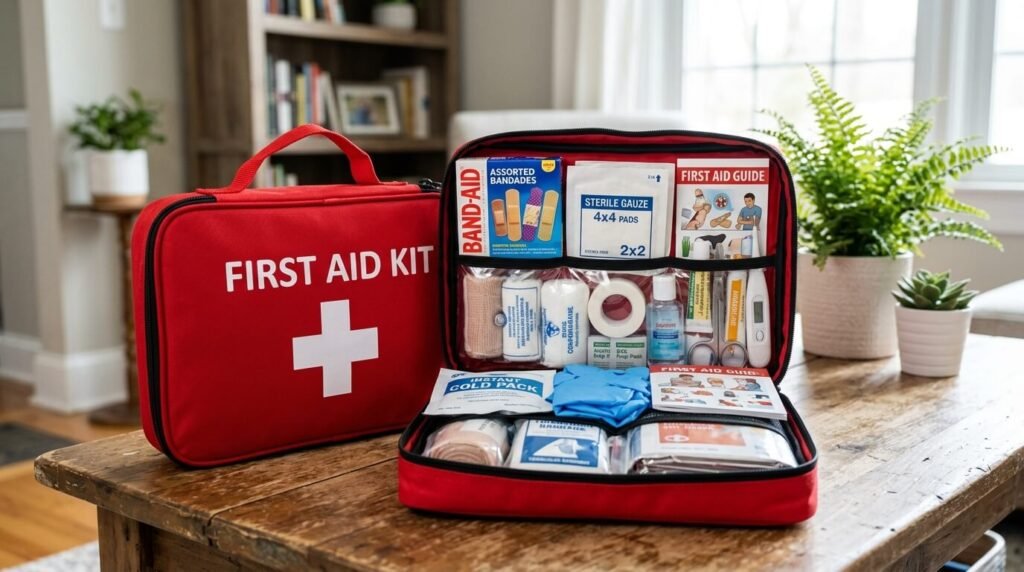
Every emergency kit should include:
- Adhesive bandages in different sizes
- Sterile gauze pads
- Medical tape
- Elastic bandages
- Triangular bandages
- Non-stick dressings
- Butterfly bandages
- Cotton balls and swabs
These supplies help stop bleeding, cover wounds, and support sprains or fractures.
Important Medical Supplies
Your kit should also contain:
- Disposable gloves
- Scissors
- Tweezers
- Thermometer
- Instant cold packs
- Eye wash solution
- CPR face shield
- Hand sanitizer
- Flashlight with batteries
These tools make emergency treatment safer and easier.
Recommended Medications
Experts recommend adding common over-the-counter medicines such as:
- Pain relievers
- Antihistamines
- Antibiotic ointment
- Antacids
- Anti-diarrheal medicine
- Hydrocortisone cream
- Aspirin for adults during emergency heart symptoms
Always check expiration dates regularly and replace expired medications.
Home First Aid Kit Essentials
A home first aid kit should be larger and more detailed than a travel kit. Since home emergencies can vary, it is smart to include extra supplies.
Items for Family Safety
Families with children should include:
- Child-safe medications
- Fever reducers
- Digital thermometer
- Emergency contact list
- Allergy medications
Supplies for Elderly Family Members
If older adults live in your home, add:
- Blood pressure monitor
- Prescription medications
- Reading glasses
- Mobility support items
- Medical history information
Pet Emergency Supplies
Pet owners should also prepare a small pet emergency kit containing:
- Pet bandages
- Tweezers
- Antiseptic wipes
- Emergency veterinarian contacts
Travel First Aid Kit Checklist
A travel first aid kit should be compact, lightweight, and easy to carry. Travel emergencies may happen on airplanes, road trips, hiking trails, or international vacations.
Important Items for Travel
Travel kits should include:
- Motion sickness medicine
- Pain relievers
- Hand sanitizer
- Adhesive bandages
- Anti-nausea tablets
- Insect bite cream
- Sunscreen
- Prescription medications
- Water purification tablets
Travel Safety Tips
When traveling:
- Store medicines in waterproof bags
- Carry copies of prescriptions
- Pack extra medication for delays
- Keep emergency numbers available
- Check airline restrictions for medical supplies
Medical professionals suggest customizing your travel kit based on your destination and activities.
Emergency Kit vs First Aid Kit
Many people confuse an emergency kit with a first aid kit, but they serve different purposes.
First Aid Kit
A first aid kit focuses mainly on treating injuries and medical emergencies.
Emergency Kit
An emergency kit includes survival items for disasters or unexpected situations such as:
- Food supplies
- Bottled water
- Emergency blankets
- Flashlights
- Batteries
- Portable chargers
- Radio
- Hygiene products
For complete preparedness, every family should have both.
How to Organize Your First Aid Kit
A messy first aid kit wastes valuable time during emergencies. Organization is extremely important.
Best Storage Tips
- Use clear containers
- Label all sections
- Keep medications separated
- Store in a cool, dry place
- Keep out of children’s reach
- Make kits easy to access
Experts also recommend checking kits every three to six months.
Common First Aid Emergencies at Home
A well-prepared first aid kit helps manage many everyday emergencies.
Cuts and Scrapes
Clean the wound using antiseptic wipes and cover it with sterile gauze or bandages.
Burns
Use cold water immediately and apply burn cream or non-stick dressing.
Sprains
Elastic bandages and cold packs help reduce swelling.
Allergic Reactions
Antihistamines can reduce mild allergic symptoms quickly.
Fever and Illness
Pain relievers and thermometers help monitor symptoms until medical care is available.
How to Build Your Own First Aid Kit
Some people buy ready-made kits, while others prefer creating customized kits.
Benefits of Building Your Own Kit
- Saves money
- Matches personal needs
- Avoids unnecessary items
- Allows better organization
Ready-Made Kits vs DIY Kits
Ready-made kits are convenient for beginners. However, many experienced users recommend customizing your own kit based on family needs, travel habits, and medical conditions.
Best Places to Keep a First Aid Kit
Experts recommend keeping first aid kits in multiple locations.
Recommended Locations
- Kitchen
- Bathroom
- Car
- Office
- Backpack
- Camping gear
- School bag
Quick access can save valuable time during emergencies.
Mistakes People Make with First Aid Kits
Many households own first aid kits but fail to maintain them properly.
Common Mistakes
- Keeping expired medications
- Missing essential supplies
- Storing kits in hard-to-reach places
- Not replacing used items
- Forgetting personal medications
Regular inspections help keep your emergency kit effective.
First Aid Tips Everyone Should Know
A first aid kit is only useful if people know how to use it correctly.
Important First Aid Skills
Everyone should learn:
- CPR basics
- Burn treatment
- Wound cleaning
- Bleeding control
- Choking response
- Emergency calling procedures
Basic first aid training improves confidence and emergency response speed.
How Often Should You Replace Medical Supplies?
Medical supplies lose effectiveness over time.
Replace These Items Regularly
- Expired medicines
- Damaged bandages
- Used gloves
- Batteries
- Open ointments
Health experts recommend checking your kit at least twice yearly.
Why Emergency Preparedness Matters
Natural disasters, road accidents, storms, and power outages can happen unexpectedly. A properly stocked emergency kit and first aid kit improve survival and safety during difficult situations.
Prepared families experience:
- Faster emergency response
- Less panic
- Better injury management
- Increased confidence
Preparedness is not about fear. It is about safety and responsibility.
Best First Aid Kits for Families and Travelers
Modern first aid kits are designed for different situations.
Popular Types of Kits
- Family first aid kits
- Car emergency kits
- Hiking medical kits
- Workplace first aid kits
- Waterproof travel kits
- Outdoor survival kits
Choose a kit based on your lifestyle and daily activities.
Signs Your First Aid Kit Needs Updating
Your first aid kit may need replacement if:
- Supplies are expired
- Packaging is damaged
- Medications are missing
- Bandages are dirty
- Tools are broken
Keeping updated medical supplies ensures better emergency care.
Conclusion
A well-prepared first aid kit is one of the smartest investments for your family’s safety. Whether you need a home first aid kit, a travel first aid kit, or a complete emergency kit, having the right medical supplies ready can make a major difference during emergencies. Preparedness helps reduce panic, improves safety, and gives you confidence during unexpected situations. Regularly check, organize, and update your first aid kit so you are always ready for any emergency.
For reservations and additional information, visit : aspertaan.com