
Travelers visiting the Chesapeake Bay area often search for historic attractions but struggle to find detailed and simple information about visiting the famous lighthouse near Annapolis. Many guides only mention the landmark briefly without explaining its history, tours, or visitor experience. The solution is understanding the story, architecture, and travel tips related to the thomas point lighthouse, which helps visitors fully appreciate this unique maritime landmark. This historic structure is one of the most recognizable lighthouses in the United States and remains an important part of American coastal heritage.
Overview of the Historic Lighthouse
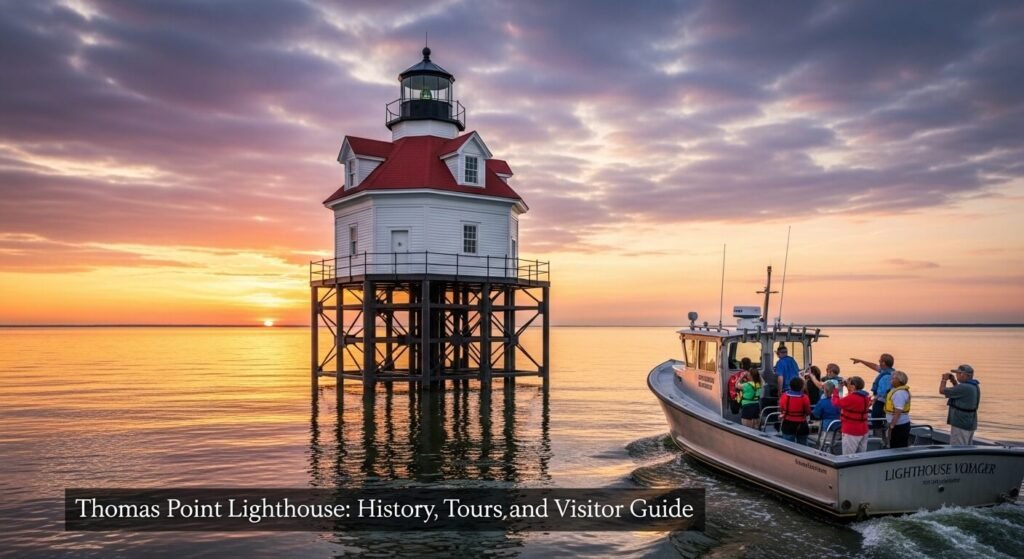
The thomas point lighthouse stands in the Chesapeake Bay near Annapolis, Maryland. It is famous for its unique offshore location and classic cottage-style design built on a screw-pile foundation.
Unlike many tall stone lighthouses built on land, this structure stands directly above the water. The lighthouse appears almost like a small house floating on the bay, supported by strong iron piles anchored into the seabed.
Because of its unusual design and historic importance, the lighthouse is recognized as a National Historic Landmark and remains one of the best-preserved screw-pile lighthouses in the country.
Thomas Point Lighthouse History
Understanding the thomas point lighthouse history helps visitors appreciate its importance to maritime navigation.
The first lighthouse at Thomas Point was built in 1825 along the shoreline. However, coastal erosion and changing water levels created problems for the structure. Over time, the shoreline lighthouse became less effective in guiding ships through the Chesapeake Bay.
To solve this problem, engineers decided to build a new lighthouse farther offshore. In 1875, the current offshore lighthouse was constructed using a screw-pile foundation system designed specifically for shallow coastal waters.
This design allowed the lighthouse to remain stable even during storms and strong tides. The structure has continued guiding ships for more than a century and remains active today.
Architecture and Design Features
The thomas point lighthouse maryland is famous for its unique architecture. Its design reflects the engineering innovation of the 19th century when screw-pile lighthouses became popular in coastal areas with soft seabeds.
Screw-Pile Foundation
The foundation consists of large iron piles that are screwed deep into the seabed. These piles create a stable base that supports the wooden house-style lighthouse structure.
This type of construction was ideal for shallow waters like those found in the Chesapeake Bay.
Cottage-Style Structure
Unlike many tall tower lighthouses, this lighthouse has a charming cottage appearance. The building features white wooden walls and a bright red roof that makes it easily recognizable from a distance.
Because of its distinctive appearance, the lighthouse has become one of the most photographed landmarks in Maryland.
Importance for Maritime Navigation
For many decades, the thomas point lighthouse annapolis played a critical role in protecting ships traveling through the busy waterways of the Chesapeake Bay.
Before modern GPS systems existed, sailors depended on lighthouses to safely navigate coastal routes. The lighthouse provided a bright signal that helped ships avoid dangerous shoals and shallow waters.
Even today, the lighthouse continues to operate as an active navigational aid maintained by the United States Coast Guard.
Its continued use highlights the long-lasting importance of this historic maritime structure.
Thomas Point Lighthouse Tours
One of the best ways to experience the lighthouse is through guided thomas point lighthouse tours.
Because the lighthouse is located several miles offshore, visitors cannot reach it by car or by walking. Instead, boat tours depart from Annapolis Harbor and travel across the Chesapeake Bay to the lighthouse.
What Visitors Experience
During the tour, visitors can learn about:
- The construction and engineering of the lighthouse
- The daily life of lighthouse keepers
- Maritime history of the Chesapeake Bay
- The preservation efforts that protect the structure
Many tours allow visitors to step inside the lighthouse, explore its rooms, and see the lantern area where the light once operated manually.
Life of Lighthouse Keepers
Before the lighthouse became automated, keepers were responsible for maintaining the light and ensuring ships could see it every night.
Life at the thomas point lighthouse required discipline and dedication. Keepers had to perform several daily tasks such as:
- Lighting the lamp at sunset
- Cleaning the lantern glass
- Maintaining the light equipment
- Recording weather observations
- Monitoring passing ships
Living offshore meant keepers often experienced isolation and challenging weather conditions. Despite these hardships, their work played a crucial role in maritime safety.
Location and Scenic Views
The lighthouse sits in the Chesapeake Bay about two miles from Annapolis. The surrounding waters create breathtaking scenery that attracts photographers and travelers from around the world.
Visitors taking boat tours often enjoy panoramic views of the Chesapeake Bay shoreline, sailing boats, and the historic city of Annapolis.
Sunset tours are particularly popular because the lighthouse silhouette against the evening sky creates stunning photography opportunities.
Preservation and Restoration Efforts
Protecting historic landmarks like this lighthouse requires ongoing preservation work.
Over the years, storms, wind, and saltwater exposure have threatened the structure. Preservation organizations partnered with local communities and government agencies to restore and maintain the lighthouse.
Restoration projects have included:
- Structural repairs
- Wood exterior restoration
- Roof maintenance
- Lighthouse light preservation
These efforts ensure that future generations will continue to experience this historic landmark.
Travel Tips for Visitors
Travelers planning a visit should keep a few helpful tips in mind:
Book tours early: Lighthouse tours often have limited seats and can sell out quickly.
Check weather conditions: Boat tours depend on safe weather and water conditions.
Bring a camera: The lighthouse and surrounding bay provide excellent photography opportunities.
Wear comfortable clothing: Boat trips across the bay can sometimes be windy.
Following these tips helps visitors enjoy a safe and memorable lighthouse experience.
Why This Lighthouse Is Special
Many historic lighthouses exist across the United States, but the thomas point lighthouse stands out for several reasons.
First, it is one of the few screw-pile lighthouses still standing in its original offshore location. Second, its cottage-style design makes it visually unique compared to traditional lighthouse towers.
Finally, its long history of guiding sailors through the Chesapeake Bay makes it an important part of American maritime heritage.
Conclusion
The thomas point lighthouse is more than just a historic building in the Chesapeake Bay. It represents centuries of maritime navigation, engineering innovation, and coastal preservation. From its fascinating thomas point lighthouse history to the memorable thomas point lighthouse tours, this landmark continues to attract visitors interested in history, architecture, and scenic coastal views. Located near Annapolis, the thomas point lighthouse annapolis remains one of the most treasured maritime landmarks in the United States and an unforgettable destination for travelers exploring Maryland’s historic coastline.
FAQs – Thomas Point Lighthouse
1. Where is Thomas Point Lighthouse located?
The thomas point lighthouse is located in the Chesapeake Bay near Annapolis, Maryland. It stands about two miles offshore from the city of Annapolis and is one of the most famous historic lighthouses in the region.
2. Why is Thomas Point Lighthouse historically important?
The thomas point lighthouse history dates back to the 19th century when it was built to guide ships safely through the busy waters of the Chesapeake Bay. It is one of the last screw-pile lighthouses still standing in its original location in the United States.
3. Can visitors tour Thomas Point Lighthouse?
Yes, visitors can experience guided thomas point lighthouse tours. These tours usually depart from Annapolis Harbor and take visitors by boat to the lighthouse where they can explore the structure and learn about its maritime history.
4. When was Thomas Point Lighthouse built?
The current offshore lighthouse was completed in 1875. It replaced an earlier shoreline lighthouse that had been built in 1825 but became ineffective due to erosion and changing water conditions.
5. Why is the lighthouse built on the water?
The thomas point lighthouse maryland was built on screw piles in the water because the shallow seabed of the Chesapeake Bay made traditional foundations difficult. This design allowed the lighthouse to stand securely offshore.
6. Is Thomas Point Lighthouse still active today?
Yes, the thomas point lighthouse annapolis still functions as an active navigational aid. It is currently maintained by the United States Coast Guard and continues to guide ships traveling through the Chesapeake Bay.
7. What is the best time to visit Thomas Point Lighthouse?
The best time to visit is during spring and summer when thomas point lighthouse tours operate regularly. These seasons offer better weather conditions and clearer views of the Chesapeake Bay.
8. Is Thomas Point Lighthouse a National Historic Landmark?
Yes, the thomas point lighthouse has been designated a National Historic Landmark because of its architectural uniqueness and importance in American maritime history.