
Introduction
A keloid scar can be frustrating because it grows beyond the original wound, often becoming larger, thicker, and more noticeable over time. Many people experience discomfort, itching, or self-consciousness due to these raised scars. The good news is that modern dermatology offers several effective treatment options, including corticosteroid injections, silicone sheets, laser therapy, cryotherapy, and surgical removal. Early diagnosis and proper wound care can significantly reduce the risk of keloid formation and help maintain healthy skin. Understanding the causes, symptoms, treatment options, and prevention strategies is the first step toward managing keloid scars successfully.
What Is a Keloid Scar?
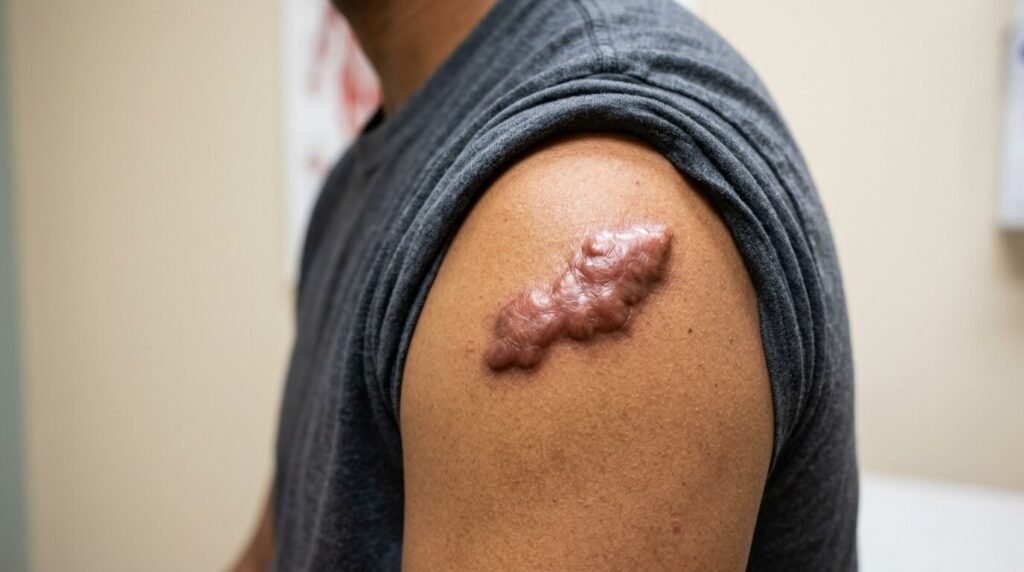
A keloid scar is a type of raised scar that develops when the body produces excessive collagen during the wound-healing process. Unlike normal scars, keloids continue growing beyond the boundaries of the original injury.
These scars may develop after:
- Acne
- Burns
- Surgery
- Ear piercings
- Tattoos
- Vaccinations
- Cuts and scratches
- Insect bites
Keloids are not contagious or cancerous, but they can affect appearance and quality of life.
Keloid Scar Symptoms
The symptoms of a keloid scar can vary depending on its size, location, and stage of growth.
Common symptoms include:
- Raised, thick scar tissue
- Growth beyond the original wound
- Pink, red, purple, or brown coloration
- Smooth and shiny appearance
- Itching or tenderness
- Burning sensation
- Pain or discomfort
- Restricted movement if located near joints
Keloids can take months or even years to fully develop after an injury.
What Causes Keloid Scars?
The exact cause of keloid scars is not fully understood, but researchers believe they result from an abnormal wound-healing response.
Potential triggers include:
Skin Injuries
Any injury that damages the skin may lead to keloid formation, including:
- Surgical incisions
- Burns
- Acne lesions
- Piercings
- Cuts
Excess Collagen Production
During healing, the body creates collagen to repair tissue. In people prone to keloids, collagen production continues excessively, causing thick scar tissue to form.
Genetic Factors
Family history significantly increases the likelihood of developing keloids, suggesting a strong genetic component.
Risk Factors for Developing Keloids
Certain individuals are more likely to develop keloid scars.
Darker Skin Tones
People with darker skin tones have a higher risk of keloid formation.
Age
Keloids are most common between the ages of 10 and 30.
Family History
Having relatives with keloids increases your risk.
Hormonal Changes
Pregnancy and puberty may increase susceptibility in some individuals.
Keloid Scar vs. Hypertrophic Scar
Many people confuse keloids with hypertrophic scars.
| Feature | Keloid Scar | Hypertrophic Scar |
| Growth | Extends beyond original wound | Stays within wound boundaries |
| Size | Often larger | Usually smaller |
| Recurrence | Common after removal | Less common |
| Duration | Persistent | May improve over time |
| Appearance | Thick and raised | Raised but localized |
This distinction is important because treatment approaches may differ.
How Is a Keloid Scar Diagnosed?
Diagnosis is typically straightforward.
A dermatologist may:
Perform a Physical Examination
The appearance and growth pattern of the scar often provide enough information for diagnosis.
Review Medical History
Your doctor may ask about previous injuries, surgeries, piercings, or family history.
Conduct a Skin Biopsy
In rare cases, a biopsy may be performed to rule out other skin conditions or skin cancer.
Keloid Scar Treatment Options
There is no single treatment that works for everyone. Dermatologists often combine multiple therapies for better results.
Corticosteroid Injections
Steroid injections are among the most common treatments.
Benefits include:
- Reducing scar size
- Relieving itching
- Softening scar tissue
Silicone Gel Sheets
Silicone sheets help flatten scars and reduce discomfort when used consistently.
Cryotherapy
Cryotherapy freezes the scar tissue and is most effective for small keloids.
Laser Therapy
Laser treatments can improve scar color and texture while reducing thickness.
Pressure Therapy
Pressure earrings and garments may help prevent and reduce keloid growth.
Surgical Removal
Large keloids may require surgical excision. However, surgery is often combined with other treatments because recurrence rates are high.
Radiation Therapy
In some cases, low-dose radiation is used after surgery to reduce recurrence risk.
5-Fluorouracil (5-FU) Injections
This medication may be combined with steroids to improve outcomes in resistant keloids.
Can Keloid Scars Be Removed Permanently?
Complete permanent removal can be challenging because keloids often return after treatment.
The best long-term results are usually achieved through combination therapy, such as:
- Surgery plus steroid injections
- Surgery plus radiation therapy
- Silicone sheets plus corticosteroids
- Laser treatment combined with injections
Early intervention often improves success rates.
Home Remedies for Keloid Scars
While home remedies cannot completely remove keloids, some methods may help improve appearance.
Common options include:
- Silicone gel products
- Gentle scar massage
- Consistent moisturizing
- Sun protection
- Proper wound care
Avoid unproven DIY methods such as tying rubber bands around keloids, which may lead to infection and permanent damage.
How to Prevent Keloid Scars
Prevention is especially important for individuals with a history of keloids.
Practice Proper Wound Care
Keep wounds clean and moisturized during healing.
Use Silicone Dressings
Silicone sheets may help prevent excessive scar formation.
Avoid Unnecessary Skin Trauma
Consider avoiding:
- Tattoos
- Body piercings
- Elective cosmetic procedures
Protect Healing Skin
Use sunscreen to reduce discoloration and support healthy healing.
Follow Post-Surgical Instructions
If surgery is necessary, closely follow your healthcare provider’s recommendations.
When Should You See a Doctor?
Consult a dermatologist if you notice:
- Rapid scar growth
- Persistent itching
- Pain or tenderness
- Restricted movement
- Cosmetic concerns affecting confidence
Early treatment can help prevent further enlargement and improve outcomes.
Frequently Asked Questions
Are keloid scars dangerous?
No. Keloids are benign and non-cancerous, but they can cause physical discomfort and emotional distress.
Can keloids disappear naturally?
Most keloids do not disappear on their own and often persist for years without treatment.
Is laser treatment effective for keloids?
Laser therapy can improve appearance and symptoms, especially when combined with other treatments.
Do keloids come back after surgery?
Yes. Recurrence is common, which is why surgeons often combine surgery with additional therapies.
Conclusion
A keloid scar is more than just a cosmetic concern—it is a complex wound-healing disorder that can continue growing long after the original injury has healed. Understanding the causes, symptoms, diagnosis methods, and treatment options can help individuals make informed decisions about their skin health. Although keloids can be difficult to treat permanently, modern therapies such as corticosteroid injections, silicone sheets, laser therapy, cryotherapy, and surgical interventions offer significant improvement for many patients. The most effective strategy remains prevention through proper wound care, early treatment, and avoiding unnecessary skin trauma. If you notice a raised scar growing beyond the original wound, consulting a dermatologist early can greatly improve treatment success and help maintain healthy, confident skin.