
Introduction
Kidney stones are one of the most painful urinary tract conditions that can affect people of all ages, often without warning. The main problem is that many individuals ignore early discomfort, which leads to severe complications such as urinary blockage, infection, and extreme pain that requires emergency treatment. The solution is early detection by understanding kidney stone symptoms and taking immediate medical action before the condition worsens. Recognizing these signs early can help prevent long-term kidney damage and reduce the need for surgical intervention.
What Are Kidney Stones?
Kidney stones are hard mineral and salt deposits that form inside the kidneys when urine becomes concentrated. These stones are mainly made of calcium oxalate, uric acid, or other mineral compounds.
They can vary in size from tiny grains to large stones that block the urinary tract. While small stones may pass unnoticed, larger ones can cause severe pain and complications.
Early Warning Signs and Kidney Stone Symptoms
One of the most important steps in prevention is recognizing kidney stone symptoms early. These symptoms often appear suddenly and can worsen quickly.
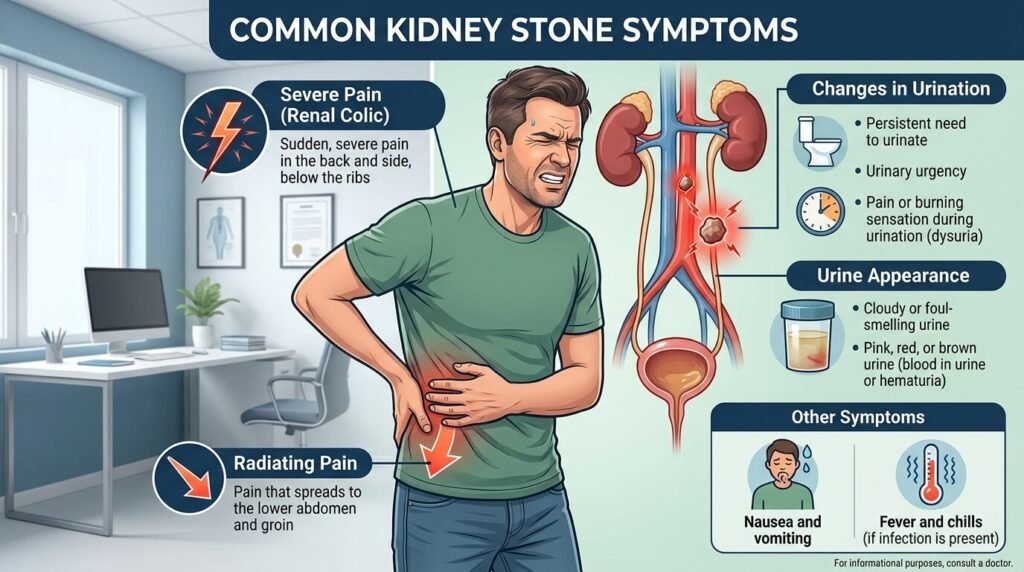
Common early symptoms include:
- Sharp pain in the back or side (often called renal colic)
- Pain that spreads to the lower abdomen or groin
- Burning sensation during urination
- Frequent urge to urinate
- Blood in urine (pink, red, or brown color)
- Cloudy or foul-smelling urine
In many cases, people first notice mild discomfort, which gradually turns into severe pain as the stone moves through the urinary tract.
Causes of Kidney Stones
Kidney stones develop when urine contains more crystal-forming substances than the fluid in your urine can dilute.
Main causes include:
- Low water intake (dehydration)
- High salt diet
- Excess animal protein consumption
- High oxalate foods (spinach, nuts, chocolate)
- Obesity and metabolic disorders
- Certain medications
- Family history of kidney stones
Lifestyle and dietary habits play a major role in stone formation.
Risk Factors
Some people are more likely to develop kidney stones due to biological and environmental factors.
High-risk groups include:
- Males between 30–50 years old
- People with a family history of kidney stones
- Individuals with chronic dehydration
- Patients with gout or urinary tract infections
- People living in hot climates (like Pakistan and Middle East regions)
Diagnosis of Kidney Stones
Doctors use several methods to confirm kidney stones and assess their size and location.
Common diagnostic methods:
- Urine test: Detects infection and mineral levels
- Blood test: Checks kidney function and calcium levels
- Ultrasound: Non-invasive imaging method
- CT scan: Most accurate test for detecting stones
- X-ray (KUB): Helps identify larger stones
Early diagnosis helps determine whether the stone can pass naturally or needs treatment.
Treatment Options for Kidney Stones
Treatment depends on the size, type, and location of the stone.
1. Small Stones Treatment
Small stones often pass naturally with:
- Drinking plenty of water
- Pain relievers
- Medical expulsive therapy (alpha blockers)
2. Larger Stones Treatment
If stones are too large, medical procedures may be required:
- Shock Wave Lithotripsy (SWL): Breaks stones into smaller pieces
- Ureteroscopy: Removes stones using a thin scope
- Percutaneous Nephrolithotomy (PCNL): Surgical removal for large stones
Home Remedies and Prevention Tips
Preventing kidney stones is easier than treating them.
Effective prevention strategies:
- Drink 2–3 liters of water daily
- Reduce salt intake
- Limit sugary drinks and sodas
- Eat more citrus fruits (like lemon and orange)
- Maintain a healthy weight
- Avoid excessive protein consumption
These habits significantly reduce the risk of recurrence.
Diet Recommendations
Diet plays a key role in preventing kidney stones.
Foods to include:
- Water-rich fruits (watermelon, cucumber)
- Citrus fruits
- Whole grains
- Low-fat dairy products
Foods to limit:
- Processed foods
- Excess salt
- Red meat
- High-oxalate foods in excess
When to See a Doctor
Seek immediate medical attention if you experience:
- Severe and persistent pain
- Blood in urine
- Fever and chills (possible infection)
- Difficulty urinating
- Nausea and vomiting with pain
Delaying treatment can lead to kidney damage or infection.
Complications of Kidney Stones
If untreated, kidney stones can cause serious issues:
- Urinary tract infections (UTIs)
- Kidney damage
- Recurrent stones
- Urinary blockage
- Sepsis (in severe cases)
Early awareness of kidney stone symptoms helps avoid these complications.
Prevention Through Lifestyle Changes
Long-term prevention requires consistent lifestyle adjustments:
- Stay hydrated throughout the day
- Exercise regularly
- Reduce stress
- Maintain a balanced diet
- Monitor calcium intake properly
These habits not only prevent stones but also improve overall kidney health.
Conclusion
Kidney stones are painful but highly manageable if detected early. Understanding kidney stone symptoms, causes, and treatment options allows individuals to take timely action and prevent complications. With proper hydration, dietary control, and medical guidance, most kidney stones can be prevented or treated without surgery. Early awareness is the key to protecting long-term kidney health and avoiding unnecessary suffering.