
Not all hobbies help with all mental health challenges equally. This sounds obvious once it is stated directly, but most of the conversation around hobbies and teen mental health treats the relationship as a single, uniform thing, as if any activity a teen picks up will produce the same benefit regardless of what they are actually struggling with. The reality is considerably more specific than that, and matching a hobby to what a teen is actually dealing with produces meaningfully better results than simply encouraging any activity and hoping for the best.
This matters practically because a parent pushing a socially anxious teen into a team sport before they are ready can make things worse rather than better. A teen dealing with depression who is steered toward a solitary, passive hobby may find their isolation deepening rather than lifting. Getting this match right requires understanding both what different hobbies actually do for the brain and the body, and what specific mental health challenges respond best to which kinds of activity.
For Teens Dealing With Anxiety
Anxiety involves a nervous system that is chronically activated, running threat detection at a level that does not match the actual demands of everyday situations. Activities that help regulate this physiological response are particularly well matched to teens dealing with anxiety, and the research points fairly consistently toward two categories.
Rhythmic, repetitive physical activity, running, swimming, cycling, rowing, produces a genuine calming effect on the nervous system that is not simply the result of distraction. The rhythm itself matters, and activities where the body settles into a steady, predictable movement pattern over an extended period tend to produce more meaningful anxiety reduction than high-intensity burst activities. For teens who find team sports overwhelming, individual endurance activities offer the physiological benefit without the social pressure.
Creative activities with a strong focus component also help with anxiety specifically. Knitting, embroidery, and other craft-based hobbies require enough sustained attention to interrupt the ruminative thought patterns that anxiety feeds on, while being gentle enough that a teen does not need to be in a good mental state to start. The focus required to follow a pattern or work on a detailed project occupies the part of the brain that anxiety hijacks for catastrophic thinking, without demanding the kind of high-energy engagement that can feel overwhelming when anxiety is already elevated.
For Teens Dealing With Depression
Depression tends to reduce motivation and narrow a teen’s world, pulling them away from activities they once enjoyed and making the initiation of anything new feel disproportionately difficult. The hobby recommendation for depression is almost counterintuitive: start smaller than seems meaningful. A teen who cannot currently engage with a full hour of any activity can often manage ten minutes of something low-stakes, and that ten minutes, done consistently, is worth considerably more than an ambitious plan that never actually gets started.
Sunlight and movement together are particularly powerful for depression, which is why outdoor activities tend to outperform indoor ones for teens dealing with low mood specifically. Gardening is worth mentioning here precisely because it seems unlikely. It involves regular outdoor time, physical movement, and a relationship with something living that requires care and produces visible results over time. The combination of these elements addresses several of the physiological and psychological features of depression simultaneously in a way that feels accessible rather than demanding.
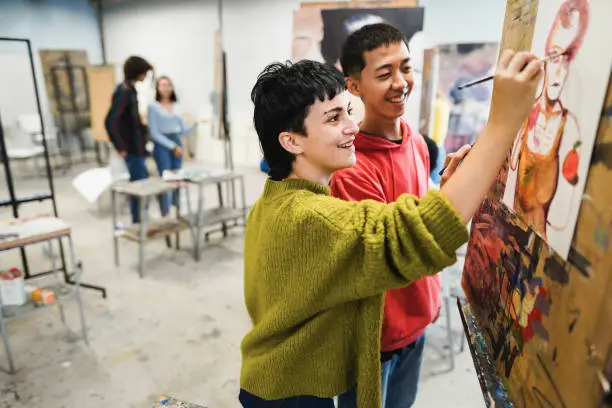
Social hobbies that involve genuine creative collaboration, rather than pure performance, also work well for depression because they rebuild social connection gradually without requiring a teen to show up and be fine. A teen working on a mural with other young people, playing in an informal band, or building something as part of a maker group is connecting through the activity rather than being required to present a version of themselves they cannot currently sustain.
For Teens Dealing With Social Isolation
Social isolation in teenagers often involves a learned avoidance pattern where the discomfort of social interaction has become associated with danger, and repeated avoidance has strengthened that association over time. The most effective hobbies for this specific challenge are ones that provide structured, low-pressure social contact organized around a shared activity rather than direct conversation.
Tabletop gaming communities, anime clubs, robotics teams, coding groups, and similar interest-based communities work particularly well here because the social interaction is mediated through the shared activity. Teens who cannot sustain unstructured socializing can often engage genuinely in these settings because the activity provides both a focus and a conversational framework that removes the pressure of having to generate connection from nothing.
The key distinction is between structured and unstructured social contact. Putting a socially isolated teen in a situation where they are expected to mingle and make conversation typically produces more anxiety and deeper avoidance. Putting the same teen in a setting where everyone is focused on the same activity, and conversation emerges naturally from that shared focus, produces a completely different experience.
For Teens Processing Trauma
Trauma therapy increasingly incorporates somatic and body-based approaches because trauma is stored in the body in ways that talking alone does not always reach. Hobbies that involve physical movement combined with a strong sensory and present-moment focus reflect a similar logic. Martial arts, yoga, dance, and rock climbing all involve sustained attention to physical sensation and body position in ways that help trauma survivors reconnect with their bodies in a controlled, empowering context rather than in the involuntary, frightening way that trauma responses typically involve.
Creative expression also plays a meaningful role for teens processing difficult experiences, particularly creative activities that do not require verbal articulation of what happened. Drawing, painting, and music composition allow teens to externalize internal experiences without having to translate them into words, which is often genuinely impossible in the immediate aftermath of traumatic experience.
Understanding the specific relationship between different hobbies and different mental health challenges gives parents a considerably more useful framework than general encouragement toward any activity. For families wanting to explore this further alongside professional clinical support, hobbies and teen mental health resources can help build a picture of how structured activity fits into a broader approach to adolescent wellbeing.